WASHINGTON, United States – CNN, MS NOW and Politico have asked a federal court to prevent the Trump administration from reinstating a White House access ban against their journalists while the news organizations’ legal challenge moves forward.
The three outlets filed the request Monday, arguing that the administration has continued to apply the ban inconsistently despite a federal judge’s order requiring their White House press credentials to be restored. They are seeking a preliminary injunction that would keep the administration from enforcing the ban until the broader lawsuit is resolved.
The dispute began on Sept. 18, when President Donald Trump announced that CNN, MS NOW and Politico would be barred from the White House. The organizations were subsequently denied access and some journalists had their hard passes deactivated.

The outlets challenge the administration’s justification
The news organizations argue that the ban was imposed because the White House objected to their reporting.
Their lawsuit alleges violations of the First Amendment and the Fifth Amendment’s due-process protections. The organizations contend that excluding them because of the content or viewpoint of their journalism improperly interferes with their ability to report on the federal government.
Trump initially justified the ban by accusing the outlets of publishing what he called “fake news.” The administration later argued in court filings that the restrictions were connected to professionalism, security concerns and reporting that it said threatened national security.
The administration has maintained that access to the White House is a privilege rather than a constitutional right.
Judge orders credentials restored
U.S. District Judge Timothy Kelly issued a temporary restraining order on Sept. 24 requiring the administration to return, reinstate and restore the White House hard-pass credentials held by employees of CNN, MS NOW and Politico.


The order applies for 14 days while the court considers further proceedings.
Kelly’s ruling focused initially on due process rather than issuing a final ruling on the outlets’ broader First Amendment claims.
The judge found that the journalists were likely to succeed on their Fifth Amendment procedural due-process claim. He cited earlier D.C. Circuit cases establishing that a White House correspondent with a valid press pass has a protected interest that cannot be withdrawn without appropriate procedures.
The court also noted that the administration acknowledged the journalists had not received notice or an opportunity to be heard before their credentials were revoked.
The judge said the White House had not established formal standards that gave the organizations fair notice about what conduct could result in revocation or how severe the resulting punishment could be.
National security argument remains disputed
The administration has argued that some of the reporting cited in its explanations involved sensitive information and posed national-security concerns.
The court did not dismiss the government’s interest in protecting classified or sensitive information. But Kelly said the administration had provided little evidence at that stage showing that removing the three organizations’ hard passes would actually protect national security.
The order also noted that some of the reporting cited by the administration dated back months or years. The judge wrote that the record did not demonstrate why immediate revocation without prior notice was necessary.
The ruling was therefore limited in scope. It restored access temporarily while the case proceeds rather than finally resolving whether the administration’s broader policy violates the First Amendment.
The White House has continued to contest access
The outlets say the administration has not consistently complied with the practical effect of the court’s order.
In their latest filing, lawyers for CNN, MS NOW and Politico said the White House had continued implementing the ban unpredictably, including preventing CNN from fulfilling its role in a rotating television pool during a presidential trip.
The outlets argued that allowing the administration to continue operating this way would permit the original dispute to re-emerge before the court reaches a final decision.
The White House has also restricted CNN’s participation in presidential travel arrangements, including denying the network a place on Air Force One for a recent trip.
The latest filing asks the court to replace the temporary protection with a preliminary injunction covering the period of the litigation.
Other news organizations entered the dispute
The conflict has extended beyond the three organizations directly involved in the lawsuit.
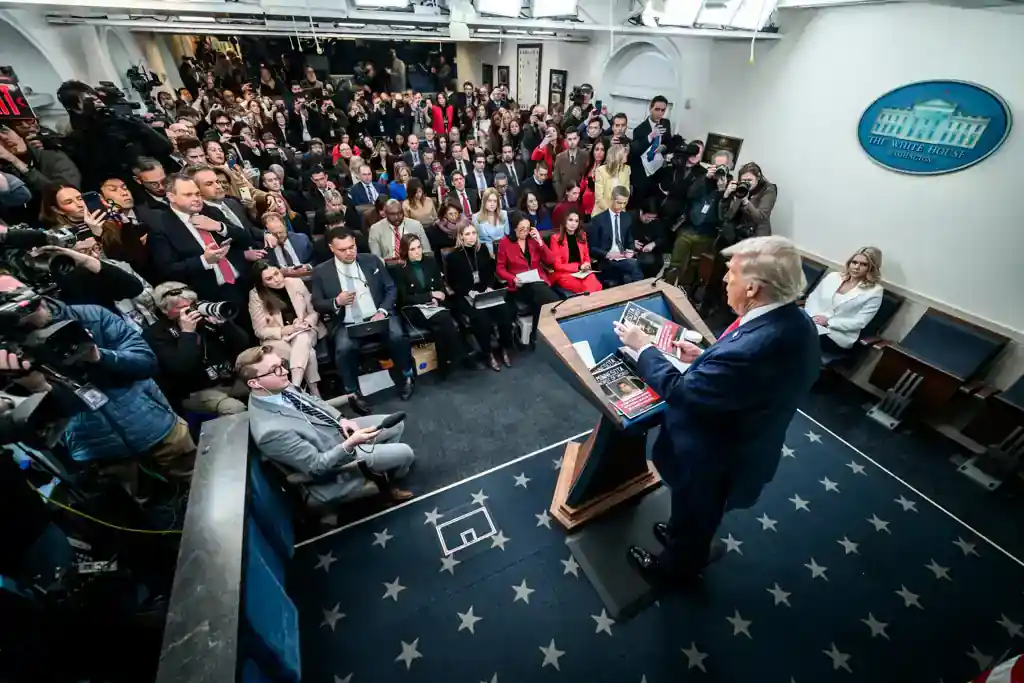
Other major U.S. television networks suspended portions of their rotating White House video pool after the three outlets were barred. The pool provides shared footage of presidential events to participating broadcasters and has become an important part of the dispute over access.
Dozens of news organizations also filed an amicus brief supporting the challenge.
Their participation reflects the broader concern that restrictions placed on one outlet can affect the functioning of the press pool and access to presidential events for other organizations as well.
The pool resumed some coverage after Kelly ordered the three organizations’ credentials restored, although the dispute over access has continued.
The case now moves toward a fuller ruling
Kelly’s Sept. 24 order was expressly temporary.
The court gave the parties a short period for expedited briefing before considering a preliminary injunction. The temporary restraining order is scheduled to remain in effect for 14 days unless further action changes that timetable.
The latest filing therefore asks the court to maintain the protection beyond the temporary order.
The administration can continue defending the ban as the case proceeds, while the three news organizations will continue arguing that their exclusion was unconstitutional retaliation for their reporting.
The court has not issued a final ruling on those broader claims.
For now, the immediate legal question is whether CNN, MS NOW and Politico will retain guaranteed White House access while that dispute is litigated.
The case also leaves unresolved a larger institutional question: how far a president can go in controlling access to government premises when the administration objects to the way particular news organizations cover the president.
That question will depend on the court’s eventual consideration of the constitutional claims beyond the temporary restoration of press credentials.
Reporting Credit: U.S. District Court for the District of Columbia — September 24 temporary restraining order restoring CNN, MS NOW and Politico hard-pass credentials; CNN, MS NOW and Politico — lawsuit and September 28 request for preliminary injunctive relief; White House/Trump administration — stated rationale for the access restrictions and court filings defending the policy.