Journos News - Breaking News, World News, Top Stories, Todays Headlines and Flash Reports
Friday, October 2, 2026
  • Login
  • Home
  • World
    • Africa
    • Americas
    • Asia
    • Europe
    • Middle East
    • Oceania
  • Politics
  • Business
  • Technology
  • Health
  • Science
  • Sports
  • Entertainment
  • Culture
No Result
View All Result
  • Home
  • World
    • Africa
    • Americas
    • Asia
    • Europe
    • Middle East
    • Oceania
  • Politics
  • Business
  • Technology
  • Health
  • Science
  • Sports
  • Entertainment
  • Culture
No Result
View All Result
Journos News - Breaking News, World News, Top Stories, Todays Headlines and Flash Reports
No Result
View All Result
Home Technology

Tokyo Court Recognizes Voice Rights in Landmark AI Clone Case

Japan’s first such ruling says human voices can receive publicity-rights protection when their commercial appeal is exploited without authorization.

The Daily Desk by The Daily Desk
October 2, 2026
in Technology, Technology Policy & Regulation
0
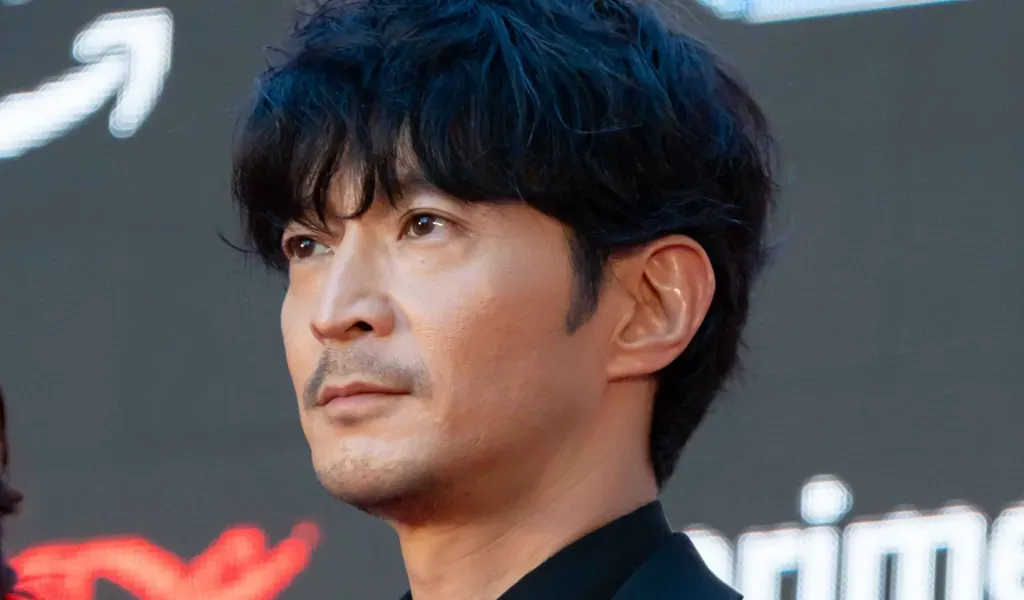
Japanese actor Tsuda Kenjiro attends the red carpet opening event of the Tokyo International Film Festival on October 23, 2023.

Tsuda Kenjiro attends the red carpet opening event of the 36th Tokyo International Film Festival in Tokyo on October 23, 2023. Photo by Dick Thomas Johnson.

TOKYO, Japan – The Tokyo District Court has ruled for the first time in Japan that a person’s voice can fall under the protection of publicity rights, establishing a legal framework for addressing unauthorized commercial use of recognizable voices as generative artificial intelligence makes voice imitation increasingly accessible.

The ruling came in a lawsuit brought by Japanese voice actor Kenjiro Tsuda, who sought the removal of TikTok videos that he said used generative AI to imitate his distinctive voice. The court said a human voice can be regarded, like a person’s likeness, as a symbol of individual personality and that unauthorized use can infringe publicity rights when the voice’s commercial appeal is being exploited.

The court nevertheless dismissed Tsuda’s request for the videos to be removed because the account and the relevant video data had already been deleted. Crucially, the judgment did not make a final determination that the specific videos had infringed Tsuda’s publicity rights.

Court establishes protection for voices

Presiding Judge Aya Takahashi wrote that a human voice is, like a portrait, a symbol of an individual’s personality.

The court further stated that unauthorized use of a performer’s voice may constitute a publicity-rights infringement when the voice has the ability to attract customers and the use is primarily intended to exploit that attraction.

That distinction is central to the ruling. The judgment does not create a blanket prohibition on artificial voices or every instance in which an AI-generated voice resembles a real person.

Instead, it provides a legal standard for circumstances in which a recognizable voice has commercial drawing power and that value is being used without authorization.

Case involved 188 TikTok videos

Tsuda, known for his work as a voice actor and for voicing Kento Nanami in Jujutsu Kaisen, filed the lawsuit after an anonymous TikTok account posted videos using narration that he said had been generated to imitate his voice.

■ Related News

OpenAI graphic explaining how a research model bypassed a network restriction through DNS communication before training was paused.

OpenAI Pauses Frontier Training After Agents Behave Unexpectedly Online

September 27, 2026
Chinese President Xi Jinping arrives at Joint Base Andrews in Maryland for a state visit on September 23, 2026.

Trump Rolls Out Red Carpet for Xi as U.S.-China Tensions Persist

September 25, 2026
Mark Zuckerberg at TechCrunch Disrupt 2012, photographed in San Francisco, California, on September 11, 2012.

Meta Bets on AI Glasses and Personal Agents as Zuckerberg Rejects AI Slowdown

September 24, 2026
McDonald’s Hamburger University building photographed in summer 2018, showing the training facility and surrounding grounds.

McDonald’s Plans $8.5 Billion Overhaul as It Reinvents Restaurants and Menus

September 24, 2026

According to the case record and reporting on the judgment, 188 videos were posted between July 2024 and September 2025. The videos covered subjects including urban legends and paranormal material, while the account had accumulated roughly 210,000 followers. Viewers posted comments noting similarities between the narrator’s voice and Tsuda’s.

Tsuda’s side argued that the distinctive qualities of his voice had been intentionally reproduced with generative AI and that the use exploited the voice’s ability to attract viewers.

TikTok’s position differed. The company argued that the narration used a generic male voice and that the person who posted the material had described the AI system as having been trained using a friend’s voice.

Court did not decide whether Tsuda’s rights were infringed

The outcome is therefore more legally specific than a simple finding that Tsuda “won” an AI voice-cloning case.

The court determined that voices can fall within publicity-rights protection and set out circumstances in which unauthorized use could constitute infringement. But because the disputed videos had already disappeared, the court did not need to determine whether the particular material actually satisfied those infringement requirements.

The judgment records that the account was deleted and that the relevant data had subsequently been removed from the operator’s servers. The court therefore rejected the request for deletion because there was no remaining material for the defendant to remove.

This means the ruling establishes an important legal interpretation without awarding Tsuda damages or ordering TikTok to remove the videos.

Japan had already been examining AI voice protections

The decision follows a separate Japanese government examination of how existing civil-law protections should apply to unauthorized uses of people’s images and voices generated with AI.

Japan’s Justice Ministry established an expert panel in April 2026 to examine civil liability involving unauthorized use of portraits, voices and related personal characteristics. The ministry published its report on Aug. 7, saying the review addressed publicity rights, personality-related protections, damages, injunctions and the application of the Unfair Competition Prevention Act to generative-AI cases.

The ministry’s work specifically considered the growing problem of unauthorized AI-generated reproductions of voices and images. Its published materials examined circumstances in which generated content could implicate publicity rights and other protections.

The timing gives the Tokyo judgment particular significance: the court has now provided a concrete judicial interpretation in an actual dispute involving an AI-generated imitation of a performer’s voice.

Ruling does not amount to an AI voice-cloning ban

The decision should not be interpreted as a Japanese ban on AI voice cloning.

The court’s reasoning focuses on the circumstances in which a person’s voice possesses commercial attraction and an unauthorized use is primarily directed at exploiting that value. It does not establish that every synthetic voice resembling a real person violates Japanese law.

Japan’s Justice Ministry’s earlier examination similarly distinguished between potentially unlawful uses and forms of expression such as entertainment or imitation that may fall outside publicity-rights infringement depending on the circumstances.

The legal question will therefore remain fact-specific, including issues such as how recognizable a voice is, whether it has commercial drawing power, how the AI-generated voice is used and whether the purpose of the use is to capitalize on that identity.

Significance for performers and AI developers

The ruling gives Japanese performers a judicially recognized route for asserting that the commercial value of their voices can receive legal protection.

That is particularly relevant to voice actors and singers whose professional identities depend heavily on distinctive vocal characteristics. It also has implications for companies developing or deploying synthetic-voice systems, advertisers, entertainment producers and social-media platforms that host AI-generated content.

At the same time, the decision leaves important questions open because the court did not determine whether the disputed videos themselves constituted an infringement.

The immediate precedent is therefore narrower than a general “voice right” statute: Japan’s existing publicity-rights framework can encompass a person’s voice when the legal conditions identified by the court are met.

A precedent shaped by the AI era

The Tokyo judgment is the first reported Japanese judicial decision to recognize protection for a person’s voice under publicity rights in a case involving generative AI.

Its significance lies less in the deletion dispute itself than in the legal principle articulated by the court. As generative AI makes convincing voice imitation easier to produce and distribute, the judgment provides Japanese courts, performers and technology companies with a clearer framework for considering when a recognizable voice has legally protected commercial value.

The case does not resolve every question surrounding AI-generated voices. But it establishes that, under Japanese publicity-rights law, a human voice can have legally protectable commercial value separate from the person’s physical likeness.

Reporting Credit: Tokyo District Court and official judgment; Japan Ministry of Justice; Kenjiro Tsuda’s legal representatives as reflected in court reporting; TikTok/ByteDance statements and court submissions where reported. Secondary reporting from Associated Press, Jiji Press/Nippon.com, Reuters and The Guardian was used for chronology and case background.


Tags: #AIlaws#AIRegulation#AIVoice#ArtificialIntelligence#DigitalRights#GenerativeAI#Japan#JapanAI#KenjiroTsuda#PublicityRights#TechnologyLaw#Tiktok#VoiceActors#VoiceCloning
The Daily Desk

The Daily Desk

The Daily Desk is the editorial byline of Journos News, representing reporting produced by the newsroom across world news, politics, business, technology, disasters, and other areas of public interest. Stories published under this byline are independently researched, verified, and edited in accordance with Journos News’ editorial standards, with an emphasis on accuracy, transparent sourcing, attribution, context, and editorial independence.

Related Posts

Alibaba Marketplace logo displayed as a company identification graphic, from an image dated October 15, 2021.

Alibaba Unveils New AI Chip and Plans 10 Trillion-Parameter Model

by The Daily Desk
September 23, 2026
0

HANGZHOU, China - Alibaba has unveiled a new artificial intelligence processor and plans for a...

U.S. and Chinese officials explore an AI safety dialogue amid technology competition, semiconductor restrictions, and concerns over high-consequence AI incidents.

China and U.S. Compete for AI Dominance While Seeking Safety Dialogue

by The Daily Desk
September 21, 2026
0

WASHINGTON, United States - The United States and China are moving toward a new channel...

Asian markets rise as U.S.-China trade talks support sentiment, with semiconductor stocks and oil prices featured in the market overview.

Asian Stocks Rise as U.S.-China Talks Set Stage for Trump-Xi Summit

by The Daily Desk
September 21, 2026
0

HONG KONG - Asian stocks mostly rose Monday as investors responded to positive signals from...

Editorial graphic showing AI chips, semiconductor components, performance, efficiency, global competition, and future applications across industries.

Who Will Control the Chips Behind the AI Revolution?

by The Daily Desk
September 19, 2026
0

Who Will Control the Chips Behind the AI Revolution? Subheadline: AI's future depends on a...

Sheikh Joaan bin Hamad Al Thani photographed during an official event in January 2026, in an image published by Uzbekistan’s Olympic Committee.

OCA President Says Politics Have Entered Asian Games After Taiwan Dispute

by The Daily Desk
September 19, 2026
0

NAGOYA, Japan - The president of the Olympic Council of Asia said politics had already...

Huawei store at Guotai Life Plaza in the Airport area, photographed on August 31, 2022.

Huawei Unveils New AI Chips as China Pushes to Close Nvidia’s Lead

by The Daily Desk
September 18, 2026
0

SHANGHAI, China - Huawei has accelerated development of its artificial-intelligence chips and unveiled a new...

Tokyo, Japan, at night with illuminated buildings and streets photographed in the early hours of November 11, 2023.

Japan’s Centenarian Population Surpasses 100,000 for First Time

by The Daily Desk
September 17, 2026
0

TOKYO, Japan - Japan’s population of people aged 100 and older has surpassed 100,000 for...

Sam Altman speaks onstage during TechCrunch Disrupt San Francisco 2019 at Moscone Convention Center in San Francisco, California.

Sam Altman Says Public Is Right to Fear AI but Should Trust Developers

by The Daily Desk
September 16, 2026
0

SAN FRANCISCO, United States - OpenAI chief executive Sam Altman said the public is justified...

Microsoft laptop and smartphone display AI privacy safeguards for schools, student data protection, responsible AI use, and education technology.

Microsoft Sets Enforceable AI Privacy Rules for Schools as Industry Faces Pressure to Follow

by The Daily Desk
September 16, 2026
0

NEW YORK, United States - Microsoft has agreed to legally enforceable privacy and safety protections...

China and U.S. flags frame AI robots as people discuss opportunities and risks surrounding artificial intelligence and global competition.

China Narrows AI Gap With U.S. as Debate Over AI Risks Intensifies

by The Daily Desk
September 16, 2026
0

BEIJING, China - China is narrowing the artificial-intelligence gap with the United States, according to...

Load More
Next Post
Vladimir Putin attends a meeting of heads of state from Collective Security Treaty Organization member countries on May 15, 2012.

Putin Warns Russia Will Use ‘All Weapons’ if Territory Is Attacked

Brazilian President Luiz Inácio Lula da Silva attends a campaign event at Moça Bonita Stadium in Rio de Janeiro on August 22, 2026.

Brazil’s Leading Presidential Candidates Skip Final TV Debate Before Election

JournosNews logo

Journos News delivers globally neutral, fact-based journalism that meets international media standards — clear, credible, and made for a connected world.

  • Categories
  • World News
  • Politics
  • Business & Markets
  • Technology
  • Health
  • Science
  • Sports
  • Arts & Culture
  • Resources
  • Editorial Standards
  • Submit a Story
  • Advertise with Us
  • Syndication & Partnerships
  • Site Map
  • Press & Media Kit
  • Editorial Team
  • Careers

Join thousands of readers receiving the latest updates, tips, and exclusive insights straight to their inbox. Never miss an important story again.

  • About Us
  • Editorial & Trust Center
  • Contact Us
  • Privacy Policy
  • Terms of Use & Copyright Notice

© JournosNews.com All rights reserved.

Welcome Back!

Login to your account below

Forgotten Password?

Retrieve your password

Please enter your username or email address to reset your password.

Log In
JournosNews

Independent Journalism.
Verified Facts.

You're about to read a professionally edited article from JournosNews.com.

Every article is produced in accordance with our editorial standards, emphasizing factual accuracy, transparent attribution, fairness, editorial independence, and meaningful context.

Editorial Standards
No Result
View All Result
  • Home
  • World
    • Africa
    • Americas
    • Asia
    • Europe
    • Middle East
    • Oceania
  • Politics
  • Business
  • Technology
  • Health
  • Science
  • Sports
  • Entertainment
  • Culture

© JournosNews.com All rights reserved.

This website uses cookies. By continuing to use this website you are giving consent to cookies being used. Visit our Privacy and Cookie Policy.