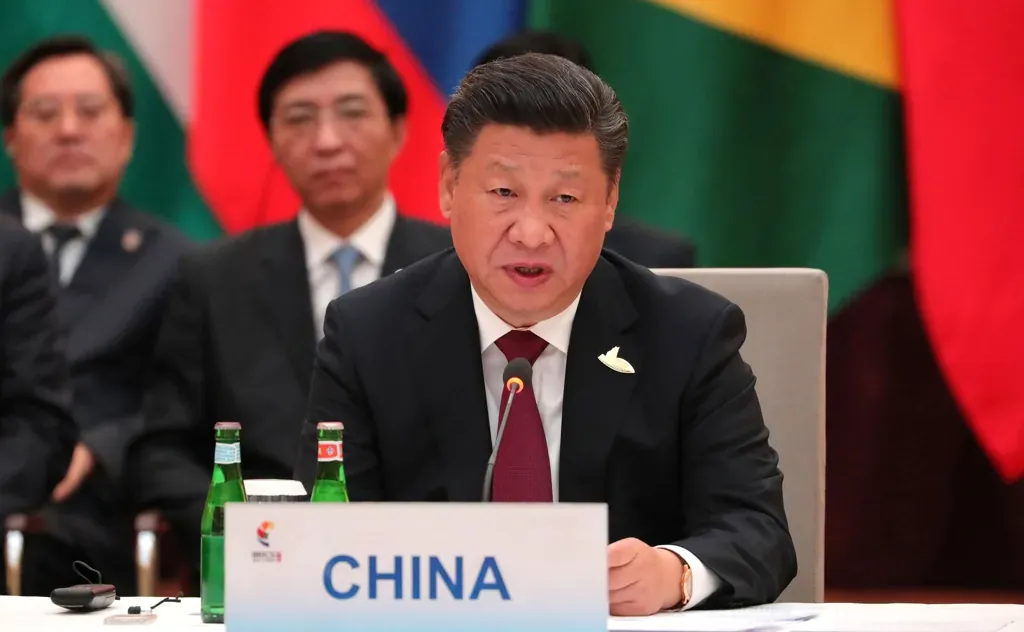
BEIJING, China – China’s ruling Communist Party has adopted a sweeping resolution to tighten internal discipline, strengthen oversight of officials and reinforce central leadership, giving President Xi Jinping a new framework for enforcing party control ahead of the 2027 national congress.
The 20th Central Committee approved the resolution during its fifth plenary session in Beijing from October 26 to 29. The document, titled Resolution of the Central Committee of the Communist Party of China on Certain Major Issues concerning Persevering with Full and Rigorous Party Self-Governance, was adopted on October 29.
Xi, the party’s general secretary, delivered an address and explained the draft resolution. The meeting called for stronger political loyalty, stricter enforcement of party rules, closer supervision of officials and a more coordinated campaign against corruption.

The decision comes as the party faces a major leadership transition next year. The communiqué confirmed that the 21st National Congress will take place in Beijing during the second half of 2027.
The resolution does not announce a new leadership structure or confirm who will hold senior positions after the congress. It does, however, reinforce the political and administrative system Xi has built around centralized party leadership.
The measures also arrive amid extensive removals of senior officials, including military commanders and former members of the Politburo. The party has presented these actions as part of its effort to address serious disciplinary and legal violations.
The scale of the removals raises questions about leadership continuity, institutional accountability and the ability of officials to make decisions without fear of political consequences.
Why the Fifth Plenum Focused on Party Discipline
The fifth plenum took an unusual direction for a meeting held at this stage of the party’s five-year leadership cycle.
■ Related News



The fourth plenum, held in October 2025, had already adopted recommendations for China’s 15th Five-Year Plan covering 2026 to 2030. That document established the country’s broad economic and social development priorities.
The latest meeting therefore focused on another issue: how the Communist Party governs itself and ensures that its officials follow central decisions.
The distinction matters because the party’s political leadership reaches into almost every major part of China’s government, military and public administration.
The Communist Party does not operate only as a political organization separate from the state. It exercises leadership across state institutions, provincial governments, public bodies and the armed forces.
Its ability to implement national policy therefore depends heavily on the conduct and performance of party officials.
The communiqué described corruption, weak discipline and declining political commitment as continuing challenges. It argued that the party must strengthen its governing capacity and protect its long-term position.
The document also identified difficulties in maintaining political loyalty, improving officials’ conduct and ensuring that central decisions are carried out effectively.
The focus reflects a broader concern within the leadership. Announcing national policies is not enough if local governments, ministries or military institutions fail to implement them.
The party’s campaign against corruption has consequently expanded beyond financial misconduct. It also addresses political loyalty, organizational discipline, administrative performance and the conduct of officials.
What the New Resolution Requires
The resolution sets out a broad programme for strengthening party self-governance. It does not rely on one new enforcement agency or a single disciplinary measure.
Instead, it combines political education, personnel management, organizational supervision and stricter enforcement of existing rules.
The communiqué identifies several priorities.
First, the party wants officials to strengthen their political commitment and understanding of their responsibilities. It calls for education on loyalty, party identity and the principles governing party members.
Second, it seeks stricter implementation of democratic centralism, the party’s system for combining internal consultation with centralized decision-making.
The document calls for clearer decision-making procedures within leadership teams and stronger oversight of officials who lead those bodies.
Third, the resolution seeks to improve the party’s organizational structure. It calls for stronger party committees at different levels and better coordination between central, provincial and local organizations.
Fourth, it demands continuing improvements in official conduct and stricter discipline enforcement. It also calls for closer integration between disciplinary action and anti-corruption measures.
Fifth, the party wants stronger rules and oversight systems to limit opportunities for corruption and abuse of power.
The communiqué also calls for improved coordination between internal party supervision and other forms of state oversight. It says party committees should exercise overall responsibility and that inspection teams should remain an important instrument of supervision.
These measures reinforce existing structures rather than establish a fully separate system. Their significance lies in the effort to make supervision more consistent across the party and state.
The resolution also makes party self-governance a responsibility shared by all party members. Officials who fail to carry out their supervisory responsibilities and cause serious problems may themselves face accountability.
Discipline Extends Beyond Financial Corruption
Xi’s anti-corruption campaign began after he took power in 2012. It has since become one of the defining features of his leadership.
The campaign targets bribery, abuse of office, misuse of public funds and other forms of official misconduct. But the party’s disciplinary system also addresses political and organizational violations.
The Central Commission for Discipline Inspection, or CCDI, is the party’s highest internal disciplinary body. It investigates alleged violations of party rules and oversees disciplinary enforcement.
The National Supervisory Commission performs a related but legally distinct state function. It investigates public officials and other personnel who perform public duties, including people who are not party members.
The two institutions share offices, personnel and working arrangements. They operate through integrated mechanisms but retain separate institutional identities and legal responsibilities.
That distinction matters when assessing official disciplinary statistics.
At an October 30 briefing, party officials said disciplinary and supervisory agencies had opened 8.1 million cases and disciplined 7.9 million people since the 18th National Party Congress in 2012.
The figures included 963 senior officials under the direct management of the party’s central leadership.
These are cumulative figures released by the party’s disciplinary authorities. They are not an independent count of criminal convictions or proof that every person disciplined committed corruption.
The distinction is important because party discipline covers a wider range of conduct than criminal law. Officials may face internal sanctions for political, organizational, administrative or personal conduct violations.
The party also reported disciplinary activity across different levels of government and administration. Its first-quarter 2026 figures recorded 245,000 cases filed and 183,000 people disciplined by national discipline inspection and supervisory agencies.
Those figures describe different stages of the enforcement process. A case opened is not necessarily a completed investigation, and a person disciplined is not necessarily a person convicted of a crime.
The party says the campaign aims to prevent corruption by making officials unwilling and unable to misuse their authority. It also wants to strengthen the institutional checks surrounding the exercise of power.
Thirty-Three Officials Expelled as Senior Leadership Faces Purges
The fifth plenum confirmed the expulsion of 33 officials from the Communist Party. The list includes former Politburo member Ma Xingrui, former senior military leader Zhang Youxia, former military official Liu Zhenli, former senior diplomat Liu Jianchao and former industry minister Jin Zhuanglong.
The communiqué also named officials from provincial governments, financial regulators, state-owned enterprises and other institutions.
The party described the cases as involving grave violations of discipline and the law. It did not publish detailed evidence or a complete explanation of the allegations against each individual in the communiqué.
The Central Committee reviewed reports submitted by the CCDI and the Central Military Commission. It confirmed earlier decisions to expel the named officials.
The party also removed Li Yunze, the former head of China’s financial regulator, from his position within the party. The communiqué distinguished this action from the expulsions.
The removals demonstrate the reach of the disciplinary campaign across government, finance, diplomacy and military institutions.
But the official record does not establish that all 33 cases involved the same conduct or political circumstances. Each person’s case must be assessed separately, using the published charges and any subsequent legal proceedings.
The number of senior officials removed also raises a question about institutional continuity. Replacing experienced officials can create gaps in leadership and disrupt established chains of command.
The party has argued that removing officials responsible for serious violations protects the wider organization. Independent observers have also raised questions about the effect of repeated purges on the quality and stability of senior administration.
Military Purges Expose Problems Within the PLA Leadership
The People’s Liberation Army has been among the most heavily affected institutions.
The fifth plenum confirmed the expulsion of Zhang Youxia and Liu Zhenli, two former senior military leaders whose cases had already been announced by the authorities.
Zhang was a former vice chairman of the Central Military Commission and a member of the Politburo. Liu was a former member of the Central Military Commission and chief of staff of its Joint Staff Department.
China’s Ministry of National Defense announced on January 24 that both men were under investigation for suspected serious violations of discipline and law. On September 21, the ministry announced their expulsion from the party and military service.
The plenum later confirmed the disciplinary decisions.
The communiqué also listed other military officials whose cases were reviewed by the Central Military Commission. They included Wang Renhua, Liu Qingsong, Huang Ming, Li Qiaoming and several other senior personnel.
The party’s published decisions identify the cases as involving serious violations of discipline and law. They do not provide a full evidentiary account of each investigation.
The scale of the military removals is especially significant because the Central Military Commission directs China’s armed forces.
Five of the seven members appointed to the commission in the 2022 leadership reshuffle have since been purged, according to a review of the personnel changes.
Xi and Zhang Shengmin remain. Zhang Shengmin, a senior military disciplinary official and vice chairman of the commission, was elected to the Politburo during the fifth plenum.
His promotion places a senior disciplinary figure in the party’s top political leadership body. It also reinforces the importance of political oversight within the military.
The removals do not establish a single explanation for the problems within the armed forces. Corruption, procurement misconduct, political loyalty and command performance may involve different cases and institutional weaknesses.
The available official records do not provide enough evidence to conclude that every military removal reflects a political struggle or a failure of operational readiness.
However, repeated investigations at the highest levels raise questions about procurement controls, personnel selection and the reliability of military command structures.
Xi Seeks Stronger Policy Implementation Across the State
The resolution’s focus extends beyond corruption. It also addresses officials who fail to implement decisions made by the party’s central leadership.
Chinese authorities have repeatedly criticized bureaucratic inaction, superficial policy implementation and officials who avoid responsibility.
The party’s 2026 campaign to promote a correct view of performance reflects this concern. It targets behavior such as pursuing projects for political recognition, reversing policies without proper justification and prioritizing appearances over practical results.
The latest resolution connects these concerns with party discipline and personnel accountability.
Its emphasis on organizational coordination suggests that Beijing wants central decisions to reach local administrations more consistently.
That is a major challenge in a country as large and administratively complex as China. Local governments must implement national policies while managing different economic conditions, fiscal pressures and regional needs.
Stronger supervision may help the central leadership identify misconduct and improve compliance. It may also make it harder for local officials to ignore national priorities.
But the same pressure can create risks.
Officials who fear punishment may avoid decisions that involve uncertainty. They may delay projects, seek approval for routine matters or prioritize visible compliance over solving practical problems.
That risk is especially relevant when the government expects local administrations to support economic growth, attract investment and respond to changing conditions.
The party has acknowledged that some officials lack motivation, fear making mistakes or do not have the skills to carry out their responsibilities effectively.
The challenge is to distinguish deliberate misconduct from reasonable policy mistakes. A system that fails to make that distinction may discourage initiative and weaken the quality of government decisions.
The 2027 Congress Will Test Leadership Renewal
The fifth plenum confirmed that the Communist Party’s 21st National Congress will take place in Beijing during the second half of 2027.
The congress will determine the party’s senior leadership and set its political direction for the next five-year period.
Xi has served as the party’s general secretary since 2012. He secured a third term in 2022, breaking with the previous pattern of leadership succession.
Some observers expect him to seek another five-year term in 2027. But the fifth plenum did not announce his future leadership arrangements, confirm a successor or formally establish a fourth term.
The leadership transition will also involve decisions about the Politburo, its Standing Committee, the Central Committee and other major party bodies.
The current personnel changes may affect the pool of officials available for promotion. The party’s call to train and select capable younger cadres suggests that leadership development will remain a priority.
However, the scale of the removals does not by itself reveal who will replace the officials or how the next leadership team will be structured.
The resolution also reinforces the party’s expectation that officials remain aligned with Xi’s political leadership and the Central Committee’s centralized authority.
That makes political loyalty an important factor in the wider personnel process. The party will also need officials with the administrative and technical skills required to manage China’s economy, public institutions and armed forces.
Tighter Discipline Could Come at an Institutional Cost
The party presents strict self-governance as essential to preventing corruption and protecting its ability to rule.
There are practical reasons for that argument. Corruption can distort public spending, weaken procurement systems and undermine confidence in government institutions.
Military corruption can also affect equipment procurement, personnel decisions and the reliability of command systems.
But stronger internal control does not automatically produce better administration.
Political discipline can help ensure that officials follow national policy. Excessive pressure can also make them reluctant to report problems, challenge unrealistic targets or take responsibility for decisions that carry personal risk.
Researchers studying China’s political system have warned that a stronger emphasis on loyalty may create tensions with merit-based promotion and independent problem-solving.
The risk is not limited to local government. Military officers, financial regulators and senior administrators also need room to make professional judgments within their responsibilities.
The party’s stated goal is to encourage initiative while enforcing strict discipline. Whether the system can achieve both will depend on how authorities distinguish corruption and disloyalty from legitimate disagreement, professional judgment and honest mistakes.
The resolution provides a framework for stronger supervision. It does not demonstrate that the new measures will eliminate corruption or improve policy implementation.
A More Disciplined Party Faces Its Next Political Test
The fifth plenum has made internal governance a central priority ahead of the 2027 congress.
Its resolution reinforces political loyalty, organizational supervision, stricter discipline and coordination between party and state oversight. The expulsion of 33 officials and the removal of senior military leaders show how far the current enforcement campaign has reached.
Xi’s political position remains central to the party’s system. The resolution strengthens the institutional emphasis on centralized leadership, but it does not confirm the next leadership lineup.
The party now faces a difficult balance. It wants officials who follow central decisions, reject corruption and remain accountable. It also needs administrators and military leaders capable of making sound decisions and responding to complex problems.
The outcome will matter beyond the party’s internal structure. It could influence economic administration, military leadership, state-owned enterprises and China’s international conduct.
The next congress will provide a clearer picture of how the party intends to manage that balance. Until then, the central test will be whether tighter discipline produces more effective institutions or a more cautious system in which officials place political safety above initiative.
Reporting Credit: Journos News reviewed the October 29, 2026, communiqué of the fifth plenary session of the 20th Central Committee, published through Xinhua and the Chinese Ministry of Foreign Affairs; the Central Commission for Discipline Inspection’s published disciplinary statistics; official statements from China’s Ministry of National Defense concerning Zhang Youxia and Liu Zhenli; the National Supervisory Commission’s statutory responsibilities; and the party’s published decisions concerning the 33 expulsions. The report also examined independent analysis of the party’s leadership transition, military personnel changes and the administrative effects of tighter political discipline. Official descriptions of investigations and expulsions are attributed to the institutions issuing them. The available records do not establish criminal convictions for every expelled official or confirm Xi Jinping’s leadership arrangements after the 2027 congress.