Journos News - Breaking News, World News, Top Stories, Todays Headlines and Flash Reports
Thursday, October 1, 2026
  • Login
  • Home
  • World
    • Africa
    • Americas
    • Asia
    • Europe
    • Middle East
    • Oceania
  • Politics
  • Business
  • Technology
  • Health
  • Science
  • Sports
  • Entertainment
  • Culture
No Result
View All Result
  • Home
  • World
    • Africa
    • Americas
    • Asia
    • Europe
    • Middle East
    • Oceania
  • Politics
  • Business
  • Technology
  • Health
  • Science
  • Sports
  • Entertainment
  • Culture
No Result
View All Result
Journos News - Breaking News, World News, Top Stories, Todays Headlines and Flash Reports
No Result
View All Result
Home Government and Politics Elections & Political Process

Senate Delays Bill to Permanently Restrict Chinese Vehicles Until After Elections

Bipartisan sponsors failed to resolve objections over the bill’s ownership threshold before the Senate left Washington for the November elections.

The Daily Desk by The Daily Desk
October 1, 2026
in Elections & Political Process, Government and Politics
0
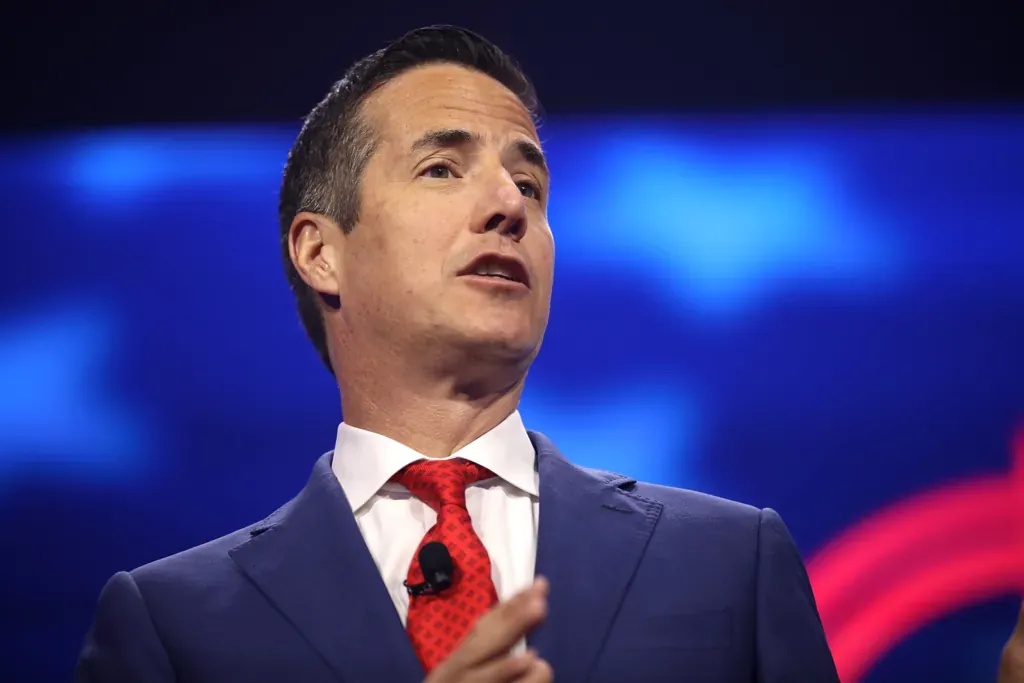
Bernie Moreno speaks with attendees at the 2023 Turning Point Action Conference in West Palm Beach, Florida, on July 16, 2023.

Bernie Moreno speaks with attendees at the 2023 Turning Point Action Conference in West Palm Beach, Florida, on July 16, 2023.

WASHINGTON, United States – The U.S. Senate has postponed action on bipartisan legislation that would permanently restrict Chinese-linked connected vehicles from the American market, with supporters now planning to pursue the measure after the November midterm elections.

The Connected Vehicle Security Act of 2026, sponsored by Republican Sen. Bernie Moreno of Ohio and Democratic Sen. Elissa Slotkin of Michigan, had been headed toward a fast-track Senate vote before lawmakers left Washington.

That effort stalled after Republican Sen. Rand Paul of Kentucky objected to provisions that could affect companies with significant Chinese ownership, including German automaker Mercedes-Benz. The Senate will now consider the legislation after returning from the election recess in November.

Bill would turn existing restrictions into federal law

The legislation would prohibit the import, manufacture, sale, resale or introduction into interstate commerce of certain internet-connected vehicles, software and hardware associated with China and other designated foreign adversaries.

The measure would cover China, Russia, Iran and North Korea and is designed to make restrictions on connected-vehicle technology more permanent than the regulatory measures imposed by the Biden administration.

The Senate Commerce, Science and Transportation Committee approved the bill unanimously in July, sending it to the full Senate for consideration.

The legislation focuses not only on where a vehicle is manufactured but also on ownership, control and technology relationships that could connect a vehicle or its components to a designated foreign adversary.

Ownership threshold becomes central dispute

The principal unresolved issue concerns the bill’s ownership threshold.
■ Related News

Graphic showing new U.S. import restrictions on selected Canadian goods, their estimated value, trade dispute timeline and potential supply-chain effects.

U.S. Bans Nearly $1 Billion of Canadian Imports as Trade War Escalates

September 29, 2026
U.S. Ambassador to China David Perdue takes a selfie before the Great Seal at the U.S. Embassy in Beijing on May 15, 2025.

Trump Asked Xi Whether China Wanted to Buy U.S. Arms, Ambassador Says

September 28, 2026
Iranian Foreign Minister Abbas Araghchi photographed during an official meeting in Moscow on April 27, 2026.

Trump Rejects Iran’s Seven-Day Plan to Reopen Strait of Hormuz

September 28, 2026
U.S. and Chinese leaders and first ladies greet one another during a state arrival ceremony at the White House on September 24, 2026.

China and U.S. Establish AI Safety Channel as Trade, Military Talks Continue

September 27, 2026

The legislation would restrict vehicles associated with companies in which entities from China or other covered foreign adversaries hold more than a specified ownership interest. The version under Senate consideration has included a 15% threshold.

That provision raised concerns because Mercedes-Benz has significant Chinese ownership, although the Chinese stake is described as passive rather than involving operational control.

Paul argued that the legislation could unintentionally prohibit Mercedes-Benz vehicles from the U.S. market.

Moreno has said he wants the final legislation structured so that Mercedes-Benz would not be barred. Reuters reported that Moreno said the final version would contain an exemption for the German automaker.

The precise language of any exemption remains subject to negotiations.

Sponsors seek another vote in November

Moreno and Slotkin had sought unanimous Senate consent to move the bill without a conventional roll-call vote.

That procedure requires all senators to agree, allowing a single objection to prevent the measure from advancing through the proposed fast-track route.

After negotiations failed to resolve Paul’s concerns before the recess, supporters shifted their timetable to November. Reuters reported that congressional aides said the senators would seek approval after the Senate returns from its election recess.

Slotkin and Moreno had previously said they believed the bill had broad bipartisan support.

In a Sept. 24 Senate-floor statement, the two sponsors said they intended to continue working toward unanimous-consent approval.

Existing Biden restrictions already limit Chinese vehicles

The proposed law would build on restrictions established by the Biden administration.

A Commerce Department rule issued in 2025 restricted the sale or import of connected vehicles and related hardware and software linked to China and Russia, citing risks involving sensitive data and national security.

Separate U.S. tariffs also make Chinese electric vehicles substantially more expensive to import into the American market.

The Senate legislation would give the restrictions a statutory foundation, making it more difficult for a future administration to reverse them through regulatory action alone.

Bill addresses technology as well as finished vehicles

The legislation is broader than a straightforward prohibition on Chinese-made automobiles.

It would also restrict certain vehicle software and hardware connected to covered foreign adversaries. That could include technologies used in connected vehicles, autonomous-driving systems and other electronically integrated vehicle functions.

Supporters have cited the amount of information modern vehicles can collect as a national-security concern.

Slotkin has argued that connected vehicles could collect information about drivers, locations and surrounding infrastructure. Those concerns are part of the sponsors’ stated rationale for the legislation rather than a finding that Chinese vehicles currently operating in the United States have been used for espionage.

Automakers and unions have supported the measure

The bill has received support from major U.S. automotive interests and labor organizations.

The United Auto Workers, Teamsters, International Association of Machinists and Aerospace Workers, United Steelworkers and the Motor & Equipment Manufacturers Association have backed the legislation, according to Slotkin’s office.

The Alliance for Automotive Innovation has also urged Congress to establish permanent restrictions on Chinese connected vehicles, hardware and software.

The industry’s position is that a statutory restriction would provide greater certainty for manufacturers and suppliers as Chinese automakers expand internationally.

Trump position adds uncertainty

The congressional effort comes as President Donald Trump has expressed openness to some Chinese automobile investment in the United States.

Trump said in January that Chinese automakers could potentially build plants in the United States and employ American workers. He reiterated a similar position before his September meeting with Chinese President Xi Jinping.

That approach differs from the legislation’s broader effort to restrict Chinese-linked vehicle technology and manufacturers.

The White House had not taken a formal position on the legislation in the latest reporting.

The administration’s position could therefore become relevant if Congress sends a final version of the bill to the president.

China has opposed U.S. vehicle restrictions

Beijing has criticized U.S. restrictions on Chinese vehicles and technology as discriminatory.

Chinese automakers have expanded rapidly in overseas markets, particularly in electric and other new-energy vehicles. China’s new-energy vehicle exports exceeded 3.4 million units during the first eight months of 2026, according to figures cited by the Associated Press.

The expansion has increased competition for established manufacturers in Europe and other markets, while Chinese automakers remain largely excluded from the U.S. passenger-vehicle market by existing trade and regulatory barriers.

November becomes the next legislative test

The Senate delay does not terminate the bill.

Instead, it leaves the legislation unresolved until lawmakers return after the November elections. Moreno and Slotkin will need to resolve the ownership issue and obtain the procedural agreement required to move the bill through the Senate.

The House has a companion measure with more than 100 cosponsors, according to Reuters, adding another potential source of congressional support.

The final legislation could therefore differ from the version that stalled in September, particularly on how it treats companies with substantial but passive Chinese ownership.

Until the Senate acts, the existing regulatory restrictions remain the principal U.S. framework governing Chinese connected vehicles.

Reporting Credit: U.S. Senate Commerce, Science and Transportation Committee; U.S. Senators Elissa Slotkin and Bernie Moreno; U.S. Department of Commerce; U.S. Department of Transportation.


Tags: #AutomotiveIndustry#BernieMoreno#China#ChineseVehicles#ConnectedVehicles#ElectricVehicles#ElissaSlotkin#MercedesBenz#NationalSecurity#RandPaul#UnitedStates#USSenate#VehicleTechnology
The Daily Desk

The Daily Desk

The Daily Desk is the editorial byline of Journos News, representing reporting produced by the newsroom across world news, politics, business, technology, disasters, and other areas of public interest. Stories published under this byline are independently researched, verified, and edited in accordance with Journos News’ editorial standards, with an emphasis on accuracy, transparent sourcing, attribution, context, and editorial independence.

Related Posts

Guided missile frigate USS RENTZ escorts transport oiler USS SEALIFT CHINA SEA through the Strait of Hormuz on October 1, 1987.

Iran Offers Seven-Day Plan to Reopen Strait of Hormuz

by The Daily Desk
September 26, 2026
0

UNITED NATIONS, United States - Iran has offered the United States a seven-day plan that...

Chinese President Xi Jinping arrives at Joint Base Andrews in Maryland for a state visit on September 23, 2026.

Trump Rolls Out Red Carpet for Xi as U.S.-China Tensions Persist

by The Daily Desk
September 25, 2026
0

WASHINGTON, United States - President Donald Trump gave Chinese President Xi Jinping an unusually elaborate...

U.S. President Donald Trump meets Argentina’s President Javier Milei at the Gaylord National Resort in Maryland on February 22, 2025.

U.S. Offers Up to $7 Billion to Develop Argentina’s Energy and Minerals

by The Daily Desk
September 24, 2026
0

NEW YORK, United States - The United States and Argentina have launched a new infrastructure...

F-35 Full Mission Simulator used for pilot training at Marine Corps Air Station Yuma, Arizona, photographed on June 30, 2015.

Pentagon Investigates How F-35 Parts Ended Up in Hong Kong

by The Daily Desk
September 24, 2026
0

WASHINGTON, United States - The Pentagon is investigating how components from the F-35 fighter program...

Chien Hsiang loitering munition displayed by Taiwan’s NCSIST at the 2019 Taipei Aerospace and Defense Technology Exhibition.

Taiwan Watches Trump-Xi Summit Closely as U.S. Arms Sales Hang in Balance

by The Daily Desk
September 24, 2026
0

TAIPEI, Taiwan - Taiwan is closely watching President Donald Trump’s meeting with Chinese President Xi...

U.S. President Donald J. Trump participates in a welcome ceremony with Chinese President Xi Jinping at Beijing’s Great Hall of the People on May 14, 2026.

Xi Arrives in Washington as Trump Opens High-Stakes U.S.-China Summit

by The Daily Desk
September 24, 2026
0

WASHINGTON, United States - Chinese President Xi Jinping arrived in Washington on Wednesday for a...

Brazilian President Luiz Inácio Lula da Silva at the Palácio da Alvorada in Brasília on July 9, 2026.

Lula Warns Against Foreign Interference in Brazil’s Election

by The Daily Desk
September 23, 2026
0

BRASILIA, Brazil - President Luiz Inácio Lula da Silva has warned against foreign interference in...

Leaders from the United States, Denmark, and Greenland attend a security agreement signing ceremony on September 22, 2026.

Trump Signs U.S.-Denmark-Greenland Deal to Expand Arctic Security Presence

by The Daily Desk
September 23, 2026
0

UNITED NATIONS, United States - President Donald Trump, Danish Prime Minister Mette Frederiksen and Greenlandic...

Courtroom hearing shows judges seated at the bench, defendants facing forward, lawyers and police officers present during proceedings.

Sri Lankan Court Gives 15 Men Effectively Life Sentences for Easter Bombings

by The Daily Desk
September 23, 2026
0

COLOMBO, Sri Lanka - A Sri Lankan High Court has sentenced 15 men to prison...

Chinese military official Zhang Youxia meets Russian President Vladimir Putin and Defense Minister Sergei Shoigu in Moscow on December 7, 2017.

China Expels Two Top Generals Over Corruption and Disloyalty Allegations

by The Daily Desk
September 21, 2026
0

BEIJING, China - China has expelled two of its highest-ranking military officials from the Communist...

Load More
JournosNews logo

Journos News delivers globally neutral, fact-based journalism that meets international media standards — clear, credible, and made for a connected world.

  • Categories
  • World News
  • Politics
  • Business & Markets
  • Technology
  • Health
  • Science
  • Sports
  • Arts & Culture
  • Resources
  • Editorial Standards
  • Submit a Story
  • Advertise with Us
  • Syndication & Partnerships
  • Site Map
  • Press & Media Kit
  • Editorial Team
  • Careers

Join thousands of readers receiving the latest updates, tips, and exclusive insights straight to their inbox. Never miss an important story again.

  • About Us
  • Editorial & Trust Center
  • Contact Us
  • Privacy Policy
  • Terms of Use & Copyright Notice

© JournosNews.com All rights reserved.

Welcome Back!

Login to your account below

Forgotten Password?

Retrieve your password

Please enter your username or email address to reset your password.

Log In
JournosNews

Independent Journalism.
Verified Facts.

You're about to read a professionally edited article from JournosNews.com.

Every article is produced in accordance with our editorial standards, emphasizing factual accuracy, transparent attribution, fairness, editorial independence, and meaningful context.

Editorial Standards
No Result
View All Result
  • Home
  • World
    • Africa
    • Americas
    • Asia
    • Europe
    • Middle East
    • Oceania
  • Politics
  • Business
  • Technology
  • Health
  • Science
  • Sports
  • Entertainment
  • Culture

© JournosNews.com All rights reserved.

This website uses cookies. By continuing to use this website you are giving consent to cookies being used. Visit our Privacy and Cookie Policy.