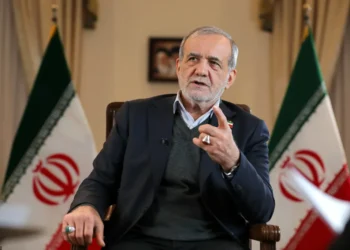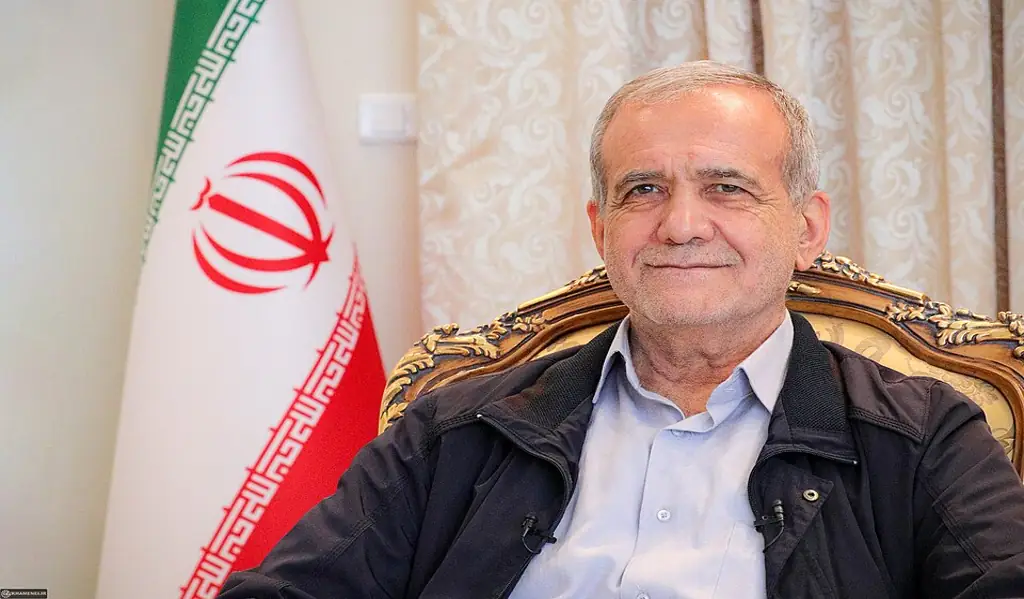
Iranian President Masoud Pezeshkian said Monday that Supreme Leader Ayatollah Mojtaba Khamenei had called for national unity as Iran faces economic pressure from U.S. sanctions and the continuing consequences of its war with the United States.
Pezeshkian said he held a nearly seven-hour meeting with Khamenei to discuss livelihoods, employment, housing, market conditions and the effects of U.S. sanctions. He described preventing internal divisions as the most important message from the meeting.
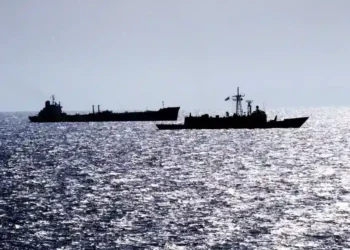
The developments come as a broader regional crisis continues to affect shipping, energy supplies and security across the Middle East, with Iran maintaining demands for changes in U.S. policy before reopening the Strait of Hormuz.

Iran ties Hormuz reopening to U.S. concessions
Iranian Foreign Ministry spokesperson Esmail Baghaei said Monday that Tehran would not reopen the Strait of Hormuz until the United States stops what Iran describes as illegal and destructive actions and addresses its demands.
Iran is seeking an end to the U.S. blockade of its ports, compensation for war damage, the lifting of economic sanctions and the release of frozen Iranian assets, according to the supplied material.
The standoff has international economic implications because the Strait of Hormuz normally carries roughly one-fifth of the world’s traded oil supplies. Its closure has therefore made energy prices a major issue in the United States as the country approaches November’s midterm elections.
Iran is also holding separate discussions with Oman over transit through the waterway, including the possibility of a temporary shipping corridor. Tehran has said, however, that a full reopening depends on negotiations with Washington.
New Iranian leadership faces questions over cohesion
Pezeshkian’s account of his meeting with Khamenei comes amid reported tensions within Iran’s leadership.



It was only the second meeting the president said he had held with the new supreme leader since Khamenei was appointed in March after a U.S.-Israeli strike killed his father. Khamenei was also believed to have been wounded in that attack and has not appeared publicly since then.
Pezeshkian said Khamenei warned that Iran’s adversaries were seeking to create divisions inside the country.
The meeting therefore combined immediate economic concerns with an emphasis on maintaining political cohesion as Tehran confronts external pressure and the consequences of the conflict.
Israel expands security restrictions in West Bank town
In the occupied West Bank, Israel’s military said Monday it had designated the Christian-majority town of Taybeh a closed military zone.
The measure is intended to prevent Israeli settlers and other non-residents from entering the town, which lies between settlements and has experienced arson, vandalism and incursions onto private and village property.
The military said Palestinian residents and journalists would not be covered by the restriction unless soldiers determine that their presence poses a threat. It also said troops would detain suspects and disperse gatherings in an effort to maintain order.
The designation follows months of reported difficulties by Israeli forces and police in responding to violence across the West Bank. The Ramallah-based Palestinian Health Ministry said at least 87 Palestinians have been killed by Israeli settlers or soldiers in 2026.
Residents of Taybeh have complained that Israeli forces and police have been slow to respond to attacks by extremist settlers.
Houthi attack adds pressure around Red Sea shipping
In Yemen, an attack by Iran-backed Houthi rebels on the Red Sea port town of Mokha killed seven people and wounded 30 on Sunday, according to Yemen’s Defense Ministry.
The ministry, which operates under Yemen’s internationally recognized government, said four military personnel and three civilians were among those killed.
The attack is part of a wider escalation in Houthi strikes against Yemeni military positions and areas controlled by the Saudi-backed government since a 2022 truce.
Renewed disruption around the Strait of Hormuz has also increased attention on the Red Sea and the Bab el-Mandeb Strait, the strategic waterway linking the Red Sea with the Gulf of Aden. Some shipping has shifted toward the Red Sea route as traffic through Hormuz remains heavily restricted.
Gaza beekeepers attempt to rebuild
In Gaza, where more than two years of war have devastated much of the territory and its economy, beekeepers are attempting to restart honey production.
The sector was previously concentrated on agricultural land near Gaza’s perimeter, much of which is now under Israeli military control. Beekeepers have instead returned to areas near the Yellow Line and found surviving hives that can support renewed production.
They say Israel’s blockade, including restrictions on equipment and other goods needed for beekeeping, continues to limit their ability to rebuild.
Ibrahim al-Dabbeh, head of the Cooperative Association of Beekeepers, described the sector as important to sustainability, ecological balance and agriculture.
The developments illustrate how the wider regional conflict continues to affect security, trade and civilian livelihoods across multiple fronts, from strategic waterways and energy markets to communities rebuilding damaged local economies.
This report is based on reporting by The Associated Press.