WASHINGTON, United States – US consumers are raising questions about how retailers use digital shelf labels, artificial intelligence and pricing software as technology makes it easier to change prices and tailor promotions. But the practices drawing scrutiny are not interchangeable: electronic labels display prices, algorithmic systems help businesses make pricing decisions, and personalized pricing uses information about customers to determine individual prices or offers.
The distinction matters as concern grows over whether shoppers could pay different amounts for the same product based on their personal data. Retailers including Walmart and Target have publicly denied using customer identities or personal information to increase individual prices, while the Federal Trade Commission has warned that undisclosed use of personal data to set prices could violate consumer-protection law.
The available evidence establishes that pricing technology can support more frequent price updates and that intermediaries offer tools capable of tailoring prices or promotions. It does not establish that every retailer uses those capabilities, or that electronic shelf labels routinely lead to higher prices.

Digital shelf labels change how prices are displayed
Electronic shelf labels are small digital displays mounted on store shelves in place of paper price tags. They allow retailers to update prices electronically rather than sending employees through aisles to replace printed labels. Walmart said in March that roughly 2,300 US stores were already using the technology and that it expected to expand the rollout across its US stores within the following year.
The labels make it easier to synchronize shelf displays with approved price changes, markdowns and promotions. But the display itself does not determine the price. That decision remains with the retailer’s pricing process, which may involve human approval, software or both.
Walmart says its labels show the same price to all shoppers and do not use cameras, microphones or facial recognition to identify customers. The company says prices are centrally set, with associates reviewing approved changes, and that the labels are not used for dynamic or individualized pricing.
Those statements address claims that the labels themselves scan shoppers or independently change prices. They should be understood as Walmart’s description of its own systems, not proof that every retailer uses the technology in the same way.
Three pricing practices that are often confused
Dynamic pricing means changing prices in response to market conditions such as supply, demand, competition or inventory. Airline fares that change as a departure approaches and ride-hailing prices that rise when demand outstrips available drivers are familiar examples. Price changes can be increases or decreases.




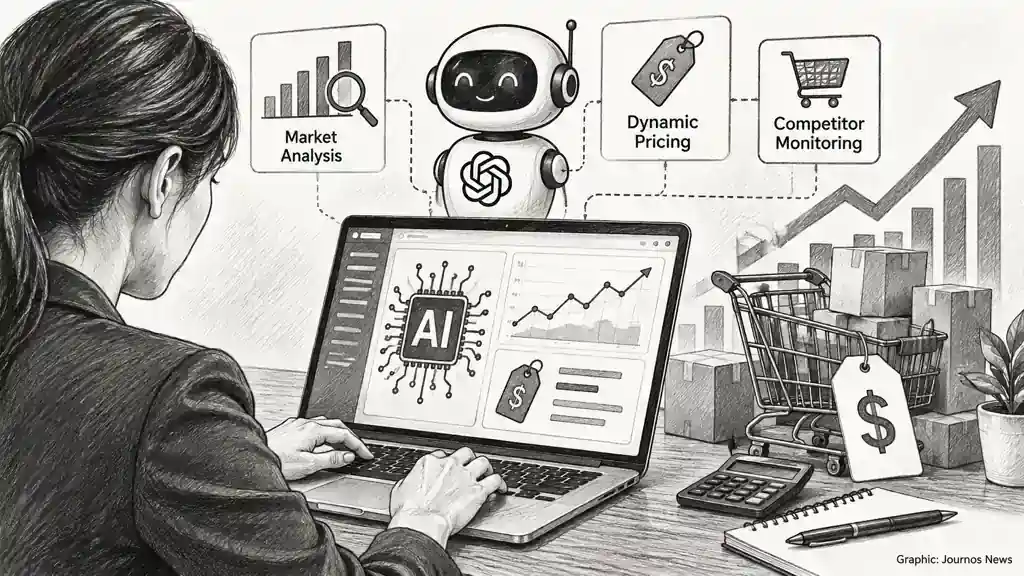
Algorithmic price optimization uses software to analyse factors such as competitor prices, demand, sales trends and inventory to recommend or determine prices. Artificial intelligence may be used in such systems, but not every pricing algorithm is AI, and using software does not automatically mean a price is personalized to an individual.
Personalized pricing, sometimes called surveillance pricing, means using personal information or inferred characteristics to set prices or offers for an individual customer or group. Inputs could include location, browsing activity, purchase history or demographic characteristics. It is different from charging different prices in separate locations, offering a publicly available promotion or giving loyalty-programme members a discount.
These distinctions help separate a technology’s possible capabilities from its actual commercial use. A retailer’s ability to update a shelf price quickly does not establish that it changes prices repeatedly during the day, while two customers seeing different offers does not by itself prove that personal data determined the difference.
FTC study found pricing tools capable of using personal data
The FTC’s January 2025 staff findings examined documents from six companies involved in providing pricing-related tools: Mastercard, Accenture, PROS, Bloomreach, Revionics and McKinsey & Co. The agency said the intermediaries could use data such as precise location, browsing history, shopping behaviour and inferred characteristics to help retailers tailor prices or promotions.
The intermediaries examined by FTC staff worked with at least 250 clients across sectors including grocery and apparel retail, the agency said. The figure describes the client base of the intermediaries studied; it does not mean that 250 retailers were proven to charge every customer an individualized price.
The FTC also cautioned that the initial findings were based on an ongoing market study and included hypothetical examples to illustrate how the technology could work. The staff findings identified capabilities and potential practices, but did not establish the prevalence of individualized pricing across the entire US retail sector or prove that every client used the tools in the same way.
The study nevertheless raised questions about transparency: consumers may not know what information is being used to determine the offers they see, or whether a price reflects general market conditions, a promotion or an assessment of their willingness to pay.
Walmart and Target reject individualized price increases
Walmart has repeatedly said it does not use personal information to set individualized prices. In an October 5 statement, the company said it does not use a shopper’s income, shopping history, urgency or willingness to pay to charge that person more. It also said digital shelf labels do not independently set prices and are not used for individual or dynamic pricing.
Target issued a similar clarification on October 15. The company said it does not raise prices based on a shopper’s identity or location, or adjust prices according to the time of day or periods of high demand. It said prices may differ because of local costs, competition, regulations, or store- and channel-specific discounts, while remaining the same for customers on the same platform or at the same location.
Target also said its Target Circle loyalty programme uses shopping history to provide relevant deals and offers but does not raise prices. That distinction is important because targeted promotions and individualized price increases are not the same practice.
The companies’ statements provide evidence of their declared policies, but they are not a substitute for independent examination of all pricing systems, contracts and transactions. The sources reviewed for this article do not establish that Walmart or Target currently charges individual shoppers different prices for the same product based on personal data.
Research finds little evidence of grocery surge pricing from digital labels
Research can help test claims about what happens after retailers introduce electronic shelf labels. A study by researchers associated with the University of California, San Diego, the University of Texas at Austin and Northwestern University examined product-level pricing data from a US grocery retailer with more than 100 stores.
The researchers found virtually no surge pricing either before or after electronic shelf labels were introduced. Their analysis found no statistically significant increase in temporary price spikes following adoption. The study was published as a working paper, so its results should be treated as research evidence rather than a universal finding about every retailer.
The findings challenge the claim that electronic shelf labels necessarily cause surge pricing. They do not establish that every pricing practice is fair, that no retailer uses dynamic pricing, or that personalized pricing never occurs in other settings.
The frequency of price changes also depends on the retailer’s policies and market. A system may technically support rapid updates while a company continues to change prices on a regular schedule. The existence of the technology alone does not show how often a retailer uses it or why a particular price changed.
FTC proposal focuses on disclosure, not a blanket ban
On August 19, 2026, the FTC invited public comment on a proposed enforcement policy statement concerning personalized pricing. The agency said businesses that fail to disclose their use of personal data to set individualized prices could risk violating the FTC Act and other laws it enforces. The commission later extended the comment deadline to September 25.
The proposal is an enforcement-policy statement, not an enacted rule banning all personalized pricing. The FTC itself said it does not have the legal authority to prohibit personalized pricing in every circumstance. The agency’s position focuses on the potential for undisclosed or misleading use of personal data to violate existing law.
As of the latest FTC materials reviewed for this article, the statement remained listed as proposed. The agency’s position does not mean every price difference is unlawful: location-based pricing, public promotions, loyalty offers and individualized pricing raise different factual and legal questions.
State lawmakers have also considered restrictions. The Associated Press reported that Maryland, New Jersey and Connecticut had enacted measures addressing the use of personal data to determine prices, with different scopes and exceptions. The precise coverage and effective dates of those state laws should be checked against the statutes before publication.
The transparency question remains unresolved
For consumers, the practical issue is not simply whether a retailer uses AI. It is whether shoppers can understand why the price they see has changed, whether personal information influenced that price and whether the same product is being offered on different terms to comparable customers.
Retailers argue that digital labels can improve accuracy, reduce manual work and make promotions easier to implement. Regulators and consumer advocates, meanwhile, are concerned that opaque pricing systems could make it difficult for shoppers to identify when personal data affects what they pay.
The evidence supports neither the claim that digital price tags automatically enable widespread price gouging nor the assumption that all algorithmic pricing is harmless. The technology can serve different purposes, and the actual effects depend on how retailers configure and use their systems.
As digital pricing tools spread, meaningful transparency will depend on clearer disclosures, verifiable information about retailers’ practices and evidence that distinguishes general price changes from prices tailored to personal data. Until that information is available, consumer concern is understandable, but claims about individual retailers should remain tied to documented practices rather than technical possibilities alone.
Reporting Credit: Associated Press reporting on consumer concerns and retail pricing technology; the Federal Trade Commission’s 2025 surveillance-pricing study and 2026 proposed enforcement policy; Walmart’s published statements on digital shelf labels and pricing; Target’s October 15 statement as reported by Reuters; and research by economists examining electronic shelf labels and grocery price changes.