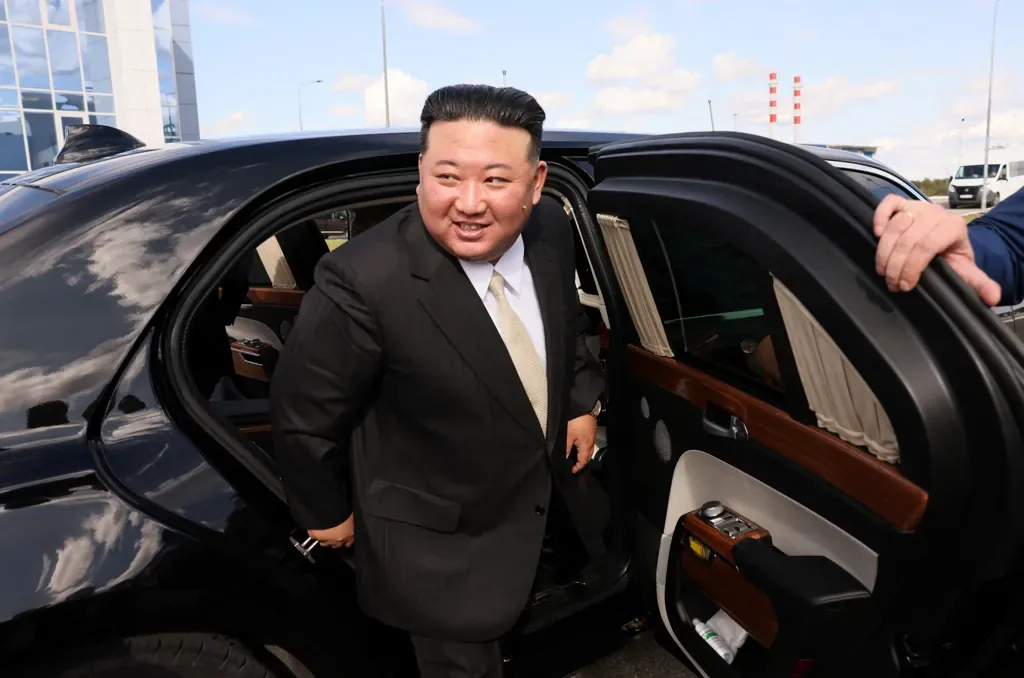
PYONGYANG, North Korea – North Korean leader Kim Jong Un has called for his country to achieve “absolute superiority” in drone technology. He made the remarks after visiting a military exhibition and weapons demonstration on October 29.
The exhibition, called Unmanned Aeronautical Technology Development-2026, displayed North Korea’s latest unmanned aircraft. Military officials, weapons developers, scientists and researchers attended the event.
North Korean state media reported that the exhibition featured several types of drones, including multipurpose aircraft and suicide-attack drones. The event also included a weapons demonstration involving drones, missiles and large rocket launchers.

Kim called for faster development of drone technology and artificial intelligence (AI). He said these systems should become a major part of the country’s military modernization.
However, North Korea has not provided enough technical information to confirm how advanced its drones are or whether they can perform complex tasks without human control.
Kim demands stronger drone and AI capabilities
Kim described drone superiority as an essential part of modern warfare. He called on North Korean scientists to improve unmanned aircraft and develop AI for military use.
He also directed officials to strengthen the capabilities of unmanned weapons through advanced AI technology.
His remarks suggest that North Korea wants more than a larger fleet of drones. It aims to develop aircraft that can carry out different military tasks, including surveillance, target detection and attacks.
■ Related News


Senior officials from the Ministry of National Defence, the weapons industry and military research institutions also attended the exhibition.
Their presence suggests that North Korea wants to make drone development a wider national defence priority.
But the official report did not provide key technical details. It did not state the drones’ flight range, operating time, payload capacity or communications systems.
It also did not explain how much control their onboard AI systems can exercise.
A government order to develop military AI does not prove that North Korean drones already have advanced autonomous capabilities.
What North Korea displayed
The official report described several types of unmanned aircraft. These included strategic and tactical multipurpose drones, as well as suicide-attack systems.
Images and reports from the event showed a wider range of designs. South Korean media assessments identified large flying-wing aircraft, small first-person-view attack drones and loitering munitions.
Some aircraft appeared designed for surveillance and reconnaissance. Others appeared built to carry explosives and strike ground targets.
These systems serve different military purposes. Reconnaissance drones gather information and track enemy movements. Attack drones can target vehicles, military positions and other facilities.
A wider mix of aircraft could help North Korea build a more flexible drone force.
However, a displayed aircraft is not necessarily ready for military service. Photographs also cannot prove that North Korea has copied a foreign design or gained access to the technology behind it.
The exhibition showed what Pyongyang wants to develop. It did not confirm how many aircraft the country can produce or deploy.
It also offered no independent proof that the displayed systems can operate reliably in combat.
Demonstration combines drones, missiles and rocket launchers
The weapons demonstration formed a major part of the event.
North Korea’s official report said tactical suicide-attack drones, air-to-surface missiles launched from multipurpose drones and tactical cruise missiles struck an island target.
State media claimed that the weapons achieved 100 percent accuracy. No independent assessment has confirmed that claim.
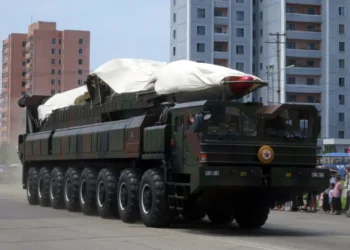
The demonstration also featured a battalion of 600mm multiple rocket launchers. North Korea calls the system “Sniper.”
State media described the firing as the first public demonstration of the system before an audience.
The combination of drones, missiles and rocket artillery is significant. It shows how North Korea wants to present different weapons working together.
Drones can locate targets and monitor enemy movements. They can also provide information to artillery and missile units.
Attack drones can strike vehicles, artillery positions and command facilities. Missiles and rocket launchers can deliver heavier attacks over longer distances.
Using these weapons together could make it harder for an opponent to detect and stop an incoming attack.
This could create additional problems for South Korea’s air defences and military surveillance systems.
However, North Korea did not publish independent measurements of the demonstration. It also did not explain the test conditions or show whether the weapons could achieve the same results in a real conflict.
Its claim of perfect accuracy remains unverified.
South Korea reports separate missile launches
South Korea’s Joint Chiefs of Staff reported another military development on October 29.
The South Korean military said it detected about a dozen short-range ballistic missiles launched from the Wonsan area on North Korea’s east coast.
The launches took place at around 12:30 p.m. The missiles travelled about 250 kilometres toward the East Sea, according to South Korean authorities.
Seoul said it was working with the United States to examine the launches. It also continued to monitor North Korea for possible further activity.
The missile launches were separate from the exhibition’s weapons demonstration. Available information does not show that the ballistic missiles formed part of the event or came from the same launch site.
Their timing added to military tensions on the Korean Peninsula.
South Korea had recently proposed military talks to address disagreements over border demarcation. North Korea, meanwhile, continued to reject Seoul’s responsibility for a landmine blast that injured South Korean soldiers.
The missile launches showed that Pyongyang was continuing to develop its conventional strike capabilities while Kim called for stronger unmanned weapons.
North Korea studies lessons from Russia’s war against Ukraine
North Korea’s growing interest in drones comes as unmanned aircraft play a major role in Russia’s war against Ukraine.
Both sides use drones to watch enemy positions, guide artillery fire and attack vehicles, military facilities and infrastructure.
Small first-person-view drones have also shown how relatively inexpensive aircraft can damage costly military equipment.
The war has demonstrated that effective drone operations require more than aircraft. They also depend on reliable communications, trained operators, electronic warfare systems and a steady supply of equipment.
Military units must also learn to adjust their tactics as opponents develop new ways to detect and stop drones.
These lessons could be valuable to North Korea. Its conventional forces face major technological and resource challenges compared with the combined military strength of South Korea and the United States.
A large supply of relatively cheap attack drones could give Pyongyang more ways to threaten military positions and disrupt supply routes.
Reconnaissance drones could also help North Korean artillery and missile units find targets more quickly.
North Korean troops have gained experience in the Ukraine war
North Korea has a direct link to the conflict through its military cooperation with Russia.
South Korean intelligence has reported that Pyongyang sent personnel to support Moscow’s war effort. Some North Korean troops have therefore had exposure to a conflict where drones and electronic warfare play major roles.
That experience could help them learn how to operate drones, gather battlefield information and coordinate attacks.
However, it remains unclear how much of that experience has reached the wider North Korean military.
Lessons learned by troops in a foreign conflict do not automatically become standard military practice. North Korea would still need to train more personnel, improve its equipment and build systems that can work reliably in different combat conditions.
A study published in South Korea’s Journal of Defence Studies in 2026 found signs that North Korea may be adopting lessons from the Russia-Ukraine war.
The research pointed to different drone designs for different missions, repeated tests of one-way attack systems and signs of increased production.
But the study also noted that public evidence remains limited. It is not yet clear how deeply these changes have affected North Korea’s military training, structure and battlefield plans.
Russian technical assistance is another possibility. However, the exhibition does not establish which systems, if any, received foreign support.
Similarities between North Korean drones and foreign designs do not prove that Russia transferred the technology.
What the drone programme could mean for South Korea
A larger North Korean drone force could create new challenges for South Korea’s military.
Small attack drones can be difficult to detect, especially when they fly in large numbers or operate alongside missiles and rocket artillery.
Their relatively low cost could also put pressure on South Korea’s defences. South Korean forces might have to use expensive interceptors to stop cheaper incoming drones.
Reconnaissance drones could pose another threat. They could monitor military bases, artillery positions, command facilities and supply routes.
If North Korea links these aircraft with its other weapons, it could reduce the time between finding a target and launching an attack.
A coordinated operation could involve surveillance drones, electronic interference, attack drones and conventional missiles.
Such an operation could put pressure on several parts of South Korea’s defence network at the same time.
Questions remain over North Korea’s military AI
Kim’s emphasis on artificial intelligence raises another concern.
AI could help drones process surveillance images, identify possible targets, improve navigation or coordinate several aircraft.
But North Korea has not explained how much AI its displayed systems actually use.
There is no public technical evidence from the exhibition showing that the drones can independently select and attack targets without human approval.
The difference is important. A drone that uses AI to help identify objects does not necessarily have the ability to make independent decisions about launching an attack.
Claims about North Korea’s advanced military AI should therefore be treated with caution.
South Korea will need to assess not only the aircraft themselves but also how North Korea plans to connect them with missiles, artillery and electronic warfare systems.
A growing programme, not proof of drone superiority
Kim’s call for absolute superiority in drone technology sets a clear military priority for North Korea.
The exhibition brought together drones, attack systems, military researchers and conventional weapons. It showed the direction in which Pyongyang wants to take its defence programme.
The Russia-Ukraine war has also demonstrated how relatively cheap drones can influence military operations. Their value increases when forces can produce them in large numbers and connect them with surveillance, communications and other weapons.
North Korea now faces the challenge of turning displayed aircraft and test systems into reliable military equipment.
The exhibition showed the country’s ambitions and the types of weapons it wants to develop. It did not prove that North Korea has achieved the technological superiority Kim demanded.
That will depend on whether the country can increase production, improve reliability, train operators and protect drone communications from electronic attacks.
It will also need to connect unmanned aircraft with its wider military command system.
Until independent evidence confirms these capabilities, North Korea’s exhibition should be seen as a serious sign of its military priorities, not proof that its drone force has reached the level claimed by its leadership.
Reporting Credit: Journos News reviewed North Korean state media reporting on the October 29 exhibition and weapons demonstration, South Korean government assessments, military statements on the missile launches, and independent research into North Korea’s drone development and military cooperation with Russia.