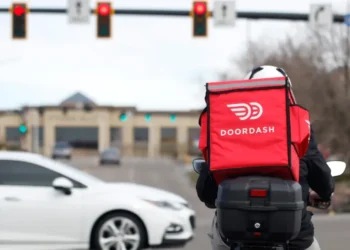
SAN FRANCISCO, United States – DoorDash has agreed to buy grocery-delivery company Instacart in a deal valued at about $17 billion. The acquisition would bring DoorDash’s delivery network together with Instacart’s grocery marketplace, retailer technology and advertising business.
The companies signed a definitive merger agreement on October 28, 2026, and announced it the following day. DoorDash will pay $65 for each eligible Instacart share under the proposed terms. Instacart’s board unanimously approved the agreement.
The companies expect to close the deal by the end of 2027 or during the first half of 2028. They must first secure shareholder and regulatory approvals and meet other conditions. The acquisition remains pending.

DoorDash says the deal could give retailers access to a wider delivery network and more technology. Consumers could also gain more store choices and delivery options. These are the companies’ expectations, not guaranteed results.
Until the deal closes, both companies will continue operating independently.
How the $17 billion deal would work
DoorDash has offered $65 per eligible Instacart share. That price represents a 26% premium over Instacart’s October 22 closing price. October 22 was the last trading day before reports of a possible transaction.
The estimated $17 billion value refers to Instacart’s equity. It does not represent the combined value of the businesses and all their financial obligations.
Instacart shareholders can choose from three payment options for each eligible share:
■ Related News



- All cash: $65.
- All stock: 0.3372 shares of DoorDash common stock.
- Cash and stock: $48.75 in cash plus 0.0843 DoorDash shares.
The agreement requires at least 75% of the total payment to come in cash. DoorDash shares can account for no more than 25%.
If too many shareholders choose stock, some may receive a different mix of cash and shares than they requested. The value of the stock portion will also depend on DoorDash’s share price under the agreement’s terms.
Shareholders who hold about 19% of Instacart’s outstanding shares have agreed to support the deal. Their commitment could help the proposal gain approval, but it does not guarantee success.
How DoorDash plans to finance the deal
DoorDash expects to use cash on hand and debt to fund the cash payment. It has secured a commitment letter from JPMorgan Chase Bank for a 364-day senior unsecured bridge loan facility.
The financing remains subject to customary conditions. However, the merger agreement does not allow DoorDash to walk away solely because financing fails to materialize. DoorDash also says it aims to maintain an investment-grade credit rating.
The cost of borrowing and the final financing structure could affect the financial benefits of the acquisition. The deal’s ultimate value will depend on more than the headline purchase price.
Both companies report growth
The proposed acquisition comes as DoorDash and Instacart report higher revenue and profits. Their latest results show growth, but the companies earn money in different ways.
For the quarter ended September 30, 2026, DoorDash reported revenue of $4.616 billion. That was a 34% increase from $3.446 billion a year earlier.
DoorDash’s net income attributable to common stockholders rose 91% to $466 million. Adjusted earnings before interest, taxes, depreciation and amortization, or adjusted EBITDA, increased 41% to $1.060 billion.
The company also handled 993 million orders, up 28% year over year. Its Marketplace gross order value rose 36% to $33.941 billion. DoorDash noted that its growth rates were lower when excluding the contribution of Deliveroo, which it acquired earlier.
Instacart also reported growth in its third quarter.
For the same three-month period, Instacart’s gross transaction value reached $10.528 billion, up 15% from a year earlier. Revenue rose 17% to $1.095 billion.
Transaction revenue increased 14% to $764 million. Advertising and other revenue grew 23% to $331 million.
Instacart reported net income of $147 million, up 2%. Adjusted EBITDA rose 23% to $342 million. The company generated $324 million in cash from operating activities and $307 million in free cash flow. It ended the quarter with $1 billion in cash and similar assets.
These figures show the companies’ financial performance before the proposed merger. They do not establish how the combined business will perform.
Why the businesses want to combine
DoorDash began with restaurant delivery and later expanded into groceries and other retail categories. Instacart built its business around grocery delivery, retailer technology and digital advertising.
The companies say the combination could help retailers reach more customers through a larger delivery network. They also expect to connect Instacart’s grocery technology with DoorDash’s delivery services.
DoorDash plans to retain the Instacart brand, app and enterprise technology products after closing. The companies say this approach would preserve Instacart’s relationships with retailers while giving the combined business more ways to serve merchants.
The strategy could create opportunities to sell more services across both platforms. Retailers might also reach customers without building their own delivery networks and digital shopping systems.
However, the companies have not established that these potential benefits will materialize. The public announcement does not provide a verified, quantified cost-savings target that can be treated as a guaranteed result.
Integration costs, borrowing expenses, retailer contracts and customer retention could all affect the outcome.
Instacart has also suspended its financial guidance and withdrawn previously issued long-term guidance following the acquisition announcement. Investors will need more information to assess the company’s future performance under the proposed ownership structure.
What the deal could mean for grocery retailers
Instacart says it works with more than 2,200 retail banners representing nearly 100,000 stores. Its services include online grocery ordering, fulfillment technology and advertising tools.
DoorDash says grocery retailers will remain free to work with other delivery platforms. It also says the combined company will not require grocery exclusivity.
That commitment matters because retailers often use several platforms to reach customers. Multiple partners can give stores more choices when negotiating fees, delivery services and access to customers.
A larger network could bring retailers more orders and improve delivery efficiency. But a combined company could also become more important to merchants that depend on third-party platforms to reach online shoppers.
The actual effect will depend on contract terms, fees, advertising costs and access to customer data. The announcement does not confirm that all existing retailer agreements will remain unchanged. Nor does it provide a complete schedule of future fees.
Retailers could face different opportunities and risks depending on their size, location and reliance on delivery services. Their individual responses are needed to establish how they view the proposed merger.
What consumers can expect
DoorDash says the deal could give consumers more store choices, faster delivery and opportunities to save money. The companies also point to potential benefits from combining their membership and merchant services.
These claims do not guarantee lower grocery prices or delivery fees. The announcement does not establish that consumers will pay less after the merger.
The companies expect Instacart’s app and brand to remain in place after closing. Instacart has also told shoppers that they should see no immediate changes to how they accept and deliver orders while the companies operate separately during the review period.
Consumers will need to judge the merger by its actual results. Important measures will include delivery prices, service fees, available stores, order reliability and the value of membership benefits.
What could change for delivery workers?
DoorDash says the deal could create more earning opportunities for Dashers and Instacart Shoppers.
The company has also said Instacart Shoppers will retain features that support their choice over how much they work. It says shoppers will continue to receive information that helps them decide which batches to accept.
The company also says shoppers can choose whether to accept DoorDash orders or continue shopping only through Instacart.
These commitments address some questions about flexibility, but they do not show how the merger will affect workers’ actual earnings. The number of available orders, delivery times, tips and work-related expenses will all matter.
The deal also leaves broader questions about contractor status, insurance and worker protections. Those issues depend on applicable laws and the circumstances of the work.
Neither company has published a comprehensive independent assessment of the merger’s likely effect on worker earnings or consumer costs. Those effects will need to be measured if the transaction proceeds.
Regulators must review the deal
The merger agreement requires Instacart shareholder approval and regulatory clearance. It also requires the parties to satisfy other closing conditions.
In the United States, the deal must meet the applicable requirements under the Hart-Scott-Rodino Antitrust Improvements Act. This process allows competition authorities to review qualifying transactions before they close.
Canada and Israel are among the jurisdictions identified in the agreement for regulatory approval. The companies have not established that all required approvals have been granted.
Canada’s Competition Bureau can review mergers that may substantially lessen or prevent competition. Applicable transactions may require advance notification and must follow the relevant waiting periods.
A required review does not mean regulators have found a competition problem. Any conclusion about the merger’s effects must rest on documented evidence and official findings.
The analysis will depend partly on how regulators define the relevant markets. Restaurant delivery, grocery delivery, online grocery technology and retail advertising are related, but they are not identical services.
Authorities may examine the choices available to consumers and retailers, the companies’ contracts and the ability of competing platforms to attract customers and merchants.
The merger would give DoorDash access to Instacart’s established grocery relationships and technology. That could strengthen its position in grocery delivery, but it does not by itself prove an antitrust violation.
Claims that the deal will raise prices, limit retailer choice or harm workers must remain distinct from any findings by regulators or courts. No formal objection, legal challenge, remedy or regulatory clearance was established in the public records reviewed for this article.
The road to closing remains long
DoorDash and Instacart expect the transaction to close by the end of 2027 or during the first half of 2028.
Before then, Instacart shareholders must vote on the deal. The companies must also complete the required regulatory reviews and meet the agreement’s other conditions. Both businesses will remain independent until closing.
The proposed merger would combine a major restaurant-delivery platform with a large grocery-delivery and retail-technology business. The deal could expand the services available to consumers and merchants, but its success will depend on the results after closing.
For now, the $17 billion agreement is a proposed acquisition, not a completed transaction. Shareholder approval, regulatory review, financing and integration will determine whether the deal proceeds and whether the expected benefits become reality.
Reporting Credit: U.S. Securities and Exchange Commission — DoorDash, Inc., Form 8-K and attached acquisition announcement concerning the October 28, 2026 merger agreement with Maplebear Inc. (Instacart). DoorDash, Inc. — third-quarter 2026 financial results for the period ended September 30, 2026, released October 29, 2026. Maplebear Inc. (Instacart) — third-quarter 2026 financial results and acquisition announcement for the period ended September 30, 2026, released October 29, 2026. Competition Bureau Canada — official merger-review guidance and 2026 pre-merger notification threshold.