TOKYO, Japan – Japan has introduced a ¥10 billion ($63 million) emergency cybersecurity package after a series of data breaches and unauthorized access incidents affected major companies and government institutions. The developments prompted Prime Minister Sanae Takaichi to call for a stronger national response.
The government adopted the package on November 6 and allocated approximately ¥10 billion from reserve funds for immediate measures.
The plan combines artificial intelligence-assisted threat detection, specialist cyber response teams, improved information-sharing and support for organizations affected by attacks.

Government Establishes Specialist Cybersecurity Teams
The package includes plans to create several specialist teams to strengthen Japan’s ability to prevent and respond to cyberattacks.
The Ministry of Economy, Trade and Industry is scheduled to establish a team of highly skilled cybersecurity specialists by the end of November. Officials have described it as a “top gun” team.
The group will use AI to identify network vulnerabilities and help counter cyber threats. It will also work with technology companies and AI developers from partner countries.
Meanwhile, a separate cyber rescue team will bring together public- and private-sector experts to provide initial assistance to companies affected by attacks.
Another specialist group will help businesses with limited cybersecurity resources improve their defences.



For incidents that could threaten national security, the government also plans to deploy a support team involving officials from the Defence Ministry, National Police Agency and National Cybersecurity Office.
AI and Information-Sharing Become Central to Response
The government wants organizations to use AI and other technical tools to identify weaknesses before attackers can exploit them.
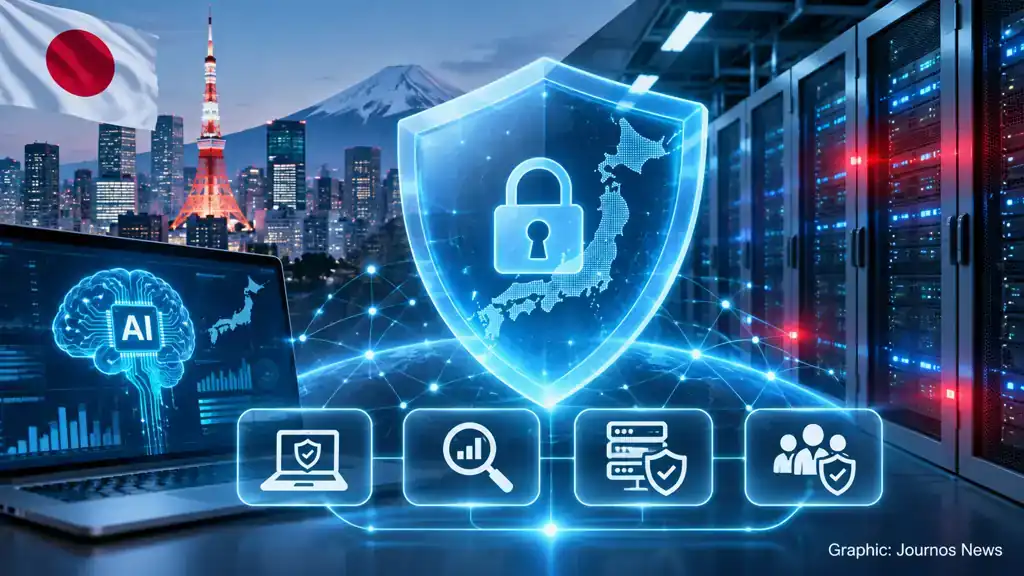
The emergency package has four main priorities:
Strengthening basic cybersecurity measures.
Improving information collection and analysis.
Developing strategic responses to cyberattacks.
Supporting victims and preventing further damage.
Takaichi has instructed relevant ministers to speed up the flow of information about cyber incidents to the National Cybersecurity Office.
Reports from operators of critical infrastructure should reach the office within hours where possible, and at least on the same day.
The government is also examining ways to expand its ability to identify and analyse suspicious communications involving private companies. This would extend its information-gathering capabilities beyond government organizations and other entities currently covered by existing arrangements.
Recent Breaches Expose Weaknesses in Digital Systems
The emergency response follows months of incidents involving unauthorized access, ransomware demands and exposure of personal information.
One major incident involved Arara, an email distribution service used by businesses and public institutions. The company reported that a cyberattack on November 2 exposed approximately 77 million email addresses across nearly 400 customers.
The breach also affected Osaka’s administrative online-services platform, which relied on the service through contractor TKC Corporation.
Osaka authorities warned that more than one million email addresses linked to people who received messages from the city’s system between July and October 31 had been exposed.
Residents were advised to watch for fraudulent emails claiming to come from the city.
Other organisations affected by cyber incidents in recent months include Japan Airlines, Sony Network Communications and gaming company Capcom.
These incidents have raised concerns about the security of systems operated by companies that handle information for large numbers of customers.
The government has also identified weaknesses in basic security practices as contributors to recent data leaks. These include poorly configured websites, inadequate mobile-app security and outdated software with unpatched vulnerabilities.
Businesses Urged to Strengthen Basic Security
Alongside the emergency package, Japan’s National Cybersecurity Office issued an advisory on November 5. The Ministry of Internal Affairs and Communications followed with a related alert on November 6.
The guidance urges businesses to review their digital systems, identify exposed services and fix known vulnerabilities.
It also highlights risks involving application programming interfaces, weak authentication controls, contractors and external software suppliers.
Companies are encouraged to:
Conduct regular vulnerability assessments.
Restrict unnecessary access to administrative systems.
Use multifactor authentication for contractors’ remote connections.
Keep records of the software components used in their systems.
The government has also reminded organizations that they remain responsible for supervising contractors who handle personal information on their behalf.
Expanded Cyber Defense Powers Raise Oversight Questions
The emergency package comes as Japan implements a broader active cyber defense framework. The framework allows authorities to take more direct action against infrastructure used by attackers.
The government is considering further changes to strengthen information gathering and improve its ability to identify threats before attacks occur.
However, proposals to expand the monitoring of communications within Japan have also entered political discussions.
Under the existing framework described in the debate, monitoring powers mainly cover communications between Japan and foreign countries. They do not generally extend to communications taking place entirely within Japan.
The proposed expansion has raised questions about privacy and constitutional protections for communications. Government officials and lawmakers have said the changes require further examination.
Japan therefore faces two connected challenges. It must improve coordination between public institutions and private companies while also addressing how expanded cyber defense powers will be supervised.
The ¥10 billion package provides immediate funding for these efforts. However, several specialist teams and longer-term capabilities are still being established.
Primary Sources: Prime Minister’s Office of Japan, “Ministerial Meeting on Cybersecurity,” November 6, 2026: documents Prime Minister Sanae Takaichi’s approval of the Emergency Cybersecurity Measures Package, the allocation of approximately ¥10 billion from reserve funds, its four policy priorities and instructions to improve information-sharing and incident reporting; National Cybersecurity Office, Cabinet Secretariat, “Measures against Unauthorized Access Leading to Leaks of Personal Information: Thorough Implementation of Basic Measures for Websites and Mobile Apps,” November 5, 2026: advises businesses on vulnerability management, application security, contractor access and supply-chain risks; Ministry of Internal Affairs and Communications, “Measures against Unauthorized Access Leading to Leaks of Personal Information,” November 6, 2026: issues a related cybersecurity alert to businesses and industry organisations. The complete original technical documents were identified through published government-source references; detailed contents were reviewed through a public-source compilation.