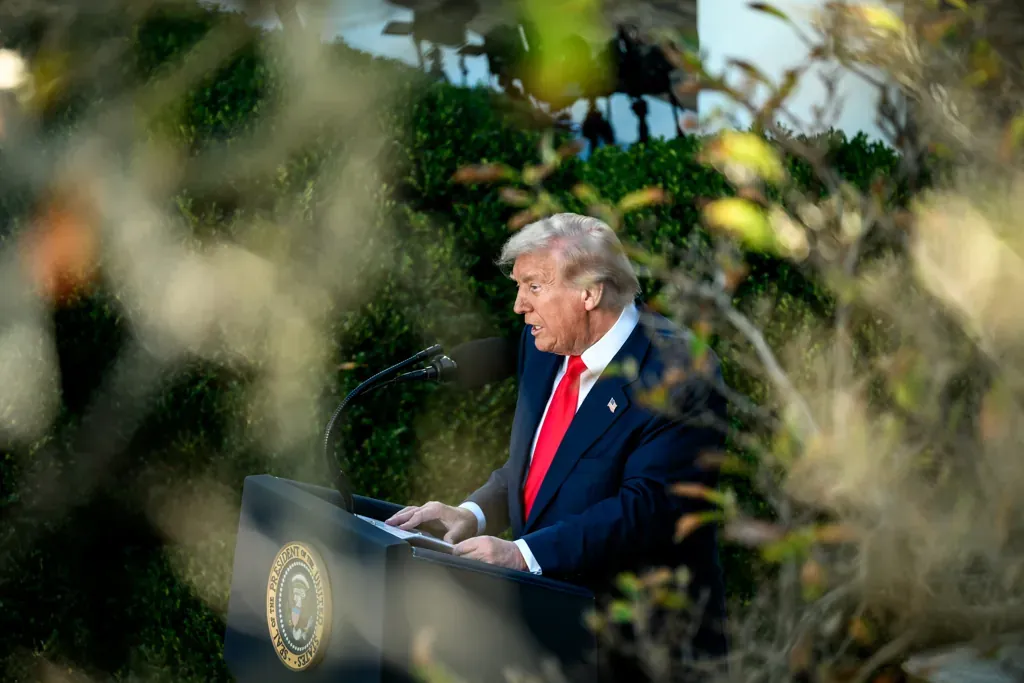
WASHINGTON, United States – President Donald Trump presented Microsoft chief executive Satya Nadella with the National Medal of Technology and Innovation on October 8, hours after Vice President JD Vance announced that the administration was suspending Microsoft from a federal program used to sponsor eligible foreign workers for permanent US residency.
The Department of Labor’s action targets the Permanent Labor Certification Program, known as PERM. The program is used in many employment-based green-card cases to establish that qualified US workers are not available for a particular job under the applicable requirements.
Vance accused Microsoft of abusing the immigration system by laying off American workers while benefiting from foreign-worker visa and green-card processes. Microsoft disputed the characterization of its hiring practices and said most of its recent H-1B applications involved existing employees.

The administration’s allegations have not, by themselves, established that Microsoft committed fraud or unlawfully replaced American workers.
PERM suspension targets permanent residency sponsorship
The suspension prevents Microsoft from using the affected PERM process while the government’s action remains in effect. The Labor Department also announced measures affecting Adobe and major information-technology services companies, including Cognizant, Infosys, Tata Consultancy Services, Wipro, HCL Technologies and Capgemini.
The department said it would stop accepting new permanent labor-certification applications from the affected companies and halt processing of their pending applications.
PERM is distinct from the H-1B visa program, which allows eligible US employers to employ foreign workers in qualifying specialty occupations. The suspension does not automatically cancel existing H-1B visas or terminate the employment of every foreign worker at an affected company.
However, the restrictions could complicate some employees’ efforts to obtain permanent residency through employer sponsorship. The effect on individual workers depends on their immigration status, the stage of their applications and any subsequent government action.


The administration had not specified a final end date for the suspension in its initial announcement.
Vance cites layoffs and immigration figures
Vance said Microsoft had laid off approximately 6,000 American workers while benefiting from about 6,300 H-1B visas and nearly 3,000 green cards. He argued that the figures demonstrated a failure of the system to protect US workers.
Those numbers refer to different employment and immigration processes. Layoffs, H-1B visa approvals and employment-based permanent residency are not interchangeable measures of new hiring. The figures alone do not establish that the foreign workers took the jobs of the employees who were laid off.
The administration said its action was part of a wider effort to investigate suspected abuses of employment and exchange-visitor programs. Officials also announced investigations involving nine universities over the use of J-1 exchange-visitor visas.
The allegations against individual employers and universities require separate examination. The existence of an investigation does not establish wrongdoing.
Microsoft says most H-1B applications involved existing staff
Microsoft responded on October 8 that approximately 80% of the roughly 6,000 H-1B applications it submitted in the previous fiscal year were intended to extend or change the status of existing employees rather than hire new workers.
The company said the remaining applications were for people already legally in the United States who chose to work for Microsoft. It said those workers represented about 1% of its US workforce.
Microsoft also said the vast majority of its US employees were Americans and that it paid H-1B workers the same as other employees performing comparable work.
The company said it looked forward to providing the administration with additional information.
Microsoft’s statement offers a different interpretation of the figures cited by Vance. The company’s explanation does not independently resolve the government’s allegations, but it is central to assessing the claim that visa use directly replaced workers affected by layoffs.
The administration’s announced action and Microsoft’s response therefore leave two distinct questions: whether the company complied with applicable immigration and labor requirements, and whether the figures cited by officials accurately demonstrate that foreign workers replaced American employees.
Trump presents Nadella with technology medal
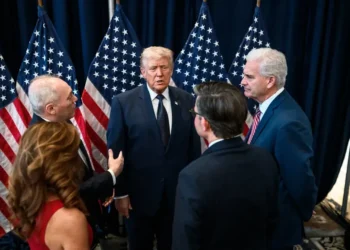
Later on October 8, Trump presented Nadella with the National Medal of Technology and Innovation at a White House ceremony recognizing achievements in science and technology.
The White House said the award recognized Nadella’s leadership of Microsoft, including its development of cloud-computing infrastructure and technology supporting artificial intelligence.
Nadella was among six prominent technology leaders honored with national science or technology medals at the event.
The ceremony took place on the same day that Vance announced the suspension. Trump’s award presentation and the Labor Department’s immigration action were separate government actions, and the White House announcement did not state that the medal altered or affected the suspension.
The timing nevertheless placed two aspects of the administration’s technology agenda in focus: recognition of major technology companies’ contributions to innovation and tighter scrutiny of how those companies employ foreign workers.
What the suspension means for the technology industry
The action affects a route through which companies can sponsor eligible foreign employees for permanent residency. It may create uncertainty for workers whose applications depend on the affected employers, even though the PERM suspension is not itself a blanket cancellation of H-1B status.
For technology companies, the dispute highlights the distinction between temporary work authorization and the process for obtaining a green card. An employee may have authorization to work in the United States without having permanent resident status, while a PERM application is one stage in many employer-sponsored green-card cases.
The practical consequences will depend on how long the restrictions remain in place, whether affected companies challenge the action and how authorities handle individual cases.
The administration has framed the suspension as an effort to protect American workers and address suspected misuse of immigration programs. Microsoft says its application figures largely reflect existing employees and that it maintains high compensation standards.
The announced suspension is a government action, not a final finding that Microsoft committed fraud. The evidence supporting the administration’s allegations, the company’s response and the effects on individual workers will remain central to assessing the dispute.
Reporting Credit: The White House; Office of the Vice President of the United States; US Department of Labor; Microsoft.