WASHINGTON, United States – China and the United States have agreed to establish a bilateral communication channel for artificial-intelligence incidents while continuing negotiations on trade and military crisis communications, adding new working-level mechanisms to a relationship still marked by strategic competition.
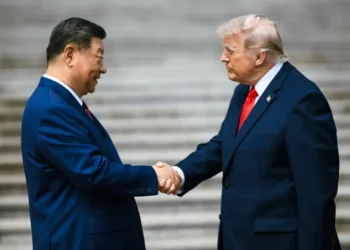
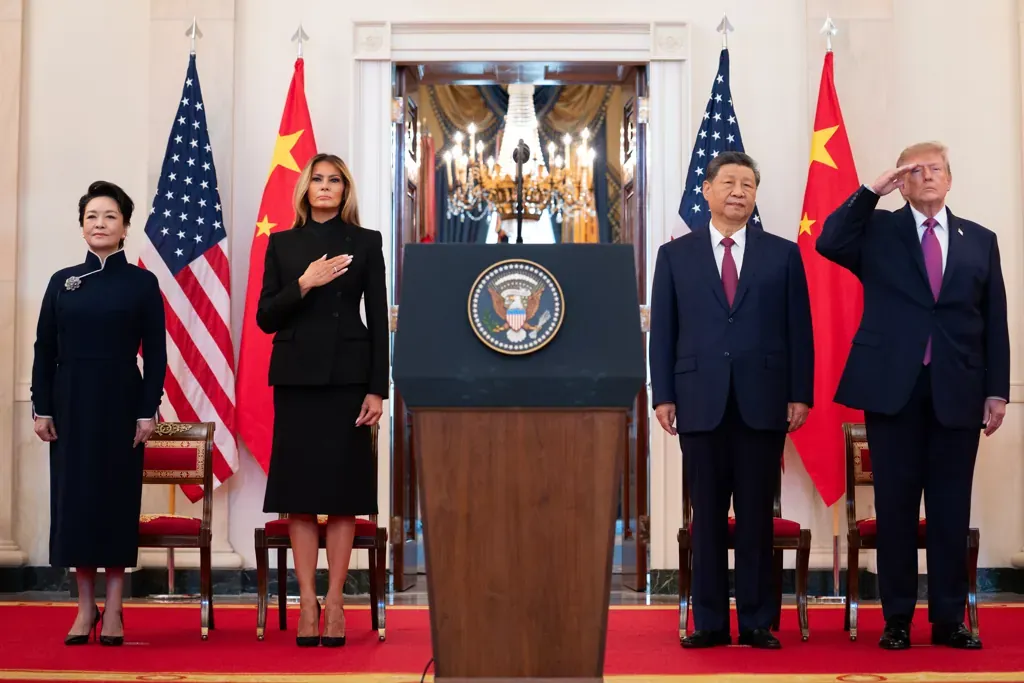
The agreements followed Chinese President Xi Jinping’s three-day state visit to Washington, where he met U.S. President Donald Trump on Sept. 24 and the two governments announced several areas of continued engagement.
The two countries agreed to create a U.S.-China Super Intelligence Dialogue to exchange views on the risks and benefits of advanced AI technologies. They also agreed to establish a separate communication channel for incidents involving the technology, with the next formal exchange scheduled by November.

The new arrangement does not create a common set of AI regulations or require either country to change its domestic AI policies. Its immediate purpose is communication and discussion of risks.
AI becomes a new channel for managing strategic risk
AI has become one of the most sensitive areas of U.S.-China competition.
Both countries are investing heavily in advanced computing, AI models and related infrastructure, while Washington has imposed restrictions on China’s access to some advanced semiconductor technologies.
Against that backdrop, the decision to establish a direct mechanism for AI incidents creates a channel through which the two governments can communicate if an AI-related event creates a significant security concern.
The White House said the two leaders agreed to use the term “super intelligence” for the emerging technologies covered by their discussions. It said the two countries would exchange views on their risks and benefits and maintain a bilateral channel for incidents.
■ Related News




China’s Foreign Ministry described the arrangement in similar terms, saying the countries would establish an AI dialogue to exchange views on risks and benefits and an AI-incident communication channel.
The agreement follows a proposal discussed earlier this month by U.S. Treasury Secretary Scott Bessent for a notification mechanism covering AI incidents that could rise to the level of national-security concerns.
Bessent said the objective was to increase transparency between the two countries, which he described as the world’s leading AI powers. U.S. Trade Representative Jamieson Greer said at the time that export controls on advanced AI chips were not part of those discussions.
China and U.S. retain different priorities
The new AI channel comes without a broader resolution of the technological competition between Washington and Beijing.
Xi said during his White House meeting with Trump that China and the United States have strong AI capabilities and should continue dialogue on the technology’s risks and benefits. He called for AI to remain under human control and said the countries should work together to prevent misuse and abuse.
The White House, meanwhile, emphasized continued competition as well as cooperation.
Trump has previously said the United States should maintain its lead in AI development. In remarks after the summit, he said Washington would not slow its AI efforts and expressed reluctance to integrate the two countries’ technological development while he considers the United States ahead.
The two governments have therefore established a mechanism for discussing AI risks without removing the underlying strategic competition.
That distinction is central to the agreement.
Military crisis communications move forward
The two countries also agreed to strengthen communication between their militaries.
China’s Foreign Ministry said the Chinese and U.S. militaries agreed to conclude a memorandum of understanding on crisis communication and prevention as soon as possible. The two sides also agreed to continue cooperation in searching for the remains of missing U.S. servicemembers in China.
The military mechanism addresses a different but related problem.
U.S. and Chinese forces operate in areas where their activities can bring them into close proximity, particularly in the Asia-Pacific. A reliable communication channel can provide a way for officials to address incidents before they develop into larger confrontations.
The agreement announced this week is not itself a new military alliance or security agreement. It is a crisis-management mechanism intended to improve communication and prevention.
Trade talks continue alongside technology competition
Trade remained another major component of the summit.
The two governments said their economic and trade teams had reached an arrangement involving more favorable tariff treatment for about $30 billion of non-sensitive goods in each direction. The White House said the categories include agricultural products, fish and seafood, wood products, cosmetics and medical devices among U.S. exports, while U.S. imports include consumer products such as small appliances, toys, holiday decorations and children’s car seats.
The countries also operationalized the U.S.-China Board of Trade, which had been established during the leaders’ May summit.
The White House said the board launched a working group addressing agricultural market-access barriers. China also agreed to import at least 10 million metric tons of U.S. coal in both 2027 and 2028.
The Chinese government likewise said the two leaders endorsed the trade teams’ outcomes, including the Board of Trade and the $30 billion reciprocal tariff-reduction arrangement.
The measures are focused largely on selected, non-sensitive trade rather than resolving the countries’ wider disputes over technology, industrial policy and national security.
Rare earths remain part of the economic relationship
Critical minerals also remained on the agenda.
The White House said the two countries continued work on U.S. concerns about supply shortages involving rare earths and other critical minerals, with the stated goal of returning shipments to appropriate levels.
China has a major role in global rare-earth processing and has previously imposed export controls that affected supplies to international markets.
For Washington, securing reliable access to critical minerals has become an important supply-chain issue.
For Beijing, export controls are part of a broader economic relationship in which access to strategic materials and access to advanced technology have become interconnected negotiating issues.
The summit did not remove those underlying tensions.
AI cooperation remains limited in scope
The creation of an AI communication channel is significant because it establishes a direct government-to-government mechanism that did not previously operate in formalized form.
But the announced arrangement is narrow.
The countries have not agreed to jointly develop AI systems, harmonize safety standards, share sensitive AI technologies or suspend competitive development.
The White House fact sheet specifically describes the new mechanism as an exchange on risks and benefits and a communication channel for incidents. China’s statement uses similar language.
That leaves major questions unresolved.
Neither government has publicly detailed what constitutes an AI incident requiring notification, which agencies will operate the channel, how quickly information must be exchanged, or what information could be withheld on national-security grounds.
Those details could determine how useful the mechanism becomes in practice.
The broader relationship remains under strategic pressure
The AI agreement is part of a larger effort by Washington and Beijing to manage disagreements without allowing individual disputes to destabilize the wider relationship.
The Chinese government said the two countries should build a constructive relationship of strategic stability based on respect, fairness and reciprocity. Xi also argued that competition should remain within limits and that differences should be managed through dialogue.
The White House similarly described the two countries as seeking a constructive relationship of strategic stability.
At the same time, Washington continues to treat advanced technology as a national-security issue, while Beijing remains focused on technological self-reliance and opposition to what it views as restrictions on its development.
The AI dialogue therefore operates within a relationship that combines cooperation, competition and risk management.
Next test comes in November
The next formal U.S.-China AI exchange is scheduled to take place by November 2026.
The two countries are also expected to continue their broader engagement at the Asia-Pacific Economic Cooperation summit in Shenzhen and later at the G20 meeting in the United States. Both governments said their leaders intend to support each other’s hosting of those meetings.
For the AI mechanism, the November meeting should provide a clearer indication of whether the new channel can move beyond a political agreement and develop practical procedures for dealing with incidents.
For the broader relationship, the same period will test whether the new trade and military mechanisms can operate alongside continuing disputes over technology, critical minerals, security and strategic influence.
The agreements announced after Xi’s visit do not eliminate those differences.
They create additional channels through which Washington and Beijing can attempt to manage them.
Reporting Credit: White House — September 25, 2026 fact sheet on the Trump-Xi summit, AI dialogue, AI-incident communication channel, trade arrangements and military/security discussions; Ministry of Foreign Affairs of the People’s Republic of China — September 26, 2026 summit outcomes and Xi-Trump meeting readout; U.S. Treasury Department — September 20, 2026 account of proposed AI incident-notification mechanism and U.S.-China economic talks.