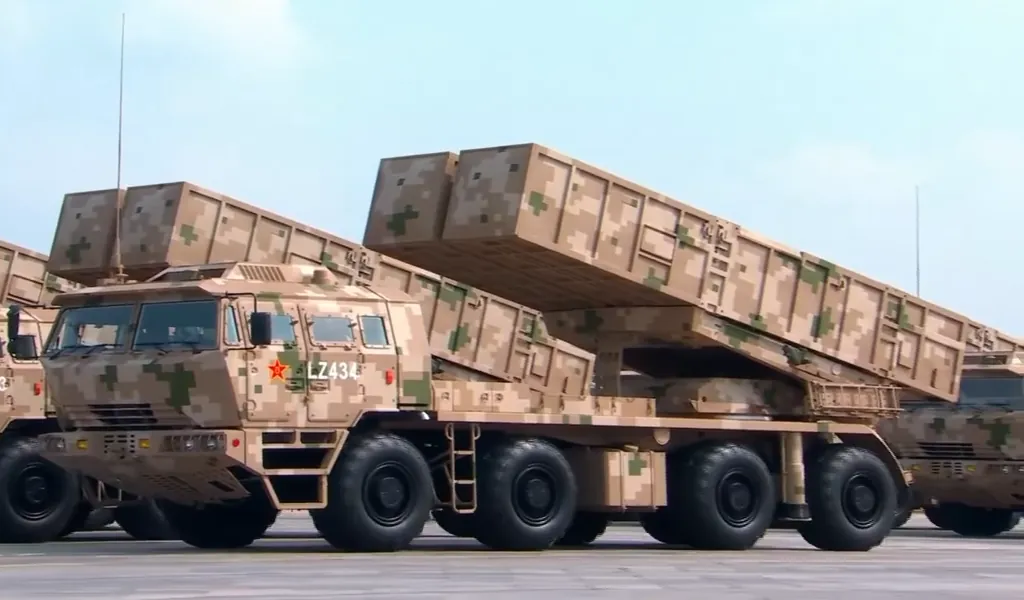
KOROR, Palau – Pacific leaders have expressed concern over China’s ballistic-missile test, but divisions within the Pacific Islands Forum prevented a stronger collective response as governments grappled with growing strategic competition in the region.
The dispute extends beyond the missile test itself. Pacific governments are increasingly focused on sovereignty, military transparency and whether major powers are adequately consulting countries whose surrounding waters are becoming more strategically important.
Palau President Surangel Whipps Jr., who chairs the forum, pushed for a stronger regional response during the annual meeting and argued that Pacific countries should receive greater transparency about military activity in the region.

Missile test raises sovereignty and transparency concerns
The missile test took place in July, but its political consequences continued into the September Pacific Islands Forum summit in Palau.
For Pacific governments, the central concern is not limited to the technical details of the launch. The controversy has raised broader questions about advance notification, regional consultation and the use of Pacific waters for military activity by major powers.
The Pacific Islands Forum describes itself as the region’s central political organization and brings together 18 members around regional cooperation, security and Pacific-led decision-making.
That role has given the dispute wider significance because the response could help shape how Pacific governments address future military activity in the region.
China rejects criticism and defends military policy
Beijing rejected Palau’s characterization of the missile test and defended its military activity.
■ Related News


Chinese Foreign Ministry spokesman Guo Jiakun said Sept. 3 that China had already made its position clear and accused Palau of attempting to influence other Pacific Islands Forum members. He said China remained committed to peaceful development and a defensive national defense policy.
China had previously described the missile test as routine military training that was not directed at any particular country or target. Beijing also said relevant countries had been notified beforehand.
The competing positions have left Pacific governments weighing China’s assurances against concerns about the strategic consequences of missile testing in their region.
Forum divisions limit a stronger response
Pacific leaders agreed to register concern over the missile test, but their final position did not amount to the unanimous condemnation sought by Palau.
Nauru dissented from the criticism, while Kiribati did not participate in the leaders’ retreat where the issue was discussed.
The disagreement illustrates the difficulty of maintaining a common position within a forum whose members have different diplomatic, economic and security relationships with major external powers.
Some Pacific governments maintain close ties with Australia and New Zealand, while others have expanded their engagement with China.
China’s expanding Pacific role complicates diplomacy
The missile dispute has unfolded alongside China’s broader diplomatic and economic engagement across the Pacific.
China’s special envoy for Pacific Island affairs, Qian Bo, attended the Pacific Islands Forum dialogue in Palau on Sept. 1. China’s Foreign Ministry said he promoted cooperation with Pacific island countries in areas including energy transition, trade and investment while emphasizing Beijing’s support for the one-China principle.
Those relationships extend China’s presence beyond security matters and complicate efforts by Pacific governments to develop a common approach toward Beijing.
For smaller island states, the challenge is maintaining economic and diplomatic relationships with external powers while preserving the ability to define regional priorities independently.
Taiwan dispute adds to summit tensions
The missile controversy coincided with a separate dispute over Taiwan’s participation in the forum.
Palau maintains formal diplomatic relations with Taiwan, while Beijing considers Taiwan part of China and opposes participation in international organizations in circumstances it considers inconsistent with the one-China principle.
China’s Foreign Ministry urged the Pacific Islands Forum to handle Taiwan-related issues according to Beijing’s interpretation of the one-China principle.
The overlapping disputes over missile activity and Taiwan made the forum a focal point for wider tensions surrounding China’s role in the Pacific.
Strategic competition reshapes Pacific security
The controversy reflects broader changes in the Pacific’s strategic environment.
The Pacific Islands Forum’s 2026 security outlook describes increasingly complex security challenges and identifies the effects of changing geopolitical conditions and wider international tensions on the region.
Against that backdrop, the missile test has become part of a larger debate over how Pacific states can maintain control of their security priorities as external powers expand their military, diplomatic and economic engagement.
The issue for many island governments is not simply alignment with one major power or another, but the ability to preserve Pacific-led decision-making over regional security.
Limited agreement leaves questions for future military activity
The forum’s response produced a significant expression of regional concern but stopped short of the unanimous condemnation sought by Palau.
The outcome highlighted both growing scrutiny of military activity in Pacific waters and the limitations of regional unity when member states maintain different relationships with China and other external powers.
China’s assurances have not eliminated concerns raised by Palau and other Pacific governments over transparency and regional sovereignty. The issue is likely to remain part of wider discussions about future military activity and strategic competition across the Pacific.
What happens next will depend on future military developments and whether Pacific Islands Forum members can establish a stronger common approach to external powers operating in the region.
Reporting Credit: Pacific Islands Forum Secretariat; Chinese Ministry of Foreign Affairs; New Zealand Government.