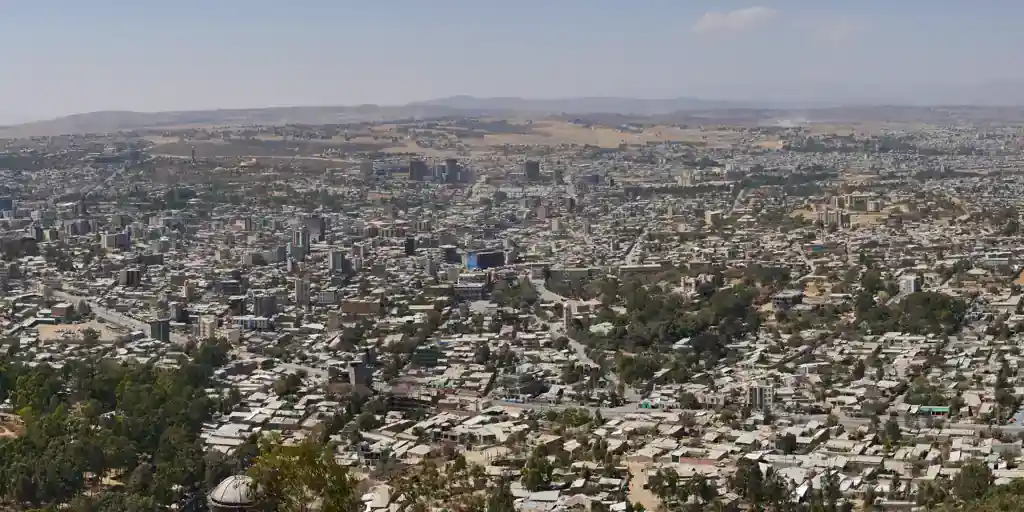
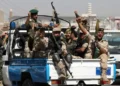
MEKELLE, Ethiopia – Ethiopian federal forces and allied Tigray Peace Force fighters have regained control of Mekelle after the Tigray People’s Liberation Front (TPLF) withdrew from the Tigray capital, marking a major reversal in the renewed fighting but not an end to the conflict.
The TPLF said it had withdrawn from the city and that its regional administration would temporarily operate elsewhere. The group described the move as an effort to prevent further destruction in Mekelle rather than an end to its resistance.
The Tigray Peace Forces said their fighters had taken control of the city. A humanitarian source and a Mekelle resident also confirmed that government forces and their allies had regained control, providing independent corroboration of the change in control.

The development comes less than two weeks after the TPLF launched a major offensive against federal forces, capturing Mekelle and its airport before Ethiopian federal forces mounted a counteroffensive and advanced toward the capital.
Mekelle changes hands again
The latest takeover marks another dramatic reversal in control of Tigray’s largest city.
The TPLF seized Mekelle’s Alula Aba Nega Airport in September, prompting the suspension of commercial flights to the city as well as to Axum and Shire. Federal forces later regained the airport before entering Mekelle.
Communications disruptions have made developments inside Tigray difficult to independently verify. Residents reported looting at government offices and other facilities as TPLF-aligned fighters withdrew, although the full circumstances surrounding those reports remain difficult to establish.
The change in control represents a significant battlefield setback for the TPLF-led opposition alliance. It does not, however, establish that the TPLF has been defeated across Tigray or that federal forces have restored control throughout the region.
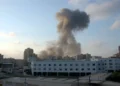
The renewed Tigray conflict remains active beyond the capital, and the TPLF has indicated that its withdrawal from Mekelle does not mean an end to its armed opposition.
Pressure on the 2022 peace framework
The latest fighting is the most serious escalation in Tigray since the 2020–2022 war, which ended with the signing of the Pretoria Agreement between Ethiopia’s federal government and the TPLF.
The African Union has reaffirmed the agreement as the cornerstone of peace, stability and reconciliation in Ethiopia. On Sept. 23, the AU called for an immediate cessation of actions that could escalate the crisis and urged the parties to resume direct talks within the framework of the agreement.
The AU said the seizure of the civilian airports in Mekelle, Axum and Shire was inconsistent with obligations under the Pretoria Agreement and warned that renewed military activity risked reversing progress made since the 2020–2022 war.
The latest fighting has therefore increased pressure on the peace process, but there has been no authoritative declaration that the 2022 agreement has formally collapsed.
Withdrawal does not mean defeat
The TPLF’s withdrawal from Mekelle should be distinguished from a military surrender.
The group said its regional administration would temporarily operate outside the capital. Its leadership has also indicated that fighting would continue, meaning the loss of Mekelle does not establish that the organization has abandoned its broader political or military objectives.
That distinction is significant given the history of the previous war. Federal forces captured Mekelle early in the 2020 conflict, but the TPLF later launched a counteroffensive and retook the city.
The latest reversal therefore does not by itself determine how the wider conflict will develop.
Regional tensions raise the stakes
The renewed fighting is unfolding alongside a sharp deterioration in Ethiopia’s relations with neighboring Eritrea.
Ethiopia closed its embassy in Asmara and expelled 10 Eritrean diplomats last week, accusing Eritrea of hostile actions and of supporting an opposition alliance led by the TPLF. Eritrea subsequently severed diplomatic ties with Ethiopia.
Ethiopia has also accused Sudan and Egypt of supporting the opposition alliance. All three countries have denied the allegations.
Egyptian Foreign Minister Badr Abdelatty told Reuters on Sunday that Egypt was not a party to Ethiopia’s internal crisis. His statement came as Egypt hosted a meeting involving the leaders of Egypt, Eritrea and Somalia, with Sudan’s army chief also expected to attend.
The regional tensions make the fighting more consequential, but the available evidence does not establish that Eritrean, Egyptian or Sudanese forces are directly participating in the battle for Mekelle.
The African Union has urged Ethiopia and neighboring countries to exercise restraint and support de-escalation and dialogue.
Humanitarian concerns remain
The renewed fighting has raised concerns about civilian safety, displacement and access to essential services.
Internet and cellphone disruptions have significantly complicated reporting from Tigray. The lack of reliable communications has also made casualty figures and detailed battlefield claims particularly difficult to verify independently.
No comprehensive, independently verified casualty figure for the latest fighting has been established in the available evidence. Journos News therefore does not present competing battlefield casualty claims as confirmed figures.
The humanitarian consequences could grow if fighting continues or spreads to additional population centers. The previous Tigray war caused extensive displacement and humanitarian suffering, making renewed hostilities particularly significant for civilians.
What happens next
The immediate challenge for Ethiopia’s federal government and its allies will be maintaining control of Mekelle while fighting continues elsewhere in Tigray.
For the TPLF, the withdrawal leaves questions about where its administration and forces will operate and whether it can sustain military resistance outside the capital.
For the peace process, the central question is whether the parties can return to negotiations despite the latest battlefield reversal.
The African Union’s continued call for direct talks under the Pretoria framework indicates that diplomacy remains the recognized route toward resolving the conflict.
The recapture of Mekelle is therefore a major military development, but it is not evidence that the renewed Tigray conflict has ended.
Reporting Credit: African Union Commission; Ethiopian federal authorities; Tigray People’s Liberation Front; Tigray Peace Forces; Ethiopian regional authorities; United Nations; humanitarian sources and residents cited in independently verified battlefield reporting.