Journos News
Friday, June 19, 2026
  • Login
  • Home
  • World
    • Conflicts & War
      • Iran-Israel Conflict
      • Russia-Ukraine War
    • Africa
    • Americas
    • Asia
    • Europe
    • Middle East
    • Oceania
  • Politics
  • Business
  • Technology
  • Health
  • Science
  • Sports
  • Entertainment
  • Culture
No Result
View All Result
  • Home
  • World
    • Conflicts & War
      • Iran-Israel Conflict
      • Russia-Ukraine War
    • Africa
    • Americas
    • Asia
    • Europe
    • Middle East
    • Oceania
  • Politics
  • Business
  • Technology
  • Health
  • Science
  • Sports
  • Entertainment
  • Culture
No Result
View All Result
Journos News
No Result
View All Result
Home World News Europe

Europe Accelerates Energy Security Shift After Iran War Disruptions

EU explores alternative trade corridors and infrastructure beyond Strait of Hormuz risks

The Daily Desk by The Daily Desk
June 19, 2026
in Europe, World News
0
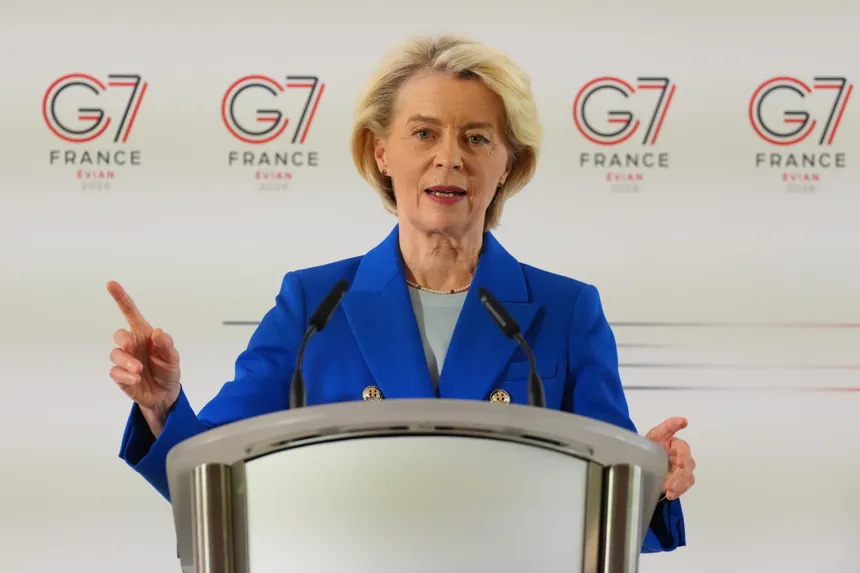
EU explores new energy corridors after Iran war disruptions - AP Photo/Vadim Ghirda

Europe evaluates new routes after regional energy shocks - AP Photo/Vadim Ghirda

NICOSIA, Cyprus — The European Union is stepping up efforts to reshape its energy and trade security architecture following the disruption of global fuel markets linked to the Iran war, Associated Press reporting indicated, as policymakers warn that reliance on traditional Middle Eastern shipping routes leaves the bloc exposed to future geopolitical shocks.

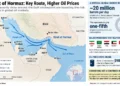
European leaders are now weighing a mix of long-term infrastructure projects and regional partnerships aimed at reducing dependence on the Strait of Hormuz, a critical chokepoint for global energy flows that has repeatedly been threatened by regional instability.

Push for new intercontinental trade corridors

A central element of the EU’s emerging strategy is renewed interest in the India-Middle-East-Europe Economic Corridor (IMEC), a proposed network of transport, energy, and digital links connecting South Asia to Europe via the Gulf and Israel.

European Commission President Ursula von der Leyen told G7 leaders that “alternative export routes have been created that are more resilient and offer choices” and added that “other routes will be built — for example, a typical one is IMEC.”

The initiative is viewed within EU policy circles as a potential mechanism for strengthening supply-chain diversification and strategic autonomy, particularly as tensions with Russia persist and transatlantic economic alignment faces new strains.

RELATED POSTS

Commercial Ships Resume Strait of Hormuz Transit Following U.S.-Iran Agreement

Southern Lebanese Residents Return Home Amid Uncertainty Following U.S.-Iran Agreement

Deadly Attack on Niger’s Main Airport Highlights Ongoing Security Challenges

Zimbabwe Lawmakers Back Constitutional Changes That Could Extend President’s Rule

Cuba’s Communist Party Backs Emergency Economic Reforms Amid Growing External Pressure

Political Turmoil Deepens in Puerto Rico as Top Government Official Faces Scrutiny

While the EU has endorsed IMEC through a memorandum of understanding, only a limited number of its 27 member states are formal signatories. A senior EU diplomat, speaking on condition of anonymity due to restrictions on disclosing internal discussions, said political support for the project remains strong, with ongoing efforts to move it from concept to implementation.

“The focus now is on translating that vision into practical implementation across its three pillars: transport and trade connectivity, energy connectivity and digital connectivity,” the diplomat said, noting that future infrastructure could include pipelines and transmission networks.

Diplomatic conditions and regional constraints

IMEC’s viability remains closely tied to regional diplomatic developments, particularly normalization between Israel and Saudi Arabia, which analysts and officials describe as a key prerequisite for full implementation.

Lianne Pollak-David, co-founder of the Israel-based Coalition for Regional Security, said during a recent briefing that U.S. involvement would be essential. “Without normalization between Israel and Saudi Arabia, IMEC cannot be truly realized,” she said.

Saudi Arabia has indicated it would only normalize relations with Israel if there is a clear pathway toward Palestinian statehood, a position that remains at odds with Israeli leadership. How the Iran war, which involved U.S. and Israeli military action and affected Gulf states, may influence Saudi calculations remains uncertain.

Saudi officials have not publicly commented on the initiative.

Europe weighs Gulf partnerships and alternative routes

European leaders are also examining shorter-term measures to reduce exposure to disruptions in the Strait of Hormuz. European Commission officials have pointed to significant increases in energy import costs during the early phase of the conflict, with President von der Leyen stating the EU spent 25 billion euros ($29 billion) more on oil and gas in the first 54 days of the war.

At an EU leaders’ meeting in April, von der Leyen and European Council President Antonio Costa said the bloc was prepared to deepen cooperation with Gulf countries to develop infrastructure that bypasses high-risk maritime corridors.

French Foreign Ministry spokesperson Pascal Confavreux said G7 discussions included financing infrastructure that could “go outside of the track of the Strait of Hormuz.”

Existing regional infrastructure has also drawn attention, including Saudi Arabia’s East-West Pipeline, which runs from eastern oil fields to the Red Sea and reportedly reached maximum capacity transport levels during the conflict period.

Renewable ambitions alongside fossil infrastructure

An EU official said the bloc may also encourage European companies to invest in renewable energy projects in Gulf states to support long-term diversification of supply. The official spoke on condition of anonymity because they were not authorized to discuss internal planning.

Analysts caution that near-term projects are more likely to focus on oil and gas pipelines or the repair of damaged infrastructure, while longer-term plans would need to align with EU climate policy goals, potentially including “dual-use” systems capable of transporting hydrogen in the future.

Gabriel Mitchell of the German Marshall Fund said such projects would take time to develop but could form part of a broader strategic shift in energy policy.

Mediterranean interconnection project gains attention

Another major initiative under discussion is the Great Seas Interconnector (GSI), an EU-backed subsea electricity cable intended to stretch 1,208 kilometers to link continental Europe’s power grid with Cyprus and Israel, with potential expansion toward broader regional integration.

The project, while delayed by financing and regulatory hurdles, is seen by supporters as a key step in reducing energy isolation in parts of the Eastern Mediterranean and enabling integration with wider intercontinental energy networks.

Gallia Lindenstrauss of the Israel-based Institute for National Security Studies described it as a “very pragmatic solution for the modern energy needs,” adding that it could support future transitions toward renewable energy systems.

The United States has also expressed interest in strengthening Eastern Mediterranean energy cooperation. U.S. Energy Secretary Chris Wright said last week the region is “an increasingly important region for global energy development,” highlighting cooperation on natural gas and infrastructure initiatives.

Despite growing political momentum, EU officials acknowledge that most projects remain in early planning stages, with financing, diplomacy, and regional stability continuing to shape their feasibility.

Tags: European Union, Iran war, energy security, Strait of Hormuz, IMEC, Cyprus, Middle East
This article was rewritten and editorially reviewed by Journos News based on verified reporting from trusted sources. All content is independently fact-checked and edited for accuracy, neutrality, tone, and global readability in line with Google News and AdSense publishing standards.

Opinions, quotes, and statements from contributors, experts, or cited organizations do not necessarily reflect the views of Journos News. The newsroom maintains full editorial independence from external funders, sponsors, and affiliated entities.

Editorial Standards  |  Journos News

Tags: #Cyprus#EnergyPolicy#G7#Geopolitics#GlobalTrade#IndiaMiddleEastEuropeCorridor#Infrastructure#MiddleEast
The Daily Desk

The Daily Desk

The Daily Desk – Contributor, JournosNews.com, The Daily Desk is a freelance editor and contributor at JournosNews.com, covering politics, media, and the evolving dynamics of public discourse. With over a decade of experience in digital journalism, Jordan brings clarity, accuracy, and insight to every story.

Related Posts

Commercial Ships Resume Strait of Hormuz Transit Following U.S.-Iran Agreement

by The Daily Desk
June 19, 2026
0
Commercial ships transit the Strait of Hormuz after diplomatic agreement - AP Photo, File

LONDON — Major shipping companies have begun moving vessels through the Strait of Hormuz following the interim agreement reached between...

Read moreDetails

Southern Lebanese Residents Return Home Amid Uncertainty Following U.S.-Iran Agreement

by The Daily Desk
June 19, 2026
0
Residents inspect damaged homes in southern Lebanon - AP Photo/Hassan Ammar

TYRE, Lebanon — Residents across southern Lebanon began returning to their homes on Thursday following the announcement of a U.S.-Iran...

Read moreDetails

Deadly Attack on Niger’s Main Airport Highlights Ongoing Security Challenges

by The Daily Desk
June 19, 2026
0
Security forces respond after attack at Niger airport - AP Photo/Sam Mednick, File

DAKAR, Senegal — Gunmen launched an attack on Niger's main international airport in the capital of Niamey early Thursday, killing...

Read moreDetails

Zimbabwe Lawmakers Back Constitutional Changes That Could Extend President’s Rule

by The Daily Desk
June 19, 2026
0
Zimbabwe parliament approves constitutional amendments affecting elections - AP Photo/Thibault Camus, File

HARARE, Zimbabwe — Zimbabwe's National Assembly has approved constitutional amendments that would postpone the country's next elections and extend the...

Read moreDetails

Cuba’s Communist Party Backs Emergency Economic Reforms Amid Growing External Pressure

by The Daily Desk
June 19, 2026
0
Cuba advances economic reforms amid international pressure - AP Photo/Ramon Espinosa

HAVANA — Cuba's Communist Party has approved an emergency economic package that includes some of the most significant market-oriented measures...

Read moreDetails

Political Turmoil Deepens in Puerto Rico as Top Government Official Faces Scrutiny

by The Daily Desk
June 18, 2026
0
Puerto Rico officials face scrutiny amid political controversy - AP Photo/Ricardo Arduengo, File

SAN JUAN, Puerto Rico — Puerto Rico's government is facing mounting political pressure as allegations of corruption, government interference and...

Read moreDetails

Brazil Police Expand Corruption Probe to Senior Lula Ally Ahead of Election

by The Daily Desk
June 18, 2026
0
Brazilian federal police investigate senior senator linked to bank scandal - AP Photo/Felipe Dana, File

RIO DE JANEIRO — Brazilian federal police on Thursday executed search and seizure warrants targeting a senior senator aligned with...

Read moreDetails

Taiwan Presses for U.S. Weapons as China Threats Remain a Concern

by The Daily Desk
June 18, 2026
0
Taiwan seeks U.S. weapons amid rising tensions with China - AP Photo/Jacquelyn Martin

WASHINGTON — Taiwan continues to seek the approval of a proposed $14 billion U.S. arms package as concerns grow over...

Read moreDetails

Trump Signs Iran Agreement as U.S. Officials Outline Major Nuclear and Sanctions Concessions

by The Daily Desk
June 18, 2026
0
Trump signs Iran agreement during diplomatic meeting in France - Amirhosein Khorgooi/ISNA via AP

WASHINGTON - The United States and Iran have signed a new agreement aimed at halting hostilities and restarting negotiations over...

Read moreDetails
Load More
JournosNews logo

Journos News delivers globally neutral, fact-based journalism that meets international media standards — clear, credible, and made for a connected world.

  • Categories
  • World News
  • Politics
  • Business & Markets
  • Technology
  • Health
  • Science
  • Sports
  • Arts & Culture
  • Resources
  • Editorial Standards
  • Submit a Story
  • Advertise with Us
  • Syndication & Partnerships
  • Site Map
  • Press & Media Kit
  • Editorial Team
  • Careers

Join thousands of readers receiving the latest updates, tips, and exclusive insights straight to their inbox. Never miss an important story again.

  • About Us
  • Accessibility Statement
  • Contact Us
  • Privacy Policy
  • Terms and Conditions

© JournosNews.com – Trusted source for breaking news, trending stories, and in-depth reports.
All rights reserved.

Welcome Back!

Login to your account below

Forgotten Password?

Retrieve your password

Please enter your username or email address to reset your password.

Log In
No Result
View All Result
  • Home
  • World
    • Conflicts & War
      • Iran-Israel Conflict
      • Russia-Ukraine War
    • Africa
    • Americas
    • Asia
    • Europe
    • Middle East
    • Oceania
  • Politics
  • Business
  • Technology
  • Health
  • Science
  • Sports
  • Entertainment
  • Culture

© JournosNews.com – Trusted source for breaking news, trending stories, and in-depth reports.
All rights reserved.

This website uses cookies. By continuing to use this website you are giving consent to cookies being used. Visit our Privacy and Cookie Policy.