TYRE, Lebanon — Senior U.S. and Iranian officials are expected to meet in Switzerland on Sunday to continue negotiations aimed at transforming a temporary wartime agreement into a broader long-term arrangement, as renewed tensions surrounding the Strait of Hormuz and ongoing fighting in Lebanon cast uncertainty over the diplomatic process.
The talks, facilitated by Pakistan with support from Qatari mediators, are intended to address unresolved elements of an interim agreement that halted direct hostilities between Washington and Tehran earlier this week. However, officials on both sides have signaled that progress could be difficult unless regional violence subsides.
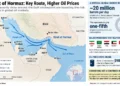
Iran announced Saturday that it had again closed the Strait of Hormuz, citing what its military described as a failure by the United States to fulfill commitments related to ending hostilities involving Israel and Hezbollah in Lebanon. The strategic waterway remains one of the world’s most important energy transit routes, making any disruption a matter of global economic concern.

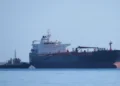
U.S. officials disputed Tehran’s claim. A spokesperson for U.S. Central Command stated that commercial shipping continued to move through the strait and that American forces were monitoring the area to ensure freedom of navigation. According to the military, dozens of merchant vessels carrying more than 17 million barrels of oil transited the waterway on Saturday.
The disagreement emerged just hours before negotiators arrived in Switzerland. Iranian state television showed members of Tehran’s delegation landing in the country, led by parliamentary Speaker Mohammad Bagher Qalibaf and including Foreign Minister Abbas Araghchi alongside senior economic and energy officials.
On the U.S. side, Vice President JD Vance departed for Switzerland Saturday evening. Before leaving, he expressed optimism about discussions concerning Iran’s nuclear activities and efforts to secure a ceasefire in southern Lebanon. He confirmed that senior negotiators Jared Kushner and Steve Witkoff were already participating in discussions.
Pakistan’s Prime Minister Shehbaz Sharif and army chief Field Marshal Asim Munir also traveled to Switzerland as diplomatic efforts intensified.
Regional Conflict Threatens Negotiations
Iranian officials have indicated that implementation of a final agreement depends on commitments being honored by all parties involved.
■ Related News



Foreign Ministry spokesperson Esmail Baghaei said negotiations toward a permanent arrangement would proceed only after key obligations are fulfilled, warning that failure to do so could place the broader understanding at risk.
The interim agreement signed earlier this week between U.S. President Donald Trump and Iranian President Masoud Pezeshkian established a 60-day framework for negotiating a comprehensive nuclear accord. As part of the arrangement, Washington lifted restrictions on Iranian ports and allowed Iran to resume oil exports while discussions continue.
Trump responded to Iran’s latest Strait of Hormuz announcement by warning that the United States could impose transit tolls in the waterway if a permanent agreement is not reached within the negotiation period. He described the proposed charges as compensation for American security efforts in the region.
Lebanon Remains Central Obstacle
Efforts to sustain diplomacy have been complicated by continued clashes between Israel and Hezbollah in southern Lebanon.
A Hezbollah official told The Associated Press that Iran had informed the group it would not reopen the Strait of Hormuz until Israel publicly committed to a comprehensive ceasefire in Lebanon and ended military operations there. The official also stated that Hezbollah would halt attacks if Israel agreed to stop its military campaign.
Later Saturday, an Israeli military official said the armed forces had received updated instructions from political leaders to cease offensive operations while maintaining defensive capabilities and retaining the right to respond to attacks.
The official also reported that five Israeli soldiers had been killed during the previous 48 hours in southern Lebanon.
Neither Israel nor Hezbollah is a formal participant in the U.S.-Iran agreement currently under negotiation.
Civilian Casualties Continue to Rise
Despite diplomatic efforts, violence persisted across southern Lebanon on Saturday.
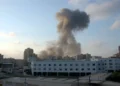
Lebanon’s National News Agency reported that Israeli strikes killed at least 16 people, including two children. Several individuals were reported trapped beneath collapsed buildings following attacks on Nabatiyeh and nearby communities.
Israeli military officials stated that Hezbollah launched more than 50 projectiles toward Israeli positions overnight. In response, the Israeli military said it conducted strikes against Hezbollah fighters and infrastructure throughout southern Lebanon.
Lebanon’s Health Ministry later announced that fatalities linked to the latest conflict between Israel and Hezbollah had surpassed 4,000.
The conflict escalated shortly after U.S. and Israeli strikes targeted Iran on Feb. 28. Since then, Hezbollah has launched rockets and drones toward northern Israel, while Israeli forces have expanded operations in parts of southern Lebanon.
Further U.S.-supported discussions involving Lebanon and Israel are expected to take place in Washington next week.
Israeli Prime Minister Benjamin Netanyahu has maintained that Israeli forces will remain in southern Lebanon until security threats are eliminated. Hezbollah, meanwhile, has insisted it will continue military operations unless Israel commits to a withdrawal.
Uncertainty Ahead
Residents on both sides of the border expressed skepticism that hostilities would end quickly despite growing diplomatic activity.
While many civilians hope a ceasefire could bring stability to communities devastated by months of fighting, continued military exchanges underscore the challenges facing negotiators as they attempt to secure both a broader U.S.-Iran agreement and a lasting reduction in regional violence.
With talks set to begin in Switzerland, the success of the diplomatic effort may depend as much on developments in Lebanon as on negotiations surrounding Iran’s nuclear program.
Tags: Iran, United States, Lebanon, Israel, Hezbollah, Strait of Hormuz, Nuclear Talks, Diplomacy