Journos News - Breaking News, World News, Top Stories, Todays Headlines and Flash Reports
Tuesday, September 1, 2026
  • Login
  • Home
  • World
    • Africa
    • Americas
    • Asia
    • Europe
    • Middle East
    • Oceania
  • Politics
  • Business
  • Technology
  • Health
  • Science
  • Sports
  • Entertainment
  • Culture
No Result
View All Result
  • Home
  • World
    • Africa
    • Americas
    • Asia
    • Europe
    • Middle East
    • Oceania
  • Politics
  • Business
  • Technology
  • Health
  • Science
  • Sports
  • Entertainment
  • Culture
No Result
View All Result
Journos News - Breaking News, World News, Top Stories, Todays Headlines and Flash Reports
No Result
View All Result
Home World News Middle East

Iran’s War Command Faces Sudden Void After Larijani Killed in Israeli Strike

Elimination of key strategist raises uncertainty over Tehran’s wartime coordination and decision-making structure

The Daily Desk by The Daily Desk
June 20, 2026
in Middle East, World News
0
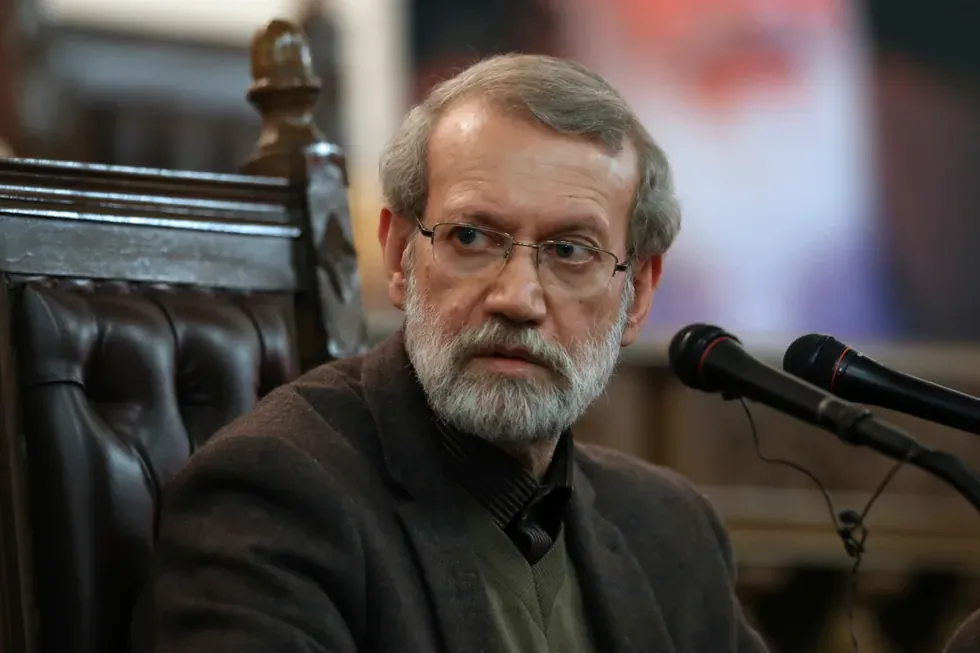
Ali Larijani Iran leadership crisis after Israeli strike escalation - AP Photo/Vahid Salemi, File

Ali Larijani’s death raises concerns over Iran’s wartime command stability - AP Photo/Vahid Salemi, File

DUBAI, United Arab Emirates (Journos News) – The killing of Ali Larijani in an اسرائیלי strike has exposed a critical leadership gap at the center of Iran’s wartime command, intensifying questions over how Tehran will coordinate strategy amid mounting military and diplomatic pressure.

Iranian authorities confirmed Tuesday that Larijani, a senior security official long embedded in the country’s power structure, died alongside his son in a targeted attack. His death follows a series of high-level eliminations that have disrupted Iran’s leadership hierarchy during a period of active confrontation with both the United States and Israel.

According to reporting by The Associated Press, Larijani had effectively assumed a central coordinating role after the recent killing of Iran’s supreme leader, widely believed to be Ali Khamenei, in joint U.S. and Israeli strikes that triggered the current escalation.

The removal of yet another senior figure now raises the prospect of fragmented decision-making within Iran’s security apparatus.

Command Fractures Emerge Across Wartime Leadership

Larijani’s influence extended beyond formal titles, positioning him as a de facto coordinator of Iran’s strategic response as senior leadership figures went underground under sustained pressure.

His role advising on nuclear negotiations with the administration of Donald Trump and engaging with mediators in Oman underscored his dual function—bridging diplomacy and military calculation at a moment of escalating confrontation.

With his death, analysts are likely to assess whether Iran’s Supreme National Security Council retains operational cohesion or faces internal competition among remaining power centers. The loss of a figure who combined political legitimacy with strategic access may complicate rapid decision-making under crisis conditions.

Editorially, the strike signals a shift from symbolic targeting to functional disruption—aimed at dismantling coordination rather than merely eliminating figureheads.

■ Related News
Donald Trump speaks at the Conservative Political Action Conference in Washington, D.C., in 2011 during a political address.

After Six Months of Iran War, U.S. Goals Have Shifted. Strait of Hormuz Is Now a Top Concern

August 27, 2026
Russian President Vladimir Putin attends a ceremony presenting Hero of Labour medals and state awards in Russia.

Putin Opens Door to State Control of Russian Sites Hit by Ukrainian Drones

August 26, 2026
Iranian President Masoud Pezeshkian speaks during an interview with Khamenei.ir in 2024.

Iran urges internal unity as Hormuz standoff deepens across Middle East

August 10, 2026
Houthi supporters protest against Saudi-led coalition airstrikes in Sana’a, Yemen, in September 2015.

Houthi Attacks Raise Risk of Wider Conflict and Red Sea Shipping Disruption

August 9, 2026

Strategic Continuity Tested Under Escalating Pressure

Larijani’s death comes amid intensifying threats surrounding key economic chokepoints, particularly the Strait of Hormuz, where tensions have raised concerns over global energy flows.

In remarks posted days before his death, Larijani dismissed U.S. warnings of escalated retaliation, suggesting Iran retained confidence in its deterrence posture. That confidence now faces a structural test as leadership continuity becomes less certain.

Without a clearly designated operational successor, Tehran may encounter delays or inconsistencies in executing coordinated responses—particularly in scenarios requiring rapid escalation or de-escalation decisions.

This introduces a layer of unpredictability not only for adversaries but also for regional actors monitoring Iran’s next moves.

Regional Deterrence Calculus Shifts

The removal of a central strategist could alter the balance of deterrence across the region, where perception of command stability plays a critical role in shaping adversary behavior.

Larijani’s long-standing involvement in both domestic security and foreign policy positioned him as a stabilizing node within Iran’s otherwise complex and factionalized governance system.

His absence may embolden further targeted operations or, conversely, provoke a more decentralized and less predictable response structure from Tehran.

From a geopolitical standpoint, the development risks lowering the threshold for miscalculation, particularly if competing factions interpret strategic priorities differently in the absence of centralized coordination.

Institutional Depth Faces Its Most Immediate Test

Born into a prominent political family often compared to American dynasties, Larijani’s career spanned decades—from cultural policymaking to parliamentary leadership and high-level security oversight.

His tenure as parliament speaker and later as a senior security official reflected deep integration into Iran’s governing architecture. Yet the current moment tests whether that institutional depth can compensate for the loss of experienced operators at the top.

While Iran’s system has historically demonstrated resilience through layered authority structures, the cumulative removal of key figures introduces stress points that may not be easily absorbed in a wartime environment.

Forward Outlook: Leadership Gap Becomes Strategic Variable

The immediate consequence of Larijani’s death is not only operational disruption but the emergence of leadership uncertainty as a defining factor in the conflict.

Future developments will likely hinge on how quickly Iran consolidates authority within its security apparatus—and whether it can maintain strategic coherence amid continued external pressure.

Absent a clear successor with comparable reach, Tehran’s response posture may shift from coordinated strategy to reactive measures, reshaping both the tempo and trajectory of the conflict.


Tags: #DiplomaticTensions#EnergySecurity#ForeignPolicy#Geopolitics#GlobalSecurity#IranIsraelConflict#IranLeadershipCrisis#MiddleEastTensions#MilitaryAnalysis#StrategicRisk#WarDevelopments#WorldNews
The Daily Desk

The Daily Desk

The Daily Desk is a contributor at JournosNews.com covering politics, media, governance, and the evolving dynamics of public discourse. Stories published under this byline are produced in accordance with JournosNews' editorial standards, with an emphasis on verified reporting, accuracy, context, and impartiality.

Related Posts

Editorial map showing the Strait of Hormuz, Iran and Oman, with shipping routes and key locations amid Iran-Oman ceasefire diplomacy.

Iran Ceasefire Talks Put the Strait of Hormuz at the Center of a Fragile Middle East De-Escalation

August 8, 2026
Firefighters from Ukraine's State Emergency Service work among the rubble of a severely damaged building as smoke rises following a Russian attack in Kyiv.

Ukraine Expands Strikes on Russian Oil Facilities as Kyiv Seeks Stronger Air Defenses

August 7, 2026
A U.S. Navy sailor stands watch aboard a military vessel while transiting the Strait of Hormuz, monitoring nearby maritime traffic.

Iran Nears Strait of Hormuz Agreement as Israel Reports First Troop Deaths Since Lebanon Ceasefire

August 6, 2026
Locator map showing the approximate coal mine explosion site near Harnai in Pakistan's Baluchistan province, rescue operation areas, nearby communities, and key incident information.

Pakistan Coal Mine Explosion Kills at Least 32 as Rescuers Search for Trapped Workers

July 31, 2026
A Russian Gerbera drone displayed after being downed by Ukrainian border guards in Ukraine's Sumy region during a reported drone attack.

Romania Shoots Down Russian Drones After Repeated Airspace Violations Near Ukraine

July 29, 2026
Map showing renewed security threats to Red Sea shipping routes, highlighting Houthi launch areas, airstrikes, maritime chokepoints, and major shipping lanes.

Houthis Launch Missiles at Saudi Arabia as Red Sea Tensions Escalate Amid Wider Regional Conflict

July 26, 2026
Regional map showing conflict locations across Iraq and Iran, major maritime shipping routes, and strategic chokepoints including the Strait of Hormuz and Bab el-Mandeb Strait.

US Strikes Continue as Explosions Reported Near American Base in Northern Iraq Conflict expands across the region

July 24, 2026
Map showing Gulf oil export routes, major pipelines, export terminals, and maritime chokepoints, including the Strait of Hormuz and Bab el-Mandeb Strait.

Gulf Oil Producers Accelerate Pipeline Projects to Reduce Reliance on Strait of Hormuz

July 24, 2026
Load More
Next Post
Joe Kent resignation highlights internal divisions over Iran war strategy - AP Photo/Rod Lamkey, Jr., File

Counterterrorism Rift Exposes Internal Strain as Iran War Narrative Fractures Inside Trump Team

Gamers reacting to Nvidia DLSS 5 AI graphics controversy - AP Photo/Jeff Chiu, File

Nvidia Faces Backlash Over DLSS 5 as Gamers Question AI Visual Control

JournosNews logo

Journos News delivers globally neutral, fact-based journalism that meets international media standards — clear, credible, and made for a connected world.

  • Categories
  • World News
  • Politics
  • Business & Markets
  • Technology
  • Health
  • Science
  • Sports
  • Arts & Culture
  • Resources
  • Editorial Standards
  • Submit a Story
  • Advertise with Us
  • Syndication & Partnerships
  • Site Map
  • Press & Media Kit
  • Editorial Team
  • Careers

Join thousands of readers receiving the latest updates, tips, and exclusive insights straight to their inbox. Never miss an important story again.

  • About Us
  • Editorial & Trust Center
  • Contact Us
  • Privacy Policy
  • Terms of Use & Copyright Notice

© JournosNews.com All rights reserved.

Welcome Back!

Login to your account below

Forgotten Password?

Retrieve your password

Please enter your username or email address to reset your password.

Log In
JournosNews

Independent Journalism.
Verified Facts.

You're about to read a professionally edited article from JournosNews.com.

Every article is produced in accordance with our editorial standards, emphasizing factual accuracy, transparent attribution, fairness, editorial independence, and meaningful context.

Editorial Standards
No Result
View All Result
  • Home
  • World
    • Africa
    • Americas
    • Asia
    • Europe
    • Middle East
    • Oceania
  • Politics
  • Business
  • Technology
  • Health
  • Science
  • Sports
  • Entertainment
  • Culture

© JournosNews.com All rights reserved.

This website uses cookies. By continuing to use this website you are giving consent to cookies being used. Visit our Privacy and Cookie Policy.