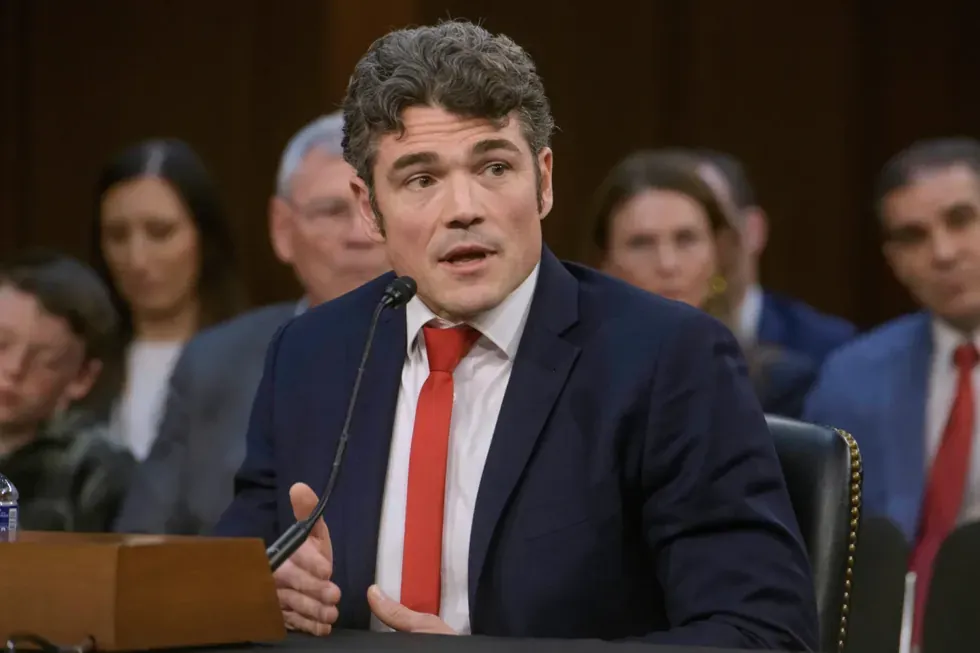
The resignation of Joe Kent from the top U.S. counterterrorism post has exposed a widening internal fracture within the national security apparatus, raising questions about the coherence of Washington’s justification for its military campaign against Iran.
In a departure that cuts directly into the administration’s central war narrative, Kent publicly rejected the premise used by Donald Trump to authorize strikes, stating that Iran posed “no imminent threat” to the United States. According to reporting by the Associated Press, his resignation letter went further, alleging that external political pressure — including from Israeli leadership and domestic lobbying networks — contributed to the decision to go to war.
The split marks one of the most visible instances of internal dissent since the launch of U.S. operations, signaling strain not just in policy execution but in the intelligence consensus underpinning it.

Command Fractures Emerge Over Threat Assessment
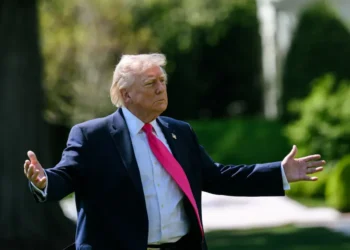
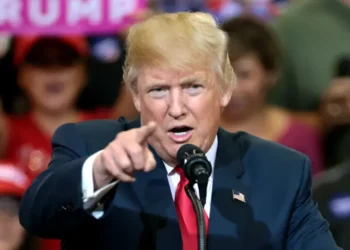
At the core of the rupture is a fundamental disagreement over whether Iran represented an immediate danger. Trump had framed the strikes as preemptive, warning that Tehran’s actions threatened U.S. forces and global allies.
Kent’s position directly contradicts that assessment, introducing doubt about whether intelligence findings were uniformly interpreted across agencies. His claims suggest that the decision-making process may have been influenced by competing political narratives rather than a unified threat evaluation.
Tulsi Gabbard, whose office oversaw Kent’s work, defended the president’s authority to act, stating that Trump reached his conclusion after reviewing available intelligence. However, her remarks stopped short of endorsing the substance of that threat assessment, leaving ambiguity about internal consensus.
The divergence highlights a deeper institutional tension: whether intelligence is being presented as analysis or shaped to align with policy direction.
Strategic Credibility Faces Internal Pressure
Kent’s resignation introduces a credibility challenge at a critical moment in the conflict. When a senior counterterrorism official publicly disputes the rationale for military action, it complicates Washington’s ability to maintain a consistent message to allies and adversaries.
■ Related News




His assertions regarding alleged misinformation campaigns — particularly those implicating foreign influence — risk amplifying scrutiny of how intelligence narratives are constructed and communicated. Even without corroboration, such claims can erode confidence in official justifications.
This internal friction arrives as the administration seeks to sustain international backing for its operations, making message discipline a strategic asset now under strain.
Past Controversies Resurface Amid Policy Break
The departure also revives attention to Kent’s political history and associations, which had already made his appointment contentious. During his confirmation, lawmakers scrutinized his past interactions with far-right figures, including Nick Fuentes, as well as his links to groups such as the Proud Boys.
His earlier statements questioning the legitimacy of the January 6 Capitol attack and the 2020 election had drawn bipartisan concern, contributing to a narrowly divided Senate confirmation.
While Kent later distanced himself from some affiliations, his resignation under politically charged circumstances reintroduces those concerns into the broader narrative, particularly as they intersect with sensitive geopolitical decisions.
Operational Role Leaves Intelligence Gap
As head of the National Counterterrorism Center, Kent oversaw the integration of intelligence related to global terrorist threats — a role designed to prevent fragmentation after the September 11 attacks.
His abrupt exit raises questions about continuity in threat monitoring at a time when U.S. forces are engaged in active operations. The position is central not only to identifying risks but also to aligning interagency analysis — precisely the area now under visible strain.
The timing of his resignation suggests that internal disagreements may extend beyond policy debate into operational cohesion, particularly if competing assessments persist within the intelligence community.
Personal Doctrine Collides With Policy Direction
Kent’s long-standing skepticism of U.S. military interventions appears to have collided with the administration’s current posture. Following the death of his wife in a 2019 attack while deployed against the Islamic State, he became increasingly critical of prolonged overseas conflicts.
That worldview, once a peripheral element of his public profile, has now intersected directly with policy at the highest level. His resignation reflects not only a dispute over facts but a broader clash between interventionist strategy and a more restrained approach to foreign engagement.
This tension is not unique to Kent but reflects a recurring divide within U.S. national security circles — one that tends to surface most sharply during active conflict.
Forward Pressure on Policy Cohesion
Kent’s departure leaves the administration facing a dual challenge: maintaining operational momentum abroad while managing internal coherence at home. Diverging narratives about the origins and necessity of the conflict risk complicating both.
The episode underscores how quickly strategic unity can erode when intelligence assessments are contested from within. As the conflict evolves, the administration’s ability to present a consistent, credible rationale may prove as critical as developments on the battlefield.
For now, the resignation stands as an early indicator that the strain of war is not confined to external fronts — but is increasingly visible inside the institutions tasked with sustaining it.