Journos News - Breaking News, World News, Top Stories, Todays Headlines and Flash Reports
Friday, October 9, 2026
  • Login
  • Home
  • World
    • Africa
    • Americas
    • Asia
    • Europe
    • Middle East
    • Oceania
  • Politics
  • Business
  • Technology
  • Health
  • Science
  • Sports
  • Entertainment
  • Culture
No Result
View All Result
  • Home
  • World
    • Africa
    • Americas
    • Asia
    • Europe
    • Middle East
    • Oceania
  • Politics
  • Business
  • Technology
  • Health
  • Science
  • Sports
  • Entertainment
  • Culture
No Result
View All Result
Journos News - Breaking News, World News, Top Stories, Todays Headlines and Flash Reports
No Result
View All Result
Home In Depth

Gen Z Protests in Nepal: How a Police Order Escalated into Deadly Violence

Nepal’s youth-led demonstrations turned deadly after security forces used live ammunition

The Daily Desk by The Daily Desk
February 26, 2026
in In Depth
0
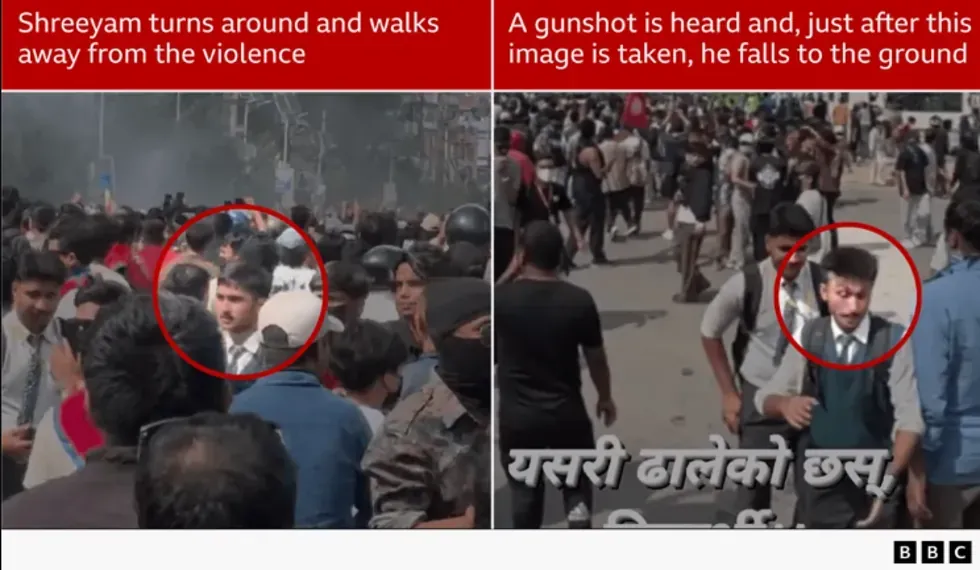
Young protesters and police clash outside Kathmandu parliament - BBC

Peaceful Gen Z protesters in Kathmandu faced live fire during September 2025 demonstrations - BBC

In September 2025, a protest in Kathmandu led by young Nepalis escalated into deadly violence after police were authorised to use live fire. Nineteen people, including teenagers in school uniforms, were killed, highlighting failures in crowd management, planning, and political oversight. The unrest exposed deeper social frustrations among Nepal’s Generation Z and triggered the resignation of the prime minister.

Nepal’s September 2025 protests marked a turning point in the country’s young democratic history. What began as demonstrations against political corruption quickly spiraled into a confrontation with police forces that resulted in multiple deaths and injuries. The incident underscores the challenges facing Nepal’s security apparatus, the limitations of crowd control strategies, and the unresolved frustrations of a generation grappling with economic insecurity and political disillusionment. It also illustrates the evolving role of social media platforms in organising civic action, particularly among digitally native youth.

The protests have left an enduring impact on Nepal’s political landscape. A former police chief authorised the use of lethal force amid unprecedented street mobilisations, leading to intense public scrutiny and calls for accountability. This explainer examines the causes, systems, historical context, and implications behind these events, drawing on verified reports, government statements, and international reporting.

Causes of the 8 September Protests

The immediate trigger for the protests was widespread frustration over political corruption and perceived nepotism. Social media platforms amplified discontent, with Generation Z activists sharing the term “nepo baby” to highlight elite privileges in Nepalese politics. The government’s restriction of platforms like Facebook, YouTube, Instagram, and X on 4 September 2025 further motivated youth to move organising activities to Discord, a gaming-focused chat platform.

Economic pressures also played a significant role. Estimates suggest that roughly 20% of young Nepalis were unemployed, creating a climate of frustration and disillusionment. The youth’s engagement was particularly visible online, where they mobilised quickly and in ways unfamiliar to traditional law enforcement, contributing to security underestimation.

Security System and Police Response

The police response on 8 September revealed structural gaps in Nepal’s law enforcement and emergency management systems. Security forces faced a crowd of approximately 30,000 protesters—ten times the anticipated size. Officers lacked a comprehensive understanding of the situation, hindered by limited live feeds from CCTV cameras, unstable internet connections, and inadequate communication between command centres and units on the ground.

At 12:30 local time, the chief district officer imposed a curfew, declaring the protests illegal. Officers initially relied on non-lethal measures, including tear gas, batons, and water cannons, but were ultimately authorised to use live ammunition at 12:40 after repeated requests. The order originated from the call sign “Peter 1,” later identified as Chandra Kuber Khapung, the former inspector general of Nepal Police. Khapung and other officials have since offered differing accounts of responsibility, with the police citing authorisation by a government security committee, while the committee’s chair denied approving live fire.

Sequence of Events During the Protests

Protesters initially gathered at Maitighar Mandala, a major intersection in Kathmandu. Barricades were established to prevent access to parliament, but the crowd quickly breached security lines. Video analysis and eyewitness accounts show peaceful protesters, including 17-year-old Shreeyam Chaulagain, attempting to retreat when they were shot.

■ Related News
Myanmar Prime Minister Min Aung Hlaing meets Russian Federation Council Chairperson Valentina Matviyenko in Moscow on March 4, 2025.

Myanmar Rejects ASEAN Pressure Over Suu Kyi as Peace Effort Falters

August 10, 2026
Editorial map showing the expansion of militant kidnappings into southwest Nigeria, highlighting Oyo State, Kwara State, and the reported forest transit route. – Image Graphic/JournosNews (File)

Nigerian Schoolchildren Describe Captivity After Rescue as Militants Expand Reach Into Southern Nigeria

July 20, 2026
French President Emmanuel Macron attends the unveiling of the Alfred Dreyfus statue in Paris. - Thomas Samson/Pool Photo via AP

Macron Warns Against Rising Antisemitism as France Honors Alfred Dreyfus 120 Years After Exoneration

July 13, 2026
Demonstrators march during anti-immigration protests in Johannesburg - AP Photos/Themba Hadebe

Anti-Immigration Protests Sweep South Africa as Some Migrants Leave the Country

July 1, 2026

Live fire resulted in multiple deaths, with the first recorded fatality at 13:15, followed by continued shootings through mid-afternoon. Nineteen people, ranging from teenagers to adults, were killed, and dozens more injured. The shootings were captured on thousands of videos and photos, providing a detailed chronology of the day’s events.

The violence triggered further unrest the following day. Angered by the killings, citizens of all ages took to the streets, leading to mob violence against police and government buildings. Arson attacks targeted parliamentary offices, the supreme court, and other state facilities. Security forces and protesters clashed, resulting in a total of 77 deaths and the resignation of Prime Minister KP Sharma Oli. The army assumed control later that evening.

Historical and Political Context

Nepal is a young republic, established in 2008 following a decade-long civil war that left more than 17,000 dead. A new constitution promised democratic renewal, yet many young Nepalis feel those promises remain unfulfilled. Generational frustrations reflect broader economic inequalities, limited employment opportunities, and perceptions of political corruption, with young people increasingly seeking to voice dissent online.

These protests highlight the tensions inherent in a transitioning democracy. While youth movements have previously mobilised for political change, the 8 September demonstrations revealed both the organisational sophistication of Generation Z and the inability of traditional law enforcement to respond effectively. The disconnect between institutional structures and social movements exacerbated the risk of violence.

Structural Failures in Crowd Management

Several factors contributed to the escalation of violence. Security forces underestimated crowd size, lacked reliable intelligence, and had insufficient coordination between police, armed police, and military units. Communication gaps and unclear command authority created confusion, particularly regarding the use of lethal force.

Additionally, the security committee responsible for overseeing public order did not exercise clear decision-making during the crisis. Conflicting statements from key officials, combined with a lack of accountability mechanisms, left law enforcement officers on the ground making critical decisions under pressure. These failures demonstrate the need for systemic reforms in Nepal’s approach to civil unrest.

Regional and Global Implications

The events in Kathmandu resonate beyond Nepal, illustrating the challenges faced by young democracies confronting rapid social mobilisation. Globally, Generation Z has increasingly used digital platforms for civic engagement, raising questions about how governments and law enforcement adapt to fast-moving, decentralized protests.

The Nepal case underscores broader concerns regarding proportionality of force, transparency in law enforcement, and the protection of human rights during demonstrations. International organisations monitoring governance and youth participation may interpret these events as a cautionary example of how unprepared institutional responses can exacerbate tensions in fragile democracies.

Conclusion

The 8 September 2025 protests in Kathmandu exemplify the intersection of political frustration, youth activism, and systemic vulnerabilities in public order management. Verified evidence shows unarmed protesters, including teenagers, were killed following an authorisation for live fire, while structural failures in planning, communication, and command compounded the tragedy.

What remains unresolved is the question of accountability, as no individual or institution has been formally held responsible for the deaths, and a public inquiry is ongoing. The protests also reveal deeper societal issues, including generational inequality, digital mobilisation, and persistent governance challenges. The events continue to shape Nepal’s political landscape, highlighting the stakes of youth-led civic engagement in emerging democracies.

Source: BBC – Shot in school uniform: BBC reveals police order led to Gen Z protest killings

Tags: #Accountability#CivilUnrest#DemocracyChallenges#GenZActivism#HumanRights#KathmanduViolence#NepalPolitics#NepalProtests#PoliceUseOfForce#PoliticalCorruption#SocialMediaMobilisation#YouthDemocracy
The Daily Desk

The Daily Desk

The Daily Desk is the editorial byline of Journos News, representing reporting produced by the newsroom across world news, politics, business, technology, disasters, and other areas of public interest. Stories published under this byline are independently researched, verified, and edited in accordance with Journos News’ editorial standards, with an emphasis on accuracy, transparent sourcing, attribution, context, and editorial independence.

Related Posts

Health workers respond to Ebola outbreak in eastern Democratic Republic of the Congo - AP Photo/Moses Sawasawa

Congo’s Ban on Public Gatherings Draws Criticism as Ebola Outbreak Intensifies

by The Daily Desk
July 1, 2026
0

KINSHASA, Democratic Republic of the Congo — The government of the Democratic Republic of the...

Rescue workers search collapsed hotel after deadly earthquakes in Venezuela. - AP Photo/Delacroix

More Than 100 Venezuelan Deportees Remain Missing After Earthquakes Strike Hours Following U.S. Flight

by The Daily Desk
June 29, 2026
0

MIAMI - More than 100 Venezuelans deported from the United States are unaccounted for after...

Soldiers outside media offices following shutdown order in Kampala. - AP Photo/Hajarah Nalwadda, File

Ugandan Army Chief Orders Closure of Major Media Outlets, Raising Press Freedom Concerns

by The Daily Desk
June 29, 2026
0

KAMPALA, Uganda — Uganda's military chief, Gen. Muhoozi Kainerugaba, ordered the closure of several media...

Security forces reopen roads during protests in Bolivia - AP Foto/Juan Karita

Bolivia Declares Nationwide State of Emergency as Protest Blockades Begin to Ease

by The Daily Desk
June 21, 2026
0

LA PAZ, Bolivia — Bolivian President Rodrigo Paz declared a nationwide state of emergency early...

António Guterres visits displaced families in Port-au-Prince Haiti - AP Photo/Danica Coto

UN Chief Visits Haiti as New International Security Force Prepares Deployment

by The Daily Desk
June 17, 2026
0

PORT-AU-PRINCE, Haiti — United Nations Secretary-General António Guterres visited Haiti on Tuesday as the Caribbean...

International Criminal Court prosecutor Karim Khan facing suspension review - AP Photo/Peter Dejong, File

ICC Chief Prosecutor Suspended as Oversight Body Reviews Misconduct Allegations

by The Daily Desk
June 8, 2026
0

THE HAGUE, Netherlands — The chief prosecutor of the International Criminal Court has been suspended...

Police presence during Tiananmen anniversary commemorations in China - AP Photo/Chiang Ying-ying

China Tightens Restrictions as Tiananmen Crackdown Anniversary Passes Under Heavy Security

by The Daily Desk
June 5, 2026
0

BEIJING, China — Chinese authorities intensified efforts to prevent public commemorations marking the 37th anniversary...

Hotel in Equatorial Guinea holding deported asylum seekers from the United States - AP Photo/Misper Apawu

US-Deported Asylum Seekers Held in Equatorial Guinea Hotel Under Secretive Deal

by The Daily Desk
May 29, 2026
0

Asylum seekers deported from the United States are being held inside a luxury hotel in...

French lawmakers vote to repeal colonial-era slavery legislation in parliament - AP Photos/Thomas Padilla

France Lawmakers Vote to Remove Colonial-Era Black Code From National Law

by The Daily Desk
May 29, 2026
0

French lawmakers voted unanimously to repeal the “Code Noir,” a slavery-era legal framework that governed...

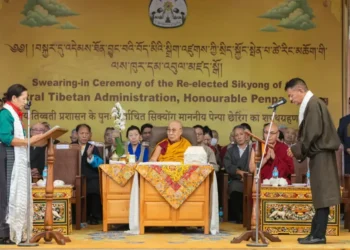
Penpa Tsering attends swearing-in ceremony in Dharamshala with the Dalai Lama - AP Photo/ Shailesh Bhatnagar

Penpa Tsering Begins Second Term Leading Tibet’s Government-in-Exile in India

by The Daily Desk
May 28, 2026
0

Penpa Tsering was sworn in for a second consecutive term as the leader of Tibet’s...

Load More
Next Post
Gen. Dan Caine overseeing military planning for Iran operations - Photo Illustration by Jason Lancaster/CNN/Getty Images

Balancing Strategy and Politics: How Gen. Dan Caine Navigates U.S. Military Planning Under Trump

Delegations meet in Geneva for Iran US nuclear talks - Foreign Ministry of Oman via AP

Iran–US Nuclear Talks Resume in Geneva as Diplomacy and Deterrence Collide

RECOMMENDED

The Pentagon, headquarters of the U.S. Department of Defense, photographed from a commercial airliner in September 2018.

Pentagon to Livestream Nidal Hasan’s Scheduled Firing-Squad Execution

October 9, 2026
CCTV screenshot showing a mudslide at Gyirong Port during the 2026 Nepal floods, viewed downstream toward the south on August 26, 2026.

Nepal Ends Flood Search With 5,285 Still Missing as Families Seek Answers

October 7, 2026
District Court building in Perth, Western Australia, photographed on January 17, 2021.

Former Australian Bishop Christopher Saunders Sentenced for Abusing Indigenous Men

October 7, 2026
Participants attend the First International Congress for Women of Influence at the Summit Conference Hall in Tehran, Iran, on January 20, 2023.

Sri Lanka’s Former First Lady Shiranthi Rajapaksa Arrested in Graft Probe

October 7, 2026
PSO petrol pump on G.T. Road near Habib Abad in Pattoki tehsil, Punjab, Pakistan, photographed on August 23, 2012.

Pakistan Expands Fuel Subsidies to 9 Million as War Drives Up Energy Costs

October 7, 2026

MOST VIEWED

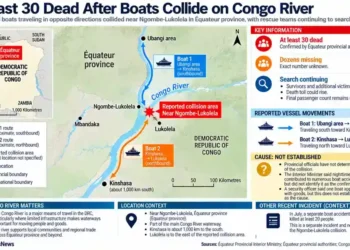
  • Map shows a reported boat collision near Ngombe-Lukolela on the Congo River in Équateur province, Democratic Republic of Congo.

    Congo River Boat Collision Kills at Least 30, Dozens Missing

    0 shares
    Share 0 Tweet 0
  • Lufthansa and Indian Airlines Suspend Riyadh Flights After Airport Explosions

    0 shares
    Share 0 Tweet 0
  • US Suspends Microsoft From Green Card Program Amid Alleged Fraud Probe

    0 shares
    Share 0 Tweet 0
  • Christa Pike Walks With Assistance and Eats After Failed Tennessee Execution

    0 shares
    Share 0 Tweet 0
  • Trump Signs Order Allowing Tax-Free Red-Dyed Diesel for Highway Use

    0 shares
    Share 0 Tweet 0
JournosNews logo

Journos News delivers globally neutral, fact-based journalism that meets international media standards — clear, credible, and made for a connected world.

  • Categories
  • World News
  • Politics
  • Business & Markets
  • Technology
  • Health
  • Science
  • Sports
  • Arts & Culture
  • Resources
  • Editorial Standards
  • Submit a Story
  • Advertise with Us
  • Syndication & Partnerships
  • Site Map
  • Press & Media Kit
  • Editorial Team
  • Careers

Join thousands of readers receiving the latest updates, tips, and exclusive insights straight to their inbox. Never miss an important story again.

  • About Us
  • Editorial & Trust Center
  • Contact Us
  • Privacy Policy
  • Terms of Use & Copyright Notice

© JournosNews.com All rights reserved.

Welcome Back!

Login to your account below

Forgotten Password?

Retrieve your password

Please enter your username or email address to reset your password.

Log In
JournosNews

Independent Journalism.
Verified Facts.

You're about to read a professionally edited article from JournosNews.com.

Every article is produced in accordance with our editorial standards, emphasizing factual accuracy, transparent attribution, fairness, editorial independence, and meaningful context.

Editorial Standards
No Result
View All Result
  • Home
  • World
    • Africa
    • Americas
    • Asia
    • Europe
    • Middle East
    • Oceania
  • Politics
  • Business
  • Technology
  • Health
  • Science
  • Sports
  • Entertainment
  • Culture

© JournosNews.com All rights reserved.

This website uses cookies. By continuing to use this website you are giving consent to cookies being used. Visit our Privacy and Cookie Policy.