BEIJING, China — Chinese authorities intensified efforts to prevent public commemorations marking the 37th anniversary of the 1989 Tiananmen Square crackdown, restricting access to memorial activities in Beijing and increasing security measures in Hong Kong as international governments and rights groups renewed calls for remembrance and accountability.
According to a person familiar with the matter who spoke anonymously due to fears of retaliation, police informed relatives of those killed during the 1989 crackdown that they would not be permitted to visit a Beijing cemetery on Thursday, the anniversary of the military operation that ended weeks of student-led pro-democracy demonstrations.
The restrictions reflect Beijing’s longstanding policy of suppressing public discussion of the events surrounding June 4, 1989, which remain among the most politically sensitive subjects in China.

Families Prevented From Holding Traditional Memorials
Members of the Tiananmen Mothers, a group representing relatives of those killed during the crackdown, have for decades visited gravesites to honor victims and read memorial statements.
Human rights organization Amnesty International said such commemorations had continued for more than 30 years under police monitoring. This year, however, relatives were reportedly prevented from carrying out the annual observances.
The group issued its annual appeal ahead of the anniversary, calling for a full accounting of the events, compensation for victims’ families and legal accountability for those responsible.
In a video message posted online, Tiananmen Mothers member Zhang Xianling described the loss suffered by families and reiterated demands for justice.
Hong Kong Security Presence Expanded
In Hong Kong, authorities deployed a heightened police presence around areas traditionally associated with annual candlelight vigils commemorating the crackdown.
■ Related News



For years, thousands gathered in the city’s parks to mark the anniversary. Those events have been prohibited since 2020, initially under pandemic-related restrictions and later amid a broader political crackdown following anti-government protests.
Police said seven people were stopped and searched on suspicion of disorderly conduct and were later released after further investigation.
Among those detained briefly was activist Chan Po-ying, who had been carrying a yellow paper flower. Journalists witnessed police taking her away in a police vehicle.
A small number of individuals still appeared at commemorative locations, including a man carrying flowers and another activist who publicly marked the anniversary with a symbolic gesture of remembrance.
International Reactions Renew Debate
Governments and lawmakers in several Western countries issued statements marking the anniversary.
U.S. Secretary of State Marco Rubio said efforts to censor discussion of the crackdown could not erase historical events and paid tribute to those who participated in the 1989 movement.
China rejected the criticism. Foreign Ministry spokesperson Mao Ning accused the United States of interfering in China’s internal affairs under the guise of promoting democracy and human rights.
Separately, leaders of the U.S. Congressional-Executive Commission on China released a statement asserting that historical memory could not be eliminated through censorship.
Commemorative events were also held in the United States, where former student activists and supporters gathered on Capitol Hill to mark the anniversary.
Legacy of 1989 Remains Politically Sensitive
The Tiananmen Square demonstrations began in the spring of 1989 and evolved into a broader movement calling for political reform and greater freedoms. Chinese authorities ultimately ordered troops into Beijing to clear demonstrators from central areas of the capital.
The exact death toll has never been officially disclosed. Estimates cited by international organizations and researchers have ranged from hundreds to potentially thousands of fatalities.
The crackdown became a defining moment in modern Chinese history, shaping the country’s political trajectory while economic reforms continued to accelerate in subsequent decades.
Commemorations Continue Abroad
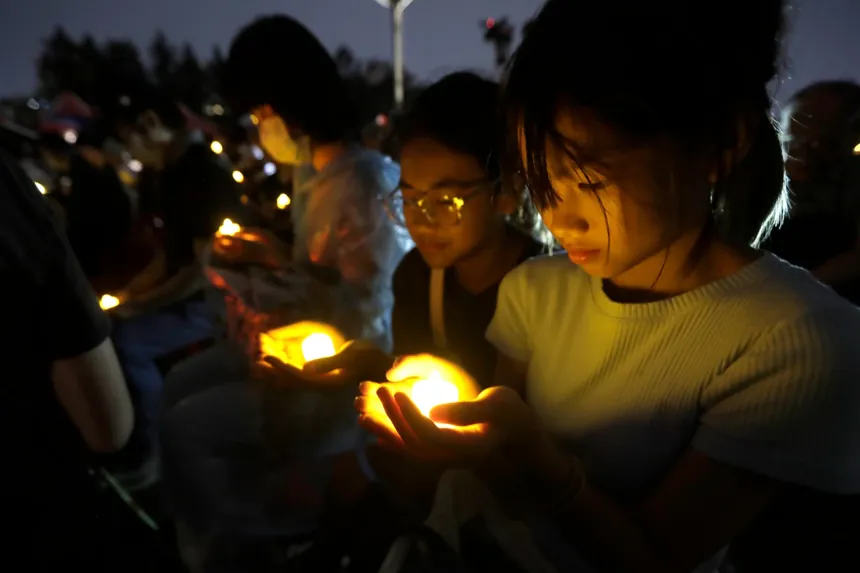
Outside mainland China and Hong Kong, remembrance events took place in other locations, including Taiwan.
An annual vigil on the self-governed island proceeded despite severe weather conditions that reduced attendance. Taiwan remains one of the few Chinese-speaking societies where public commemorations of the 1989 crackdown are openly held.
Human rights advocates and relatives of victims continue to call for greater transparency regarding the events of June 1989, while Chinese authorities maintain strict controls over public discussion of the anniversary.