Iran and the United States have resumed indirect negotiations in Geneva over Tehran’s nuclear program, with Oman mediating messages between the two sides. The talks unfold against a backdrop of rising regional tension, U.S. military deployments, and renewed debate over what limits—if any—Iran is willing to accept on uranium enrichment.
For years, the dispute over Iran’s nuclear ambitions has oscillated between fragile diplomacy and escalating pressure. The latest round of indirect talks in Geneva reflects that pattern. While envoys exchanged proposals through Omani intermediaries, U.S. naval forces moved deeper into the Middle East, underscoring the dual-track strategy that has long defined Washington’s approach: negotiation backed by deterrence.
At the center of the discussions are familiar questions with unresolved answers. Can Iran agree to meaningful restrictions on its nuclear program? What form would sanctions relief take? And how far is the United States willing to compromise on enrichment, a technical process that sits at the heart of both civilian nuclear energy and weapons capability?

The structure of indirect diplomacy
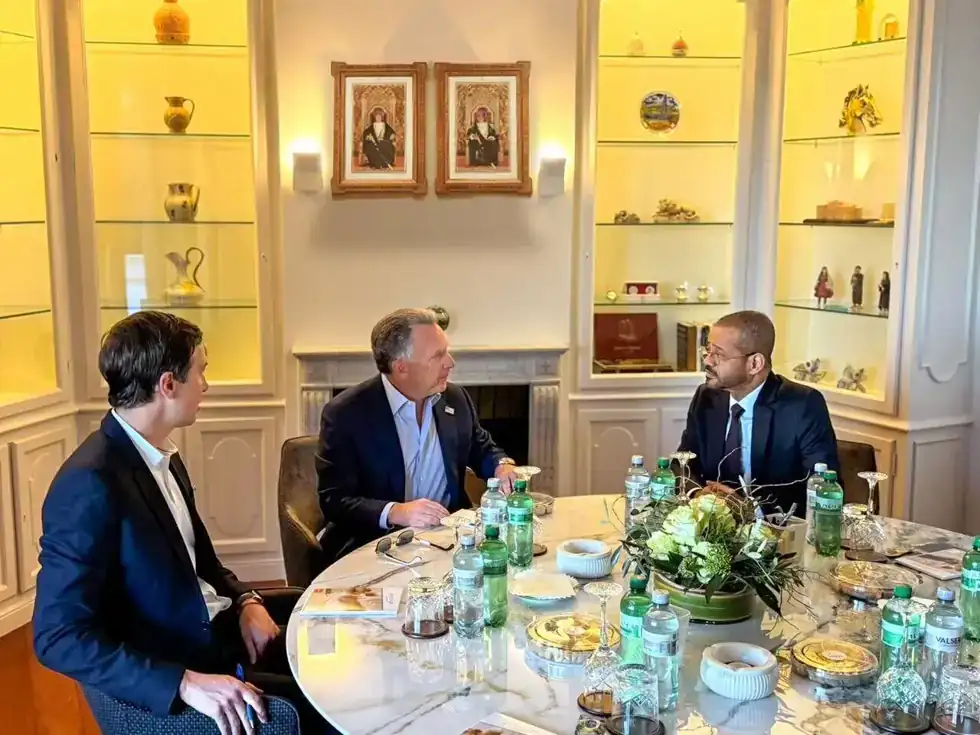
The talks are being mediated by Badr al-Busaidi, Oman’s foreign minister, whose country has historically acted as a discreet channel between Tehran and Washington. Oman played a similar role in secret negotiations that eventually led to the 2015 nuclear agreement, formally known as the Joint Comprehensive Plan of Action (JCPOA).
In Geneva, U.S. envoy Steve Witkoff and Iranian Foreign Minister Abbas Araghchi did not meet face-to-face. Instead, proposals were exchanged indirectly through Omani officials at a diplomatic residence. According to Omani statements, “creative and positive ideas” were discussed, though no details were publicly disclosed.
Indirect negotiations are not unusual in U.S.–Iran diplomacy. The absence of direct contact reflects both political sensitivities and a lack of formal diplomatic relations since 1979. It also allows each side to maintain domestic messaging flexibility, particularly when negotiations are politically contentious at home.
What is being negotiated?
At issue is Iran’s uranium enrichment program. Enrichment increases the concentration of uranium-235, which can fuel nuclear reactors at low levels or, if refined further, be used in weapons. Under the 2015 JCPOA, Iran agreed to cap enrichment at 3.67% and limit stockpiles in exchange for sanctions relief. That deal began unraveling after the United States withdrew in 2018 and reimposed sanctions.
Since then, international inspectors have reported that Iran enriched uranium to levels far beyond the JCPOA limits, in some cases approaching weapons-grade thresholds. Iran maintains that its program is peaceful and intended for energy and research purposes.



Iranian officials say the current talks should focus solely on nuclear issues and sanctions relief. A spokesperson for Iran’s foreign ministry reiterated that Tehran’s position centers on lifting sanctions and preserving what it calls its right to peaceful nuclear energy under the Nuclear Non-Proliferation Treaty.
The United States, however, has signaled broader concerns. In addition to enrichment levels, Washington has previously raised issues related to Iran’s ballistic missile program and regional proxy networks. Whether those topics are formally included in the Geneva framework remains unclear.
An adviser to Iran’s Supreme Leader suggested that an agreement could be “within reach” if negotiations are confined to assurances that Iran will not develop nuclear weapons. That framing reflects Iran’s longstanding position that its religious leadership has issued a binding decree against nuclear arms.
The role of the nuclear watchdog
Parallel to the diplomatic exchanges, Rafael Mariano Grossi, head of the International Atomic Energy Agency, met with Oman’s foreign minister. The IAEA would likely play a central role in verifying compliance under any new arrangement.
Verification has historically been one of the most technically complex elements of nuclear diplomacy. Monitoring enrichment levels, centrifuge production, and uranium stockpiles requires extensive access and transparency. Disputes over inspector access have periodically strained relations between Iran and the agency.
Experts note that any durable agreement would need a robust inspection mechanism. Without credible verification, sanctions relief may prove politically difficult for Western governments to sustain.
Military pressure as leverage
The diplomatic track is unfolding alongside visible military movements. The USS USS Gerald R. Ford, one of the U.S. Navy’s largest aircraft carriers, departed a naval base in Greece en route to the Middle East. Additional American warships and aircraft have reportedly been positioned in the region.
Such deployments are widely interpreted as signaling resolve rather than preparation for imminent conflict. U.S. officials have framed them as deterrence measures, intended to dissuade escalation and strengthen Washington’s bargaining position.
Iran, for its part, has warned that any military strike would trigger retaliation against U.S. bases in the region. Tens of thousands of American personnel are stationed across the Gulf and surrounding areas, raising the stakes of miscalculation.
Energy markets have reacted cautiously. Oil prices have edged higher in recent days, reflecting concerns about potential disruptions in a region that accounts for a substantial share of global crude supply. Market analysts note that even limited confrontation could ripple through shipping routes and insurance costs.
Domestic politics and messaging
Negotiations are also shaped by internal political pressures. In the United States, views on Iran policy remain sharply divided. Some lawmakers argue that no level of enrichment should be tolerated, while others contend that controlled enrichment under strict monitoring is preferable to an unconstrained program.
In Iran, leaders must balance economic pressures from sanctions with political narratives of sovereignty and resistance. Public statements from Iranian officials emphasize that negotiations are not a concession but a means to secure sanctions relief while safeguarding national rights.
The dual messaging illustrates a broader dynamic: both governments must present talks as aligned with domestic interests, even as compromise may be necessary.
Why this moment matters
This round of talks follows previous attempts that faltered amid regional conflict, including tensions involving Israel. While both sides have returned to the table, expectations remain measured.
Diplomacy in this context operates under compressed timelines. Iran’s nuclear advances have shortened what analysts describe as “breakout time”—the period needed to produce sufficient fissile material for a weapon, should a political decision be made. At the same time, military escalation carries unpredictable regional consequences.
The current negotiations therefore sit at an intersection of urgency and uncertainty. They suggest that neither side sees immediate conflict as inevitable, yet neither appears ready to concede core positions without reciprocal guarantees.
Whether Geneva produces a framework for further talks or merely extends the status quo will likely depend on how flexible both sides prove to be on enrichment limits, sanctions sequencing, and verification mechanisms.
For now, the optics of diplomacy—convoys arriving and departing, mediators signaling cautious optimism—stand alongside the movement of aircraft carriers and missile systems. The juxtaposition reflects a reality that has defined the Iran nuclear file for nearly two decades: diplomacy and deterrence advancing in parallel, each shaping the other.
Source: AP News – The US and Iran hold indirect talks in Geneva