KINSHASA, Democratic Republic of the Congo — The government of the Democratic Republic of the Congo is facing criticism after banning public demonstrations and mass gatherings in several provinces unaffected by the country’s worsening Ebola outbreak, with opposition parties and civil society organizations arguing the restrictions could suppress political dissent, according to The Associated Press.
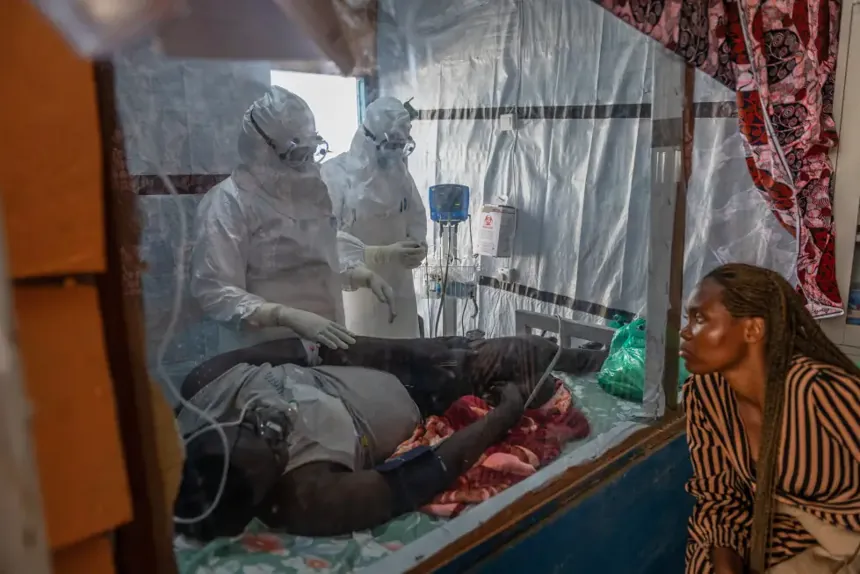
The measures were announced as health authorities continue battling an expanding Ebola outbreak in eastern Congo that has infected 1,307 people and claimed 377 lives across three provinces. Officials have warned the epidemic could become the country’s most severe Ebola outbreak to date.
Government Expands Restrictions Beyond Outbreak Areas
Congo’s Ministry of Interior announced Saturday that demonstrations and public gatherings are prohibited in the provinces of Kinshasa, Tshopo, Haut-Uele and Bas-Uele.

Authorities said the restrictions are intended to reduce the risk of the virus spreading into new regions, although none of the affected provinces has reported confirmed Ebola cases.
Separately, the mayor of Goma, eastern Congo’s largest city, also prohibited public gatherings and demonstrations on Monday, including celebrations related to sporting events.
Goma is currently controlled by the Rwanda-backed M23 rebel group, and the ban comes as Congo competes in its first FIFA World Cup in more than 50 years.
Opposition Says Ban Is Politically Motivated
Opposition leaders have challenged the legality of the restrictions, arguing they violate constitutional protections for freedom of assembly.
Prince Epenge, spokesperson for the Lamuka opposition coalition, said the decision appears designed to prevent a demonstration planned for early next month in Kinshasa.

The planned protest opposes proposed constitutional amendments that would allow President Félix Tshisekedi to seek a third presidential term.
Several civil society organizations also condemned the restrictions in a joint statement Monday, arguing they undermine freedoms of expression and peaceful assembly.
President Announces Ebola Response Plan
In a televised address Monday evening, President Tshisekedi unveiled a $319 million national response plan aimed at strengthening efforts to contain the outbreak.
He urged citizens to follow public health guidance, report suspected infections and reject misinformation surrounding the disease.
“Ebola is neither a rumor nor a source of shame,” Tshisekedi said. “It is a health emergency that demands responsibility, solidarity, and truth.”
The president did not directly address criticism of the restrictions on public gatherings.
Health Officials Face Growing Challenges
Health workers have reported skepticism toward Ebola prevention measures in affected communities, along with attacks on medical personnel in parts of Ituri, North Kivu and South Kivu provinces.
The outbreak has also spread beyond Congo’s borders. Authorities have confirmed cases in neighboring Uganda, while France reported one infection involving a doctor who recently returned from Congo.
The United Nations warned Tuesday that a wider regional spread into neighboring countries, including Rwanda and Angola, could cost Africa as much as $3.6 billion in economic losses and eliminate approximately 328,000 jobs.
Conflict Complicates Disease Response
More than a month after the outbreak began, health officials acknowledge that the virus continues to outpace containment efforts.
Authorities have yet to identify the outbreak’s initial patient and continue struggling to trace contacts of infected individuals.
The World Health Organization (WHO) has warned that ongoing violence in eastern Congo is significantly hampering response operations.
In Ituri province, attacks by the Allied Democratic Forces (ADF), an armed group linked to the Islamic State group, have restricted access to numerous communities and displaced thousands of residents, adding pressure to already overcrowded camps for people uprooted by years of conflict.
Health officials say the combination of insecurity, population displacement and limited access to affected communities continues to complicate efforts to bring the outbreak under control.
Tags: Democratic Republic of the Congo, Ebola, Félix Tshisekedi, Kinshasa, World Health Organization, United Nations, M23, Allied Democratic Forces, Public Health, Civil Society, Political Opposition, Africa