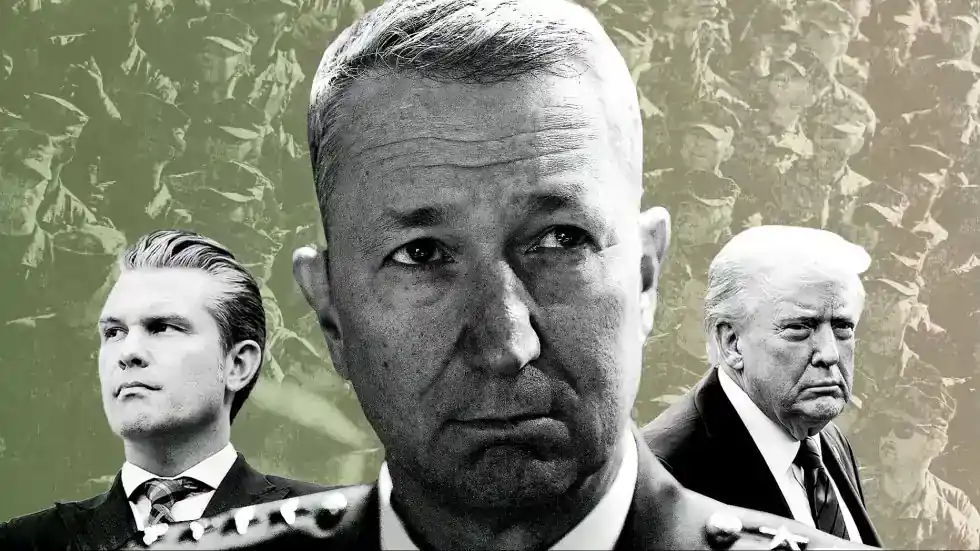
The role of the U.S. military’s top uniformed officer often requires navigating a complex intersection of strategy, politics, and national security. For Gen. Dan Caine, chairman of the Joint Chiefs of Staff, this balancing act has been particularly pronounced, as he prepares military options targeting Iran while maintaining a working relationship with President Donald Trump. The challenge lies not only in operational planning but in managing expectations from a president known for high-profile rhetoric and swift decision-making.
Caine’s tenure reflects the tension between providing professional military advice and operating under a highly politicized administration. Unlike some predecessors who confronted the White House publicly over strategic disagreements, Caine has opted for a more discreet approach, briefing senior officers privately and carefully presenting options to Trump without overtly challenging the president. This strategy appears to be aimed at maintaining influence without provoking the type of clashes that marked the tenure of Gen. Mark Milley, who often opposed Trump’s domestic and foreign policy inclinations directly.
Over the past year, Caine has overseen significant military positioning in the Middle East, assembling what sources describe as the largest concentration of U.S. military hardware in the region since the Iraq invasion. These deployments coincide with ongoing diplomatic negotiations and underscore the dual demands of preparing for potential conflict while attempting to avoid escalation. While Trump has projected confidence about military success, Caine’s internal assessments reportedly emphasize the complexities and potential risks of a major operation. Sources familiar with his thinking note that he has highlighted concerns about scale, logistics, and possible casualties—considerations that contrast with the White House’s public optimism.

A Calculated Approach to Presidential Relations
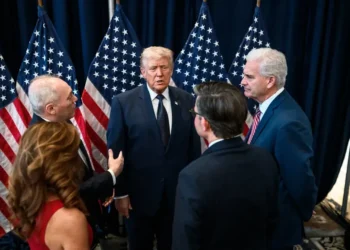
Caine’s strategy has involved careful calibration in interactions with Trump. Sources indicate he avoids direct confrontation and rarely injects personal opinion into operational recommendations, consistent with his role to provide military advice rather than dictate policy. This discretion extends to public engagements: he maintains a low profile outside of official press briefings, even as Trump occasionally encourages him to take a more prominent public role. A Joint Staff spokesperson emphasized that Caine “does not advocate for a single course of action, nor does he inject personal preference into operational deliberations.”
At the same time, Caine works to preserve institutional norms and morale. During a high-profile Pentagon event last September, he advised senior officers to maintain a neutral, stoic demeanor, guiding them to avoid political signaling in the presence of the president. This approach, while subtle, reflects an effort to safeguard the military’s nonpartisan stance amid politically charged events.
Operational Planning and Strategic Uncertainty
Caine’s current planning for Iran encompasses a spectrum of military options—from targeted strikes on missile and nuclear facilities to scenarios aimed at regime change. While Trump has pushed for bold operational concepts, Caine’s internal evaluations reportedly stress uncertainty over potential outcomes. This contrasts with his earlier involvement in Venezuela, where he expressed more confidence in the effectiveness of a rapid operation to detain former President Nicolás Maduro, which was executed in January.
Experts and former officials note that Caine’s approach reflects both his operational experience and a recognition of the unpredictable political and strategic environment. He has sought to provide options that allow the president flexibility while emphasizing the secondary effects, implications, and risks of each course of action. This methodical planning has included extensive consultations with top military leaders, conducted in a discreet setting rather than the Pentagon’s traditional secure conference room, to avoid attracting external attention or leaks.
Navigating Internal Pentagon Dynamics
Caine’s tenure also highlights internal tensions between the Joint Chiefs and the Department of Defense. His relationship with Secretary of Defense Pete Hegseth, whose priorities often diverge from Caine’s operational assessments, has been marked by negotiation and occasional deference. Sources describe Caine as attempting to influence personnel decisions and strategic policy while respecting the chain of command, particularly regarding early retirements and dismissals of senior officers viewed as insufficiently aligned with political objectives.
■ Related News


Caine’s experience and professional discretion appear to position him as a stabilizing figure, balancing political directives with strategic considerations. He has occasionally acted as a counterweight to more politically oriented officials, offering alternative assessments without publicly challenging decisions. For instance, in evaluating operations against Iran-backed Houthi forces in Yemen, he ultimately recommended scaling back the U.S. campaign, a stance later reflected in diplomatic progress toward a ceasefire.
Professionalism Amid Political Pressure
Throughout his service as chairman, Caine has emphasized adherence to professional norms and the nonpartisan conduct of the military. Colleagues describe him as highly emotionally intelligent, capable of maintaining credibility with both senior officials and political leaders. His leadership style is characterized by measured communication, careful planning, and a focus on outcomes rather than personal or political agendas.
Even in high-profile operations, such as the Venezuela mission or strikes on Iranian facilities, Caine’s public role has remained largely technical, providing detailed operational explanations rather than engaging in rhetoric. Sources note that he has consistently prioritized accurate, evidence-based briefings for both the president and the Joint Staff, highlighting risks and logistical considerations without attempting to shape policy through public opinion or partisan signaling.
Implications and Observations
Caine’s tenure illustrates the complexities of military leadership under a president with a high degree of public visibility and political volatility. The combination of operational responsibility, strategic assessment, and careful management of presidential expectations requires balancing multiple, sometimes conflicting, objectives. His approach underscores the enduring tension in U.S. civil-military relations: senior military leaders must provide candid advice, prepare for a range of contingencies, and maintain professional norms, all while respecting the constitutional authority of civilian leadership.
The broader implication of Caine’s style suggests a model for senior military officers navigating politically sensitive administrations. By emphasizing discretion, evidence-based planning, and institutional norms, he seeks to preserve the credibility of the military while remaining responsive to executive priorities. His methods, while sometimes opaque to colleagues and observers, highlight the operational and ethical dimensions of leadership in contexts where strategic decisions carry profound consequences for U.S. forces and international stability.
Source: CNN – Balancing act: Top general tries to avoid conflict with Trump while preparing for possible war with Iran