Journos News - Breaking News, World News, Top Stories, Todays Headlines and Flash Reports
Friday, September 18, 2026
  • Login
  • Home
  • World
    • Africa
    • Americas
    • Asia
    • Europe
    • Middle East
    • Oceania
  • Politics
  • Business
  • Technology
  • Health
  • Science
  • Sports
  • Entertainment
  • Culture
No Result
View All Result
  • Home
  • World
    • Africa
    • Americas
    • Asia
    • Europe
    • Middle East
    • Oceania
  • Politics
  • Business
  • Technology
  • Health
  • Science
  • Sports
  • Entertainment
  • Culture
No Result
View All Result
Journos News - Breaking News, World News, Top Stories, Todays Headlines and Flash Reports
No Result
View All Result
Home Government and Politics Elections & Political Process

US Postal Service Stops Work on Mail-Voting System After Supreme Court Ruling

Postmaster General David Steiner says the agency will not enforce new ballot-mail rules during the 2026 federal election.

The Daily Desk by The Daily Desk
September 18, 2026
in Elections & Political Process, Government and Politics
0
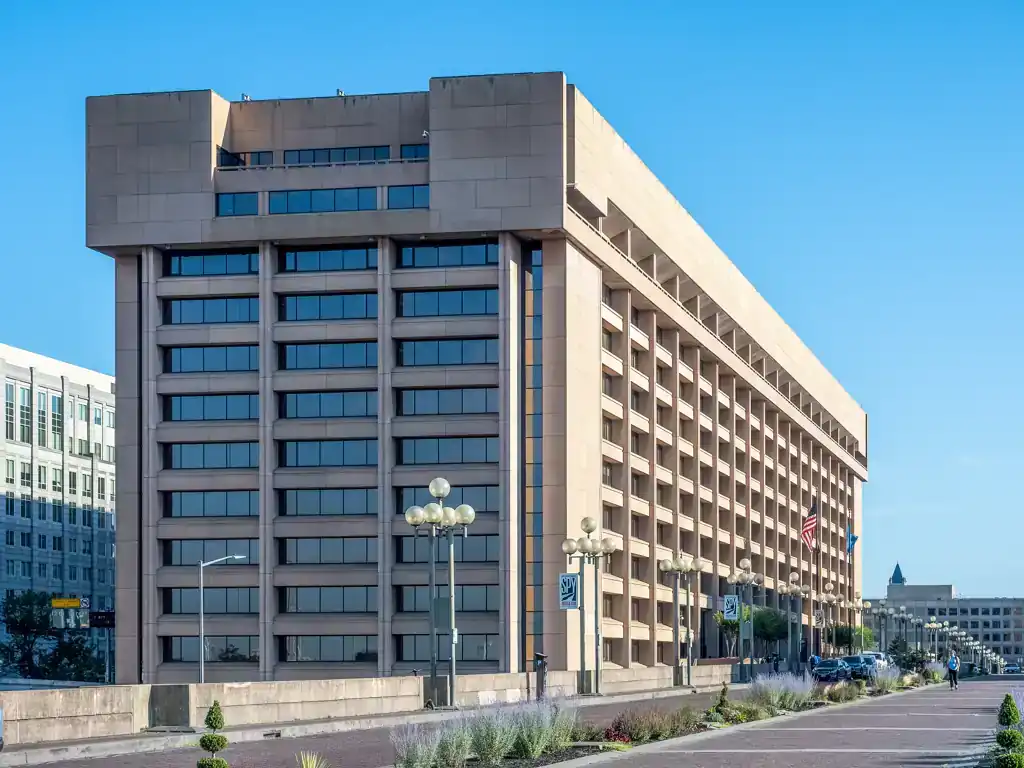
U.S. Postal Service Headquarters building in Washington, D.C., photographed in September 2024.

U.S. Postal Service Headquarters in Washington, D.C., photographed in September 2024. Photo by ajay_suresh; derivative work by Georgfotoart.

WASHINGTON, United States – The U.S. Postal Service has stopped work on a computer system designed to support new federal requirements for mail-in ballots after the Supreme Court left a lower-court injunction blocking the rules in place.

Postmaster General David Steiner said Thursday that USPS was no longer developing the system while the court order remained in effect. He said the agency would continue following its established procedures for election mail during the 2026 federal elections.

The system was being developed as part of President Donald Trump’s March executive order directing changes to federal election procedures. USPS had spent months building a Federal Ballot Mail Portal through which states would provide information about voters receiving ballots by mail.

The Supreme Court’s Sept. 14 order denied the administration’s request to lift a preliminary injunction against the USPS rule. The court said the government was unlikely to succeed in its challenge to the lower-court order and that the factors required for emergency relief did not favor a stay.

USPS halts development

Steiner told The Associated Press that the agency had stopped work because of the injunction.

The decision effectively ends USPS implementation work on the new system for the 2026 federal election unless the court orders otherwise.

A memo sent to postal employees after the Supreme Court ruling said the agency would not enforce the new requirements during this year’s federal election and would continue using established election-mail procedures.

That means states will continue sending and receiving mail ballots under their existing election systems rather than moving to the new federal portal and associated USPS requirements.

■ Related News
U.S. president speaks on the phone in the Oval Office while receiving an update about devastating California wildfires in November 2018.

Trump Pledges $5,000 Payments to Americans if Republicans Win Midterms

September 10, 2026
Donald Trump speaks with attendees at a Chase the Vote rally at Dream City Church in Phoenix, Arizona.

Federal Judge Extends Block on Trump Mail Voting Requirements

September 5, 2026
President Donald Trump delivers remarks during the F11 PRIORITY Summit at the Faena Forum in Miami, Florida.

Trump Administration Asks Supreme Court to Reinstate Executive Order on Mail Voting Before Midterm Elections

July 28, 2026
U.S. Sen. Markwayne Mullin in an official Senate portrait. - Journos News (File)

Homeland Security Chief Warns States of Possible Federal Action Over Election Security Cooperation

July 18, 2026

What the proposed system would have changed

The USPS rule was designed to establish new federal requirements for election mail.

Under the final rule, states would have been required to use specified envelope features, including an election-mail logo, compatibility with high-speed scanning equipment and a unique barcode for each voter. States also would have had to submit envelope designs to USPS for review.

The rule also required states to provide USPS with basic information about voters receiving mail ballots through a federal portal.

USPS would then compare ballot mailings with the information supplied by states. Mail that did not comply with the requirements could be rejected and returned to the state for correction.

USPS had previously described the portal as a tool for election officials to securely provide lists of people receiving ballots by mail. The agency said in early September that it was finalizing the system while complying with court orders.

Supreme Court leaves rule blocked

The Supreme Court’s latest action did not resolve every underlying legal question surrounding the USPS rule.

The court was considering the administration’s request for emergency relief from a preliminary injunction issued by a federal district court. By denying that request, the justices left the injunction in effect while the broader litigation continues.

Justice Brett Kavanaugh agreed with denying the government’s request but wrote separately that there was “at least a fair prospect” that the final USPS rule fell within the agency’s statutory authority. He concluded, however, that applying the rule to the 2026 elections would violate the Administrative Procedure Act because state and local election officials did not have enough time to implement it properly.

Justices Samuel Alito and Clarence Thomas dissented from the Supreme Court’s decision to leave the injunction in place.

The ruling therefore prevents the new USPS requirements from being applied to the 2026 federal election while leaving the underlying legal dispute capable of continuing beyond this election cycle.

Trump order triggered the dispute

The dispute began with Trump’s March executive order directing federal agencies to take steps concerning citizenship verification and federal elections.

The order directed USPS to begin rulemaking on requirements for federal ballot mail, including new envelope and barcode standards and a process under which states would provide voter information to the Postal Service.

USPS subsequently issued its final Federal Ballot Mail Rule in August.

Several states and voting organizations challenged the rule in federal court, arguing that USPS had exceeded its authority and that the new requirements could interfere with state-administered election systems.

The administration asked the Supreme Court to allow the rule to take effect while the litigation continued. The justices rejected that request on Sept. 14.

USPS says normal election-mail operations continue

Steiner said the Postal Service would continue its regular election-mail responsibilities.

The agency has also continued recommending barcodes and other processing features for election mail on a voluntary basis. Those recommendations are separate from the mandatory requirements contained in the blocked federal rule.

Steiner also encouraged voters who use mail ballots to send them early, citing concerns about postal processing times. He recommended allowing roughly seven days for ballots to move through the mail system.

The immediate effect of the Supreme Court’s ruling is therefore operational: USPS will not implement the new federal mail-ballot system for the 2026 election while the injunction remains in force.

The longer-term question of how much authority the Postal Service has to impose federal requirements on election mail remains part of the ongoing legal dispute.

Reporting Credit: U.S. Supreme Court — Sept. 14, 2026 order in United States Postal Service v. California; U.S. Postal Service — Federal Ballot Mail Rule and Federal Ballot Mail Portal statements; U.S. Postmaster General David Steiner — Sept. 17, 2026 operational update on the halted system.


Tags: #ElectionAdministration#FederalBallotMail#MailVoting#MidtermElections#SupremeCourt#USElections#USPostalService
The Daily Desk

The Daily Desk

The Daily Desk is the editorial byline of Journos News, representing reporting produced by the newsroom across world news, politics, business, technology, disasters, and other areas of public interest. Stories published under this byline are independently researched, verified, and edited in accordance with Journos News’ editorial standards, with an emphasis on accuracy, transparent sourcing, attribution, context, and editorial independence.

Related Posts

Official portrait of U.S. President Donald Trump.

Trump to Deliver Primetime Address Focused on Elections Amid Renewed Push for Federal Voting Rules

July 15, 2026
President Donald Trump marks Wall Street opening bell from the Oval Office - AP Photo/Mark Schiefelbein

Trump Rings Wall Street Opening Bell From Oval Office as White House Highlights Stock Market Focus

July 8, 2026
Republican senators discussing Iran nuclear agreement concerns - AP Photo/J. Scott Applewhite

Republican Lawmakers Split Over Trump’s Iran War-Ending Agreement as Nuclear Deal Concerns Mount

June 19, 2026
Rong Chhun greets supporters outside Cambodia Supreme Court - AP Photo/Heng Sinith

Cambodian Opposition Figure Appeals Conviction as Supreme Court Weighs Political Future

June 15, 2026
Congressional district maps shape 2026 House election battle - Source: AP / Graphic: Maya Sweedler

Republicans Gain Edge in Redistricting Fight as Battle for Congress Shifts to Voters

June 4, 2026
Donald Trump speaking during a political event in Washington - AP Photo/Manuel Balce Ceneta

Trump Maintains Strong GOP Support Despite Economic Concerns, AP-NORC Poll Finds

May 20, 2026
Brazilian Senate voting on Supreme Court nominee rejection - AP Photo/Martin Meissner

Brazil Senate Rejects Lula Court Nominee, Exposing Deepening Political Divisions

April 30, 2026
U.S. Supreme Court building as redistricting ruling impacts elections - AP Photo/J Scott Applewhite

Supreme Court Redistricting Decision Signals Gradual but Profound Political Realignment

May 13, 2026
Load More
JournosNews logo

Journos News delivers globally neutral, fact-based journalism that meets international media standards — clear, credible, and made for a connected world.

  • Categories
  • World News
  • Politics
  • Business & Markets
  • Technology
  • Health
  • Science
  • Sports
  • Arts & Culture
  • Resources
  • Editorial Standards
  • Submit a Story
  • Advertise with Us
  • Syndication & Partnerships
  • Site Map
  • Press & Media Kit
  • Editorial Team
  • Careers

Join thousands of readers receiving the latest updates, tips, and exclusive insights straight to their inbox. Never miss an important story again.

  • About Us
  • Editorial & Trust Center
  • Contact Us
  • Privacy Policy
  • Terms of Use & Copyright Notice

© JournosNews.com All rights reserved.

Welcome Back!

Login to your account below

Forgotten Password?

Retrieve your password

Please enter your username or email address to reset your password.

Log In
JournosNews

Independent Journalism.
Verified Facts.

You're about to read a professionally edited article from JournosNews.com.

Every article is produced in accordance with our editorial standards, emphasizing factual accuracy, transparent attribution, fairness, editorial independence, and meaningful context.

Editorial Standards
No Result
View All Result
  • Home
  • World
    • Africa
    • Americas
    • Asia
    • Europe
    • Middle East
    • Oceania
  • Politics
  • Business
  • Technology
  • Health
  • Science
  • Sports
  • Entertainment
  • Culture

© JournosNews.com All rights reserved.

This website uses cookies. By continuing to use this website you are giving consent to cookies being used. Visit our Privacy and Cookie Policy.