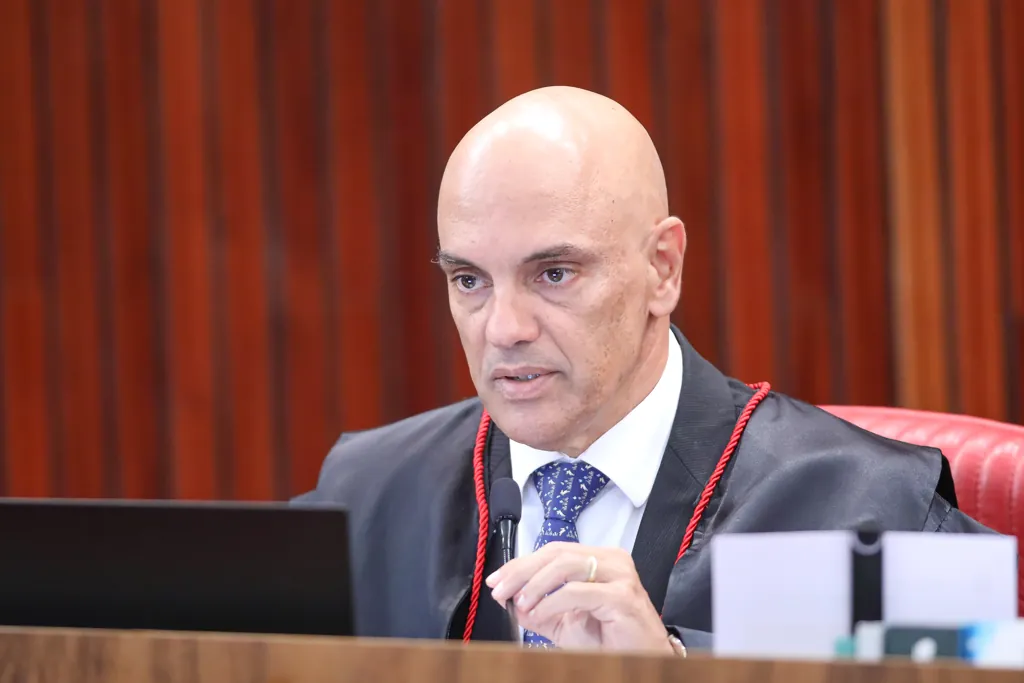
BRASÍLIA, Brazil – Brazil’s Supreme Court is considering whether to open an investigation into Justice Alexandre de Moraes over allegations involving the collapsed Banco Master, putting one of the country’s most powerful judges under scrutiny as the court faces an unusually public internal dispute.
The case centers on allegations that Moraes had provided legal advice to Banco Master founder Daniel Vorcaro and that a law firm owned by Moraes’ wife had a multimillion-dollar consulting relationship with the bank. Moraes denies wrongdoing and has challenged the handling of the material used to raise the allegations.
The Supreme Court began deliberations on Sept. 15. The proceeding concerns whether there is sufficient basis to formally investigate Moraes; it is not a determination that he committed a crime.

The controversy has become particularly sensitive because Moraes played a leading role in the Supreme Court proceedings that resulted in former President Jair Bolsonaro’s conviction over the 2022 coup attempt.
Allegations center on Banco Master
The allegations emerged from a broader investigation into Banco Master, whose former chief executive, Vorcaro, is facing scrutiny in connection with a major financial fraud investigation.
A Federal Police report examined communications involving Vorcaro and Moraes. According to reporting presented to the Supreme Court, investigators also identified a $24 million consulting contract between the bank and a law firm owned by Moraes’ wife.
Moraes has rejected the allegations and accused Justice André Mendonça, who brought the material before the court, of exceeding his authority and pursuing a politically motivated effort against him.
The accusations remain allegations. The court’s current task is to determine whether they warrant a formal investigation.
■ Related News

Supreme Court divisions become public
The proceedings have exposed an unusual split among Brazil’s Supreme Court justices.
Mendonça, who was appointed by Bolsonaro, has been involved in the Banco Master investigation and released material that included communications involving Moraes. Moraes has argued that the investigation was improperly conducted and that Mendonça’s actions were politically motivated.
Chief Justice Edson Fachin has sought to contain the dispute and emphasized the need for institutional debate while keeping the immediate proceedings focused on the allegations involving Moraes.
The court has also scheduled a separate proceeding concerning Mendonça’s conduct for Sept. 23.
Two justices, Kassio Nunes Marques and Dias Toffoli, have said they will not participate in the vote on Moraes. Nunes Marques cited a potential conflict after messages concerning his son appeared in material connected to Banco Master, while Toffoli cited a personal reason for recusing himself.
The withdrawals leave fewer justices eligible to participate in the decision.
Bolsonaro case adds political sensitivity
Moraes’ position in the controversy carries particular political weight because of his role in cases involving Bolsonaro.
As rapporteur of the criminal proceedings against Bolsonaro and other defendants accused of attempting to overturn the 2022 election result, Moraes became a central figure in the legal response to the alleged coup attempt. The Supreme Court ultimately convicted Bolsonaro and several co-defendants in 2025.
Bolsonaro’s supporters have long accused Moraes of political bias, while supporters of the court’s actions have portrayed his work as an important defense of Brazil’s democratic institutions.
The current investigation question is legally separate from those cases. Moraes has nevertheless argued that the allegations against him are connected to efforts to undermine the court after Bolsonaro’s conviction.
The timing has added to the political sensitivity. Brazil is preparing for its October presidential election, with Senator Flávio Bolsonaro, the former president’s son, emerging as a major right-wing candidate against President Luiz Inácio Lula da Silva.
What the court is deciding
The Supreme Court is not being asked at this stage to determine whether Moraes is guilty of corruption.
The immediate question is whether the material presented to the court justifies opening a formal investigation. Depending on the proceedings, the court could reject the request, authorize an investigation or require additional steps before making a final decision.
The unusual nature of the proceeding has made the institutional safeguards surrounding the investigation almost as important as the allegations themselves.
Fachin took control of the proceedings involving Moraes and Vorcaro after concerns emerged over the handling of the investigation. The court has also unsealed documents connected to the Banco Master case, allowing more of the dispute to be examined publicly.
For the Supreme Court, the case therefore presents two simultaneous questions: whether the allegations against one of its members warrant further investigation, and whether the court can resolve an internal conflict over those allegations without further damaging confidence in the institution.
Reporting Credit: Supreme Federal Court of Brazil (STF) — judicial proceedings, case records and statements from the justices; Federal Police of Brazil — investigative material concerning Banco Master and Daniel Vorcaro; Office of the Chief Justice of the Supreme Federal Court — procedural decisions concerning the investigation and related proceedings.