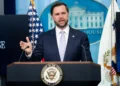
WASHINGTON — Homeland Security Secretary Markwayne Mullin warned Friday that states refusing to cooperate with the Trump administration’s election security initiatives could face federal investigations, financial penalties or the loss of federal support, escalating a dispute over the balance of federal and state authority ahead of the 2026 midterm elections.
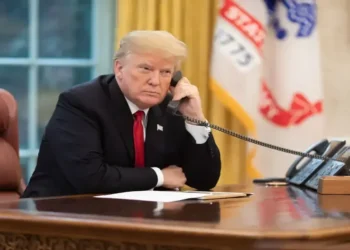
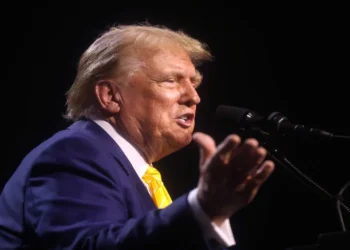
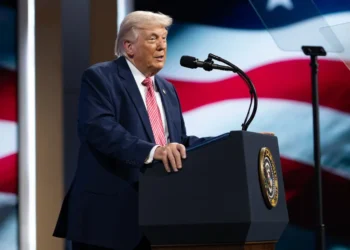
Mullin made the remarks at the White House one day after President Donald Trump devoted much of a nationally televised address to election security. The administration has continued urging states to adopt federal voter verification measures and share election-related data as part of its broader election integrity agenda.
Legal scholars and election experts, however, say many of the administration’s proposed actions could face significant legal challenges because the U.S. Constitution gives states primary responsibility for administering elections. Federal courts have also repeatedly limited the federal government’s authority to compel states to provide voter information.

“We absolutely can build confidence in the American people, but the states have to do their part,” Mullin said.
Trump has continued to question the integrity of the 2020 presidential election despite court rulings, recounts and reviews by election officials—including members of his first administration—that found no evidence of widespread fraud sufficient to change the outcome. Mullin said Friday that the administration’s current efforts are focused on strengthening future elections rather than revisiting the 2020 contest.
Administration Highlights Voter Registration Concerns
Mullin repeated Trump’s claim that federal authorities had identified roughly 250,000 noncitizens on voter registration rolls in California, Nevada, New Jersey and Pennsylvania.
Election experts have questioned how those figures were calculated, noting that public records are often incomplete or outdated and cannot reliably determine an individual’s citizenship status on their own.
Election officials in California and Pennsylvania said they would review any information provided by federal authorities while emphasizing that they already conduct routine voter list maintenance. They also noted that documented cases of noncitizen voting remain rare, a conclusion supported by multiple studies.
■ Related News




California Gov. Gavin Newsom said the state would continue defending its election system, while Nevada Secretary of State Cisco Aguilar said election officials regularly review voter registration records to maintain accurate voter rolls.
Mullin also said the Department of Homeland Security plans to expand investigations into illegal voting and encouraged states to participate in the department’s revised Systematic Alien Verification for Entitlements, or SAVE, program.
The administration has promoted the expanded SAVE program as a tool for verifying citizenship during voter registration reviews. Since April 2025, at least 25 states have used the system while federal officials continue encouraging broader participation.
Courts Continue to Scrutinize Federal Election Efforts
The administration’s expanded use of the SAVE program has already encountered legal obstacles.
A federal judge recently blocked portions of the initiative after raising concerns about privacy protections and the possibility that eligible voters could be mistakenly removed from voter registration lists.
David Becker, executive director of the nonprofit Center for Election Innovation and Research, said courts have consistently rejected federal efforts requiring states to surrender sensitive voter information.
Congress has also yet to approve the federal SAVE Act, which would require documentary proof of U.S. citizenship when registering to vote. The legislation remains stalled in the Senate, where Republicans lack enough votes to overcome procedural hurdles without Democratic support.
Cybersecurity Strategy to Be Updated
Mullin also echoed Trump’s concerns about vulnerabilities in electronic voting systems.
Election officials have long acknowledged cybersecurity risks but say multiple safeguards protect election integrity, including paper ballots, equipment testing, post-election audits and physical security measures.
Mullin said the Cybersecurity and Infrastructure Security Agency (CISA) will release an updated election infrastructure strategy within the next 30 days and continue providing cybersecurity assistance to participating states.
However, the agency’s election-related activities have been scaled back during Trump’s second term. The administration has reviewed CISA’s election programs, placed several election-focused employees on leave and reduced funding for cybersecurity initiatives that previously supported state and local election officials.
Aguilar said Nevada has strengthened its own election security efforts as federal assistance has declined.
Debate Over Federal and State Authority Continues
The administration’s latest election initiatives have renewed debate over the federal government’s role in elections that are primarily administered by the states.
Supporters argue stronger voter verification measures will improve public confidence in elections, while critics contend that states already maintain safeguards and that expanded federal involvement could exceed constitutional limits.
As preparations for the 2026 midterm elections continue, disputes over voter registration, election security and federal oversight are expected to remain at the center of the national political debate.
This report is based on reporting by The Associated Press.
Article Topics: Election Security | Voter Registration | Homeland Security | Midterm Elections | Federal Authority | Cybersecurity | Election Administration