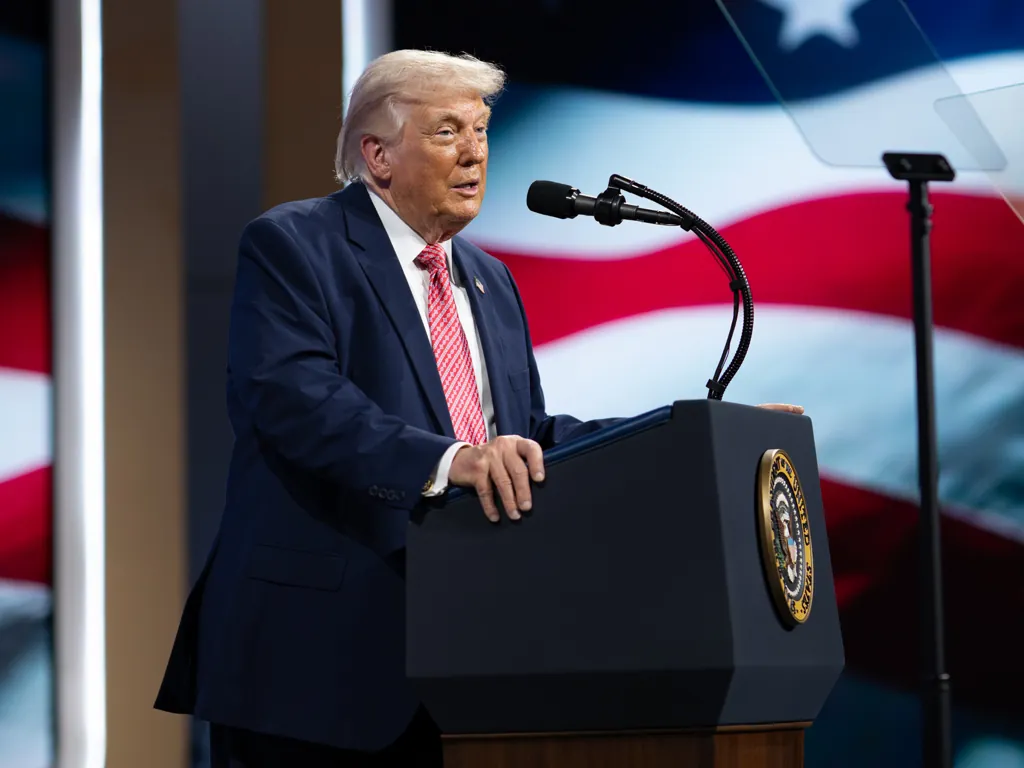
WASHINGTON – The Trump administration asked the U.S. Supreme Court on Monday to allow President Donald Trump’s executive order on mail voting to take effect while legal challenges continue, arguing that time is running short if any changes are to be implemented before the November midterm elections.
The Justice Department filed an emergency application asking the justices to pause lower court rulings that blocked enforcement of the executive order in nearly half the country. The request follows a decision by a federal judge in Massachusetts, later left in place by a divided panel of the 1st U.S. Circuit Court of Appeals, preventing implementation of the order in the 23 states and the District of Columbia that filed the lawsuit.
The dispute centers on whether the president has the constitutional authority to direct changes affecting election administration, an area the plaintiff states argue is reserved primarily for states and Congress.

Administration Says Order Establishes Federal Policy
Trump signed the executive order in March, directing federal agencies to establish a “state citizenship list” of eligible voters and requiring mail ballots to be delivered only to individuals appearing on those lists.
The order instructs U.S. Citizenship and Immigration Services and the commissioner of the Social Security Administration to provide citizenship records to state election officials for voter eligibility purposes. It also calls for mail ballots to be issued in secure envelopes with unique tracking barcodes and states that federal funding could be withheld from jurisdictions that do not comply.
In its filing, the Justice Department argued that the executive order sets out general federal policy rather than directing how states administer elections.
Solicitor General D. John Sauer urged the Supreme Court to suspend the lower court injunction while the litigation proceeds. He argued that federal agencies are still determining whether and how to implement portions of the order, making the injunction premature.
Sauer also asked the court to act quickly, saying any policies intended to affect the November elections would need to be finalized as early as August. Responses to the administration’s emergency application are due by Aug. 3.
■ Related News


States Challenge Presidential Authority
Democratic attorneys general from 23 states and the District of Columbia sued after the executive order was issued, arguing that the Constitution assigns authority over election rules to states and Congress rather than the president.
The states contend that the proposed requirements could disrupt election administration and create opportunities for confusion or misuse.
In June, U.S. District Judge Indira Talwani in Boston temporarily blocked enforcement of the order in the plaintiff states ahead of the Nov. 3 elections. Talwani concluded that implementation should remain on hold while the courts determine whether the order is lawful.
Her ruling differed from a decision issued in May by U.S. District Judge Carl Nichols in Washington, who found that legal challenges were premature because the executive order had not yet been implemented.
California Attorney General Rob Bonta, whose office is leading the lawsuit, did not immediately comment on the administration’s Supreme Court filing. New York Attorney General Letitia James’ office also declined to comment.
Mail Voting Remains a Political Flashpoint
Mail voting has remained a central issue in Trump’s election agenda. The president has argued that the executive order would help prevent non-U.S. citizens from voting and has continued to advocate legislation requiring proof of citizenship for voter registration.
Speaking Monday at a General Motors facility in Michigan, Trump again criticized mail voting while urging Congress to approve voter identification and proof-of-citizenship legislation.
According to federal data, about 30% of ballots cast in the 2024 presidential election were submitted by mail. The Associated Press also cited a 2025 Brookings Institution study that identified approximately four cases of fraud for every 10 million mail ballots cast.
Federal law already prohibits noncitizens from voting in federal elections. Violations are felony offenses that can result in criminal penalties and deportation for noncitizens.
The Supreme Court previously ruled against the Trump administration in a separate mail-ballot dispute, holding in June that states may count ballots arriving after Election Day under the circumstances presented in that case.
Meanwhile, the U.S. Postal Service declined to discuss any implementation plans while the litigation remains pending. In Kansas, the office of Republican Secretary of State Scott Schwab said it had not received information from the Postal Service regarding possible implementation of the executive order.
This report is based on reporting by The Associated Press.