KYIV, Ukraine – Ukraine has expanded its campaign of long-range drone strikes inside Russia by targeting multiple warehouse facilities operated by Wildberries, the country’s largest online marketplace, disrupting logistics for thousands of small businesses while underscoring Kyiv’s strategy of striking infrastructure it says supports Russia’s war effort.
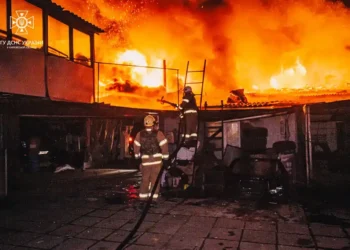
The strikes hit four Wildberries logistics centers over several days, causing extensive fires and damage. Ukrainian drones first struck warehouses in Elektrostal, east of Moscow, and in Tambov Region over the weekend, killing eight people and injuring dozens, according to Russian officials. Early Wednesday, additional drone strikes ignited warehouses in the Krasnodar and Stavropol regions, where authorities reported one death and 14 injuries.
The campaign forms part of Ukraine’s broader effort to impose economic costs on Russia by targeting infrastructure linked to the country’s wartime logistics and supply networks.

Wildberries Becomes a Strategic Target
Founded in 2004 by former teacher Tatyana Kim, Wildberries has grown into Russia’s largest e-commerce platform, serving millions of consumers and hundreds of thousands of merchants through one of the country’s most extensive logistics networks.
The marketplace sells clothing, electronics, books, household goods, cosmetics and sporting equipment, while also offering services including travel bookings and online pharmacy products.
After acquiring a small bank in 2021, the company expanded into financial services through Wildberries Bank, which has since been sanctioned by both the United Kingdom and the European Union.
According to company figures cited by The Associated Press, Wildberries operates more than 200 logistics facilities covering over 5.2 million square meters and had planned further expansion into Belarus and Kazakhstan during 2026.
Industry estimates suggest between 500,000 and 800,000 sellers rely on the platform, which accounts for approximately 52% of Russia’s online retail orders.



Despite the disruption, shoppers interviewed in Moscow told the AP they intended to continue using Wildberries, citing convenience despite the possibility of higher prices.
Competing Claims Over Military Use
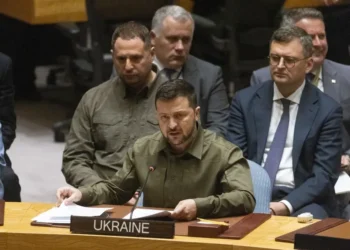
Ukrainian officials argue the targeted logistics centers contribute to Russia’s military supply chain.
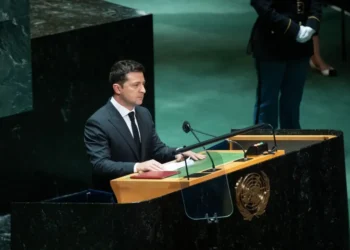
Although President Volodymyr Zelenskyy did not identify Wildberries by name, he said the facilities struck by Ukrainian forces supplied equipment and technical components used by the Russian military.
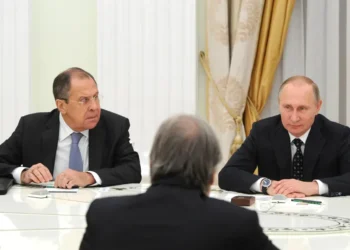
The Kremlin rejected that claim.
Presidential spokesman Dmitry Peskov described the warehouses as civilian facilities and accused Ukraine of deliberately attacking civilian infrastructure.
An Associated Press review of the Wildberries website found listings for products with both civilian and potential military applications, including body armor, helmets, radios and communications equipment. Some items were marketed using references to Russia’s “special military operation,” the Kremlin’s official term for the war, with descriptions stating they had been tested during the conflict or were favored by Russian servicemen.
Wildberries did not respond to requests for comment regarding the allegations.
Russia has also repeatedly targeted Ukrainian logistics centers and retail facilities during the war.
Small Businesses Bear the Economic Impact
The warehouse strikes have had their most immediate effect on Russia’s small and medium-sized businesses, many of which depend on Wildberries’ nationwide distribution network.
Following the attacks, numerous merchants posted videos and messages on social media showing destroyed inventory and expressing uncertainty about whether their businesses could recover.
Wildberries said it took three days to extinguish the fire at its Elektrostal distribution center, one of its principal logistics hubs serving the Moscow region.
Operations at the damaged warehouse in Kotovsk, Tambov Region, resumed Thursday.
The company has not disclosed the value of inventory destroyed.
Peskov acknowledged that both Wildberries and many small businesses had suffered significant losses.
To support affected merchants, Wildberries introduced reduced storage fees, free inventory transfers to other warehouses and discounted financing through Wildberries Bank.
Questions also emerged over compensation after the company revised its seller agreement earlier this month, exempting itself from liability for inventory losses resulting from force majeure events, including drone attacks.
Late Wednesday, Tatyana Kim announced that compensation payments had begun for sellers whose goods were destroyed at the Elektrostal warehouse, saying more than 88,000 of the smallest and most vulnerable entrepreneurs would receive payments within 24 hours.
Industry analyst Sergei Semko of Moscow-based Data Insight estimated the four damaged warehouses represented roughly 12% of Wildberries’ storage capacity.
He estimated the value of destroyed merchandise could reach $3 billion, adding to existing pressures from higher taxes, rising fuel costs and tighter regulations.
Semko described the combination of challenges as “almost a perfect storm.”
Economic Pressure Extends Beyond the Battlefield
Analysts say the strikes reflect Ukraine’s broader strategy of increasing economic pressure inside Russia.
Chris Weafer, chief executive of Macro-Advisory Ltd., said Russia’s e-commerce sector has expanded rapidly since many Western companies left the country following Moscow’s full-scale invasion of Ukraine in 2022.
Domestic retailers such as Wildberries and Ozon filled supply gaps by sourcing products through parallel imports from countries including China, the United Arab Emirates and Turkey.
Weafer estimated Russia’s e-commerce market is now worth approximately $150 billion, with online retail accounting for between $80 billion and $90 billion.
He said the warehouse strikes are unlikely to significantly weaken Russia’s overall economy but are placing increasing pressure on small businesses while making the effects of the war more visible to ordinary consumers.
Earlier Ukrainian drone strikes on Russian oil refineries exposed critical energy infrastructure to the conflict.
The attacks on one of Russia’s largest retail logistics networks extend that strategy by disrupting commercial supply chains and increasing the economic costs of the war beyond the battlefield.
This report is based on reporting by The Associated Press.