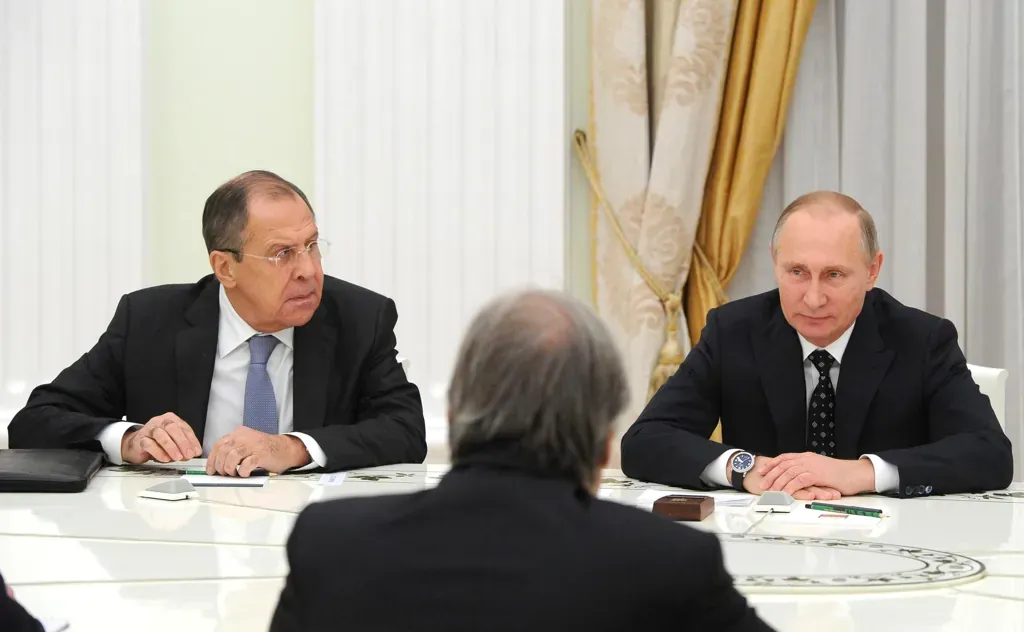
UNITED NATIONS, United States – Russia rejected a German call to reduce tensions with Berlin, Europe and NATO after the foreign ministers of the two countries held their first direct meeting since before Russia’s full-scale invasion of Ukraine in 2022.
German Foreign Minister Johann Wadephul urged Russian Foreign Minister Sergey Lavrov on Saturday to abandon what Berlin described as a “dangerous path of escalation” toward Germany, Europe and the NATO alliance.
Lavrov later dismissed the appeal, accusing Germany of supporting Ukraine and seeking a larger military role in Europe. He also questioned whether Berlin understood where its current policy could lead.

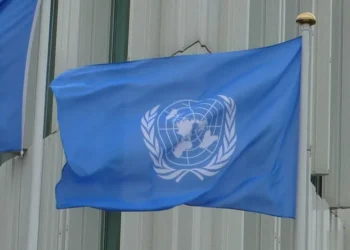
The exchange took place on the sidelines of the United Nations General Assembly in New York, as relations between Moscow and Berlin have deteriorated further following a disputed drone incident at Leipzig/Halle Airport and a series of diplomatic measures by both governments.
First foreign-minister talks since 2022
Wadephul requested the meeting with Lavrov, according to German and Russian officials.
The talks covered bilateral relations and the war in Ukraine. A German delegation source said Wadephul also urged Moscow to do everything possible to reach an agreement on grain exports through the Black Sea, where Russian and Ukrainian attacks on ports and vessels have disrupted commercial traffic.
Wadephul told Lavrov that a practical agreement on the Black Sea could create an opening for further steps.
He also pressed Russia to end what Germany describes as escalating activity directed at Germany, Europe and NATO. German officials said incidents such as the Leipzig episode would not change Berlin’s support for Ukraine.
■ Related News
The meeting was the first between the Russian and German foreign ministers since before Russia launched its full-scale invasion of Ukraine in February 2022. Their encounter did not produce a publicly announced breakthrough.
Lavrov later characterized the discussion as a repetition of Germany’s existing public position rather than a new diplomatic approach.
Leipzig drone dispute adds to tensions
The latest deterioration in relations follows an attempted drone attack at Leipzig/Halle Airport in August.
The German government said in September that its investigation had concluded Russia was responsible. Berlin subsequently announced measures including the closure of Russia’s consulate general in Bonn and the termination of an agreement governing the Russian House of Science and Culture in Berlin.
Russia has rejected the accusation.
The Russian Embassy in Berlin described the German allegations as fabricated and said Moscow had not been presented with evidence supporting Berlin’s attribution of the incident. Russia also warned that Germany’s measures would have consequences for bilateral relations.
The responsibility for the Leipzig incident therefore remains contested between the two governments. Germany has publicly attributed it to Russia, while Moscow denies involvement.
Lavrov accuses Berlin of militarization
Lavrov used his address to the U.N. General Assembly after the meeting to criticize Germany’s security policy.
He accused Berlin of becoming Ukraine’s principal sponsor and said Germany was seeking to establish itself as a leading military power in Europe.
Lavrov also invoked the history of World War II while questioning the consequences of Germany’s current approach to Russia.
The remarks continued a line of criticism Lavrov had used earlier in September.
After Germany publicly attributed the Leipzig incident to Russia, Lavrov called the accusations baseless and said Berlin’s approach amounted to the beginning of what he described as a “real war” with the West. Russia has maintained that the German accusations were intended to justify further pressure on Moscow.
Germany has rejected that characterization and says its measures are responses to what it considers Russian hybrid activity and threats to European security.
Berlin says support for Ukraine will continue
Wadephul has made clear that Germany does not intend to reduce its support for Ukraine as part of efforts to improve European security.
In a September 23 address to the U.N. Security Council, he called for an immediate ceasefire beginning in the Black Sea, a comprehensive prisoner exchange and a return to negotiations based on international law.
Germany has also said it is strengthening its own defense capabilities and coordinating with NATO and the European Union.
Before traveling to New York for the General Assembly, Wadephul said Germany wanted to work with partners to protect critical infrastructure and respond to threats involving undersea cables, hybrid attacks and Russia’s shadow fleet.
Those policies place Berlin directly at odds with Moscow’s characterization of European support for Ukraine.
No immediate diplomatic breakthrough
The New York meeting restored a direct channel between the two foreign ministries, but the public statements afterward showed how far apart the two governments remain.
Germany is pressing Russia for de-escalation, a reduction in attacks affecting European security and renewed negotiations over Ukraine. Russia continues to reject Germany’s accusations and portrays Berlin’s military and political support for Kyiv as part of a broader European confrontation with Moscow.
The disagreement extends beyond Ukraine.
Lavrov said Russia would oppose efforts by Germany and Japan to obtain permanent seats on the U.N. Security Council, arguing that both countries’ positions conflicted with Russia’s view of the international order.
The two foreign ministers’ meeting therefore produced contact without resolving the central disputes between their governments.
For Berlin, the immediate objective is to prevent further escalation while maintaining support for Ukraine and strengthening European security.
For Moscow, the same policies are evidence that Germany is becoming more directly involved in the confrontation surrounding the war.
The diplomatic channel has reopened at the ministerial level, but the positions expressed afterward indicate that the fundamental disagreement remains unresolved.
Reporting Credit: German Federal Foreign Office — statements and policy positions from Foreign Minister Johann Wadephul concerning Russia, Ukraine, European security and the Leipzig incident; Russian Ministry of Foreign Affairs — Russian position on relations with Germany, Ukraine and European security; United Nations — General Assembly and Security Council proceedings and official records; United Nations Web TV — Lavrov’s September 26 press conference.