Journos News - Breaking News, World News, Top Stories, Todays Headlines and Flash Reports
Wednesday, September 2, 2026
  • Login
  • Home
  • World
    • Africa
    • Americas
    • Asia
    • Europe
    • Middle East
    • Oceania
  • Politics
  • Business
  • Technology
  • Health
  • Science
  • Sports
  • Entertainment
  • Culture
No Result
View All Result
  • Home
  • World
    • Africa
    • Americas
    • Asia
    • Europe
    • Middle East
    • Oceania
  • Politics
  • Business
  • Technology
  • Health
  • Science
  • Sports
  • Entertainment
  • Culture
No Result
View All Result
Journos News - Breaking News, World News, Top Stories, Todays Headlines and Flash Reports
No Result
View All Result
Home World News Americas

U.S. Oil Tanker Blockade on Venezuela Signals New Phase of Strategic Economic Pressure

Washington’s move to halt sanctioned tanker traffic raises stakes in a widening confrontation with Caracas and tests regional stability in the Caribbean.

The Daily Desk by The Daily Desk
May 13, 2026
in Americas, World News
0
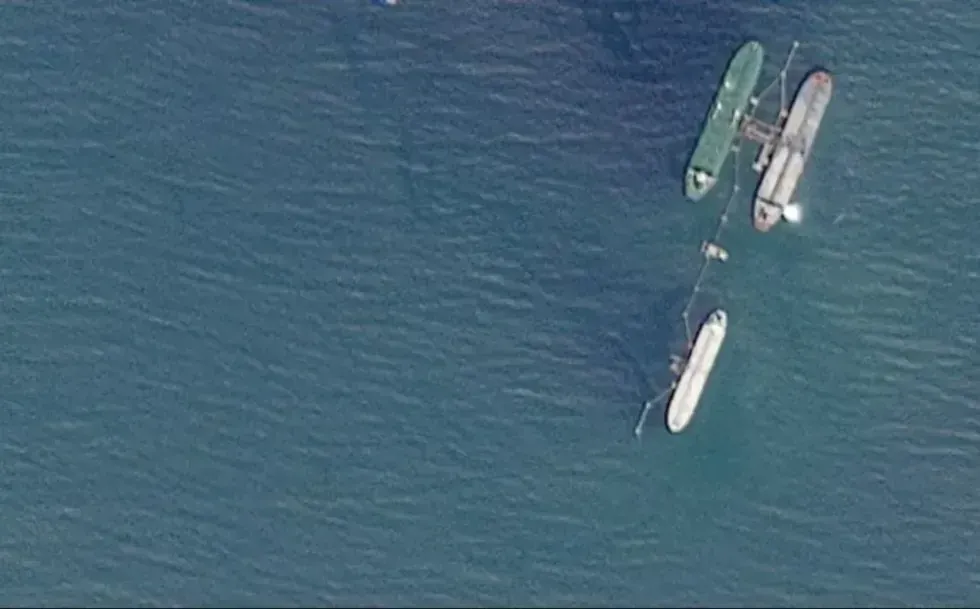
U.S. naval presence enforcing oil tanker blockade near Venezuelan waters - 2025 PLANET LABS PBC via REUTERS

U.S. naval deployments in the Caribbean expand amid blockade order targeting Venezuelan oil shipments. - 2025 PLANET LABS PBC via REUTERS

U.S. President Donald Trump has ordered what he described as a “total and complete blockade” of sanctioned oil tankers traveling to and from Venezuela, marking a significant escalation in Washington’s campaign to cut off the government of Nicolás Maduro from its primary source of revenue.

The directive, announced in a message posted on Trump’s Truth Social platform, effectively positions the U.S. Navy and other military assets deployed in the Caribbean as enforcers of a maritime pressure strategy aimed at disrupting Venezuela’s oil exports.

The move underscores a shift in emphasis from Washington’s previously stated focus on narcotics trafficking to a more explicit effort to constrain Caracas economically by targeting its energy trade.

Strategic Pressure Expands Through Maritime Enforcement

Trump stated that U.S. military deployments in the Caribbean will remain in place until the Venezuelan government returns what he described as “all of the oil, land, and other assets that they previously stole from us.”

The statement introduced new rhetoric linking Venezuela’s resource wealth directly to U.S. strategic interests, though it did not clarify what specific assets Washington expects Caracas to return or how such restitution would occur.

In practical terms, the blockade order builds on a series of maritime enforcement actions already underway. Nearly a week earlier, U.S. forces intercepted a Venezuelan-linked tanker near the country’s coastline in a highly publicized operation.

According to reporting by Reuters and The Associated Press, the U.S. Treasury Department subsequently imposed sanctions on several companies operating vessels accused of transporting Venezuelan oil through deceptive shipping practices.

Caracas Frames Blockade Order as Resource Seizure Attempt

The Venezuelan government responded within hours of Trump’s announcement, sharply condemning the move as a threat to national sovereignty.

■ Related News
Donald Trump speaks at the Conservative Political Action Conference in National Harbor, Maryland, on February 23, 2018.

Trump Loses Again in Bid to Erase His Hush Money Conviction

August 29, 2026
President Donald J. Trump speaks on the phone aboard Air Force One during a Hurricane Michael impact update in October 2018.

Trump Says U.S. Has Deal With Venezuela for Control of 65 Billion Barrels of Oil Reserves

August 29, 2026
Donald Trump speaks at the Conservative Political Action Conference in Washington, D.C., in 2011 during a political address.

After Six Months of Iran War, U.S. Goals Have Shifted. Strait of Hormuz Is Now a Top Concern

August 27, 2026
Strait of Hormuz connecting the Gulf of Oman and Persian Gulf, photographed from the International Space Station.

LIVE: Middle East Conflict — Ongoing Coverage

August 12, 2026

In a statement issued by the administration of Nicolás Maduro, officials described the proposed blockade as “reckless” and accused Washington of attempting to seize Venezuela’s natural resources.

The statement argued that Trump’s remarks implied ownership over Venezuela’s oil and mineral wealth and called on international audiences to reject what it labeled an effort to “steal the wealth” of the country.

The exchange highlights how energy policy has become the central battleground in the long-running political conflict between Washington and Caracas.

Sanctions Campaign Targets ‘Ghost Fleet’ Supplying Asian Buyers

The blockade directive follows a broader crackdown on vessels suspected of transporting Venezuelan oil while evading sanctions.

U.S. authorities have sanctioned several shipping companies operating tankers registered under flags including the Marshall Islands, Panama, Hong Kong, and the Cook Islands.

These vessels are often described in maritime monitoring circles as “ghost ships,” a reference to tactics such as disabling tracking systems or broadcasting misleading location data to avoid detection.

Analysts say the network has allowed Venezuelan crude to continue reaching buyers—particularly in Asia—despite years of U.S. sanctions.

Regional Deterrence Tested by Largest Caribbean Deployment in Decades

The maritime crackdown is unfolding alongside one of Washington’s largest military deployments in the Caribbean in recent decades.

U.S. officials have previously justified the presence as part of counter-narcotics operations targeting drug trafficking routes in the region.

However, the expansion of enforcement actions against oil tankers suggests that energy interdiction is becoming a central component of the strategy.

Security analysts note that such a posture raises the risk of confrontation at sea, particularly if vessels attempt to challenge or circumvent interdiction efforts.

Oil Revenue at the Center of Venezuela’s Strategic Vulnerability

Venezuela’s economy remains heavily dependent on crude exports, with oil sales providing a crucial source of government revenue.

For Caracas, maintaining access to international markets—particularly buyers willing to navigate sanctions—has been essential to sustaining state finances.

Analysts say the blockade order therefore represents an attempt to tighten the economic vise around the Maduro government by targeting the very trade routes that have allowed the country’s energy sector to survive under sanctions.

Long-Standing U.S. Interest in Venezuelan Oil Resurfaces

Trump has repeatedly highlighted Venezuela’s vast oil reserves in past statements.

During a 2023 speech, he suggested that the United States had once been close to gaining access to those resources during earlier efforts to pressure the Maduro government.

Those remarks, resurfacing amid the new blockade order, reinforce the perception that energy security and geopolitical competition in the Western Hemisphere remain intertwined.

Forward Outlook: Escalation Without Direct Conflict

The blockade directive signals a further tightening of economic and strategic pressure rather than an immediate move toward direct military confrontation.

Yet by placing naval forces at the center of enforcement, the measure also increases the stakes in an already tense regional standoff.

How aggressively the United States applies the blockade—and how shipping networks and Venezuela respond—will likely determine whether the current strategy remains an economic containment campaign or evolves into a broader maritime confrontation.

Tags: #CaribbeanSecurity#DonaldTrump#EnergyGeopolitics#GeopoliticalTensions#GlobalEnergyMarkets#LatinAmericaPolitics#MaritimeSecurity#NicolasMaduro#OilSanctions#USForeignPolicy#USMilitaryDeployment#VenezuelaOilBlockade
The Daily Desk

The Daily Desk

The Daily Desk is a contributor at JournosNews.com covering politics, media, governance, and the evolving dynamics of public discourse. Stories published under this byline are produced in accordance with JournosNews' editorial standards, with an emphasis on verified reporting, accuracy, context, and impartiality.

Related Posts

Donald Trump boards Air Force One at Ankara Esenboga International Airport in Turkey on July 8, 2026

Trump Confirms Secret Plane Switch After Possible Threat During NATO Summit

August 12, 2026
USCGC Aquidneck transits the Strait of Hormuz during U.S. naval operations on December 2, 2020.

LIVE: Middle East Conflict — Ongoing Coverage

August 11, 2026
Houthi supporters protest against Saudi-led coalition airstrikes in Sana’a, Yemen, in September 2015.

Houthi Attacks Raise Risk of Wider Conflict and Red Sea Shipping Disruption

August 9, 2026
Editorial map showing the Strait of Hormuz, Iran and Oman, with shipping routes and key locations amid Iran-Oman ceasefire diplomacy.

Iran Ceasefire Talks Put the Strait of Hormuz at the Center of a Fragile Middle East De-Escalation

August 8, 2026
President Donald Trump speaks at an event highlighting coal miners and the U.S. coal industry during a White House initiative in 2026.

Trump Signs New Executive Orders Renewing Push to Restrict Birthright Citizenship

August 7, 2026
U.S. Navy sailors aboard USS William P. Lawrence prepare to provide rescue assistance to a burning vessel while transiting the Strait of Hormuz.

Iran Signals Progress on Strait of Hormuz Agreement as Middle East Tensions Persist

August 7, 2026
U.S. President Donald Trump chairs a Cabinet meeting with administration officials in the Cabinet Room at the White House on Jan. 29, 2026.

Trump Says Strait of Hormuz Reopening Deal Could Come Within Days as Negotiations Advance

August 5, 2026
Locator map of the Strait of Hormuz showing major international shipping lanes between the Persian Gulf and Gulf of Oman, alongside the locations of Iran, Oman, and neighboring Gulf states.

Iran, Oman Advance Strait of Hormuz Talks as U.S. Backs Diplomatic Progress

August 5, 2026
Load More
Next Post
Ahmed al Ahmed praised after tackling gunman during Bondi Beach Hanukkah attack - Mahmoud Hassano/REUTERS

Bondi Beach Attack Tests Australia’s Social Cohesion as Citizen Heroism Emerges From Tragedy

Flooded villages in Aceh after Cyclone Senyar triggered deadly Sumatra floods - Photo: AFP/Yasuyoshi Chiba

Sumatra Flood Disaster Prompts Aid Debate as Aceh Residents Signal Distress

JournosNews logo

Journos News delivers globally neutral, fact-based journalism that meets international media standards — clear, credible, and made for a connected world.

  • Categories
  • World News
  • Politics
  • Business & Markets
  • Technology
  • Health
  • Science
  • Sports
  • Arts & Culture
  • Resources
  • Editorial Standards
  • Submit a Story
  • Advertise with Us
  • Syndication & Partnerships
  • Site Map
  • Press & Media Kit
  • Editorial Team
  • Careers

Join thousands of readers receiving the latest updates, tips, and exclusive insights straight to their inbox. Never miss an important story again.

  • About Us
  • Editorial & Trust Center
  • Contact Us
  • Privacy Policy
  • Terms of Use & Copyright Notice

© JournosNews.com All rights reserved.

Welcome Back!

Login to your account below

Forgotten Password?

Retrieve your password

Please enter your username or email address to reset your password.

Log In
JournosNews

Independent Journalism.
Verified Facts.

You're about to read a professionally edited article from JournosNews.com.

Every article is produced in accordance with our editorial standards, emphasizing factual accuracy, transparent attribution, fairness, editorial independence, and meaningful context.

Editorial Standards
No Result
View All Result
  • Home
  • World
    • Africa
    • Americas
    • Asia
    • Europe
    • Middle East
    • Oceania
  • Politics
  • Business
  • Technology
  • Health
  • Science
  • Sports
  • Entertainment
  • Culture

© JournosNews.com All rights reserved.

This website uses cookies. By continuing to use this website you are giving consent to cookies being used. Visit our Privacy and Cookie Policy.