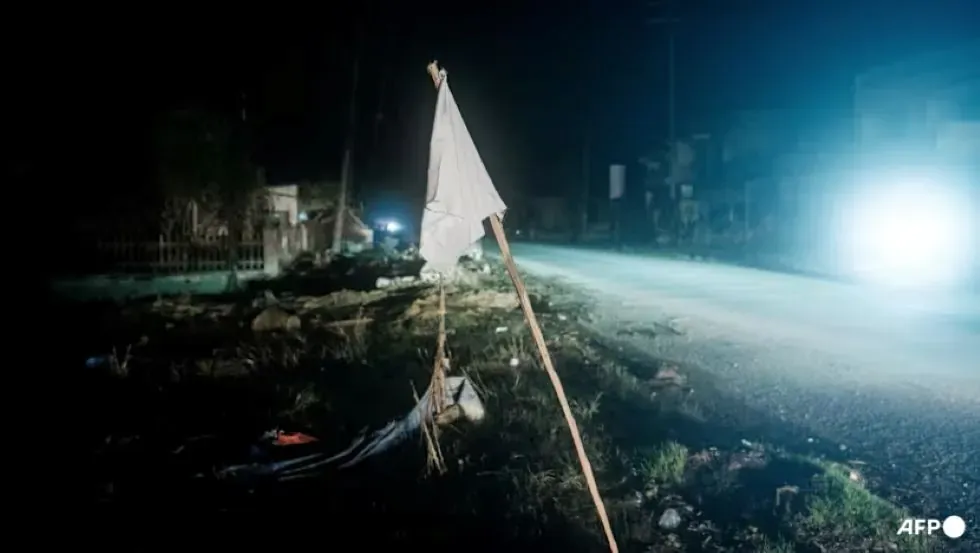
Residents in Indonesia’s Aceh province have raised white flags outside homes, evacuation centers, and public buildings to signal distress nearly three weeks after severe flooding devastated large parts of Sumatra. The disaster, linked to Cyclone Senyar in late November, has killed more than 1,000 people across three provinces and damaged hundreds of thousands of homes, according to regional reports.
Local communities say shortages of food, electricity, and medical supplies persist in some areas, raising questions about the pace of aid delivery and whether the central government should formally classify the event as a national disaster. Officials in Jakarta maintain that emergency operations remain manageable without international assistance.
The Scale of the Disaster
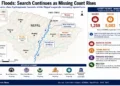
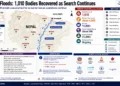
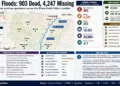
Flooding triggered by the cyclone around Nov 25 caused extensive damage across Aceh, North Sumatra, and West Sumatra. According to regional reporting cited by Indonesian media outlets, the death toll exceeds 1,000 people.

Aceh recorded the highest number of fatalities, with 431 confirmed deaths and 32 people still missing. North Sumatra reported 355 deaths and 84 missing, while West Sumatra confirmed 244 fatalities and 90 unaccounted for.
Authorities estimate that about 7,000 people were injured, and roughly 186,500 homes were damaged or destroyed. Officials have placed the projected cost of reconstruction across affected regions at approximately US$3.11 billion.
Communities Signal Distress
In several districts across Aceh, residents have raised white flags along roads and near evacuation sites to indicate that local resources are exhausted.
Residents say the flags represent a call for additional assistance as food stocks decline and essential services remain disrupted.
“It has been weeks since the floods struck, but aid reaching affected communities remains extremely limited,” Bahtiar, a resident of Alue Nimbong village in East Aceh, told local media.

In some areas, community kitchens established by volunteers have been distributing food, though supplies are reportedly diminishing.
Infrastructure and Health Challenges
The disaster disrupted power and communications infrastructure across parts of Aceh, including locations that were not directly inundated by floodwaters.
Local officials say prolonged electricity outages and shortages of fuel and liquefied petroleum gas have affected businesses and household supply chains. Health concerns are also emerging among displaced residents, with reports of fever, typhoid, and skin infections in some evacuation centers.
Transportation constraints have further complicated relief efforts. According to the Indonesian environmental organization Auriga, logistics bottlenecks have slowed the delivery of privately donated aid to affected areas.
Policy Debate Over Disaster Classification
Some community groups and regional leaders are urging Jakarta to declare the floods a national disaster, a designation that could expand the scale of emergency funding and coordination.
Under Indonesia’s disaster management framework, such a declaration can trigger broader mobilization of national resources, including additional logistics capacity, personnel, and reconstruction funding.
Masri, a spokesperson for the Aceh United People’s Movement, said demonstrations were planned in several districts to pressure the government to take that step.
Government Response
President Prabowo Subianto has said Indonesia can manage the disaster response without foreign assistance, declining international offers of aid.
“I said, thanks for your concern but we can handle it,” he told reporters earlier this week.
The government has ordered the creation of a special task force to oversee rehabilitation and reconstruction in the affected provinces. Authorities say restoring housing and critical infrastructure will be a priority.
According to government plans, around 2,000 temporary and permanent housing units will be built during the first phase of reconstruction.
What Remains Uncertain
It remains unclear how quickly large-scale rebuilding can begin across the affected regions or whether additional resources will be mobilized if local governments struggle to manage recovery operations.
Residents are also seeking clearer timelines for relocation and reconstruction, particularly in communities where homes, farmland, and small businesses were destroyed.
As floodwaters recede in parts of Sumatra, the focus is shifting from emergency relief toward long-term recovery and the resilience of local infrastructure to future extreme weather events.