Journos News - Breaking News, World News, Top Stories, Todays Headlines and Flash Reports
Tuesday, September 1, 2026
  • Login
  • Home
  • World
    • Africa
    • Americas
    • Asia
    • Europe
    • Middle East
    • Oceania
  • Politics
  • Business
  • Technology
  • Health
  • Science
  • Sports
  • Entertainment
  • Culture
No Result
View All Result
  • Home
  • World
    • Africa
    • Americas
    • Asia
    • Europe
    • Middle East
    • Oceania
  • Politics
  • Business
  • Technology
  • Health
  • Science
  • Sports
  • Entertainment
  • Culture
No Result
View All Result
Journos News - Breaking News, World News, Top Stories, Todays Headlines and Flash Reports
No Result
View All Result
Home World News Politics

Transatlantic Fallout Deepens as Trump Presses Europe to Manage Iran War Aftershock

As Washington signals a possible military off-ramp, pressure on NATO allies is shifting the crisis from the battlefield to alliance credibility and maritime security.

The Daily Desk by The Daily Desk
April 1, 2026
in Politics, World News
0
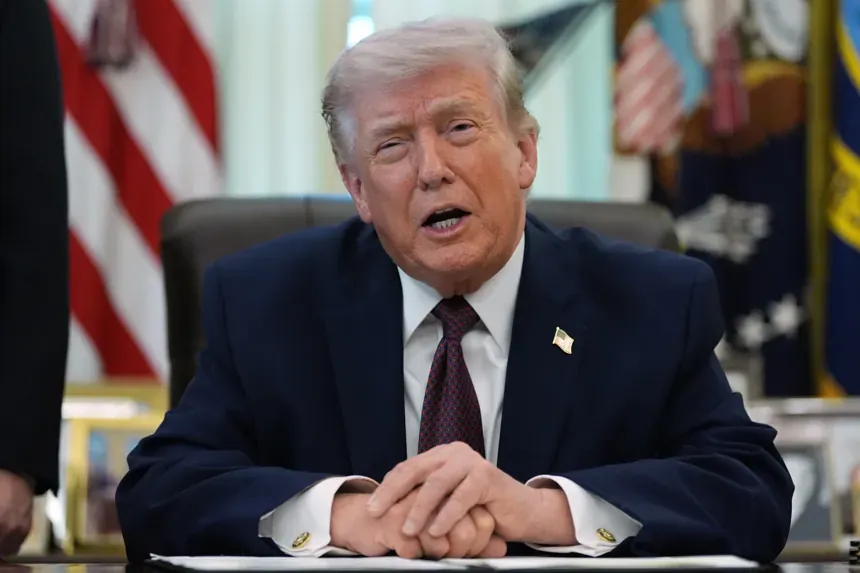
Trump pressures European allies amid Iran war diplomatic fallout - AP Photo/Alex Brandon

NATO allies face new pressure as Hormuz disruption deepens diplomatic strain. - AP Photo/Alex Brandon

President Donald Trump’s latest demands that European allies help stabilize the fallout from the Iran war have opened a new phase of the crisis: not military escalation alone, but widening diplomatic fallout inside the Western alliance system. What began as a U.S.-Israeli campaign against Iran is now evolving into a test of NATO cohesion, Gulf security burden-sharing, and Europe’s ability to shape an exit strategy before economic shockwaves deepen.

According to reporting by The Associated Press, Trump’s frustration has centered on Britain and France after both resisted direct operational support and limited military transit access, even as the Strait of Hormuz remains partially disrupted. The administration’s sharper tone suggests Washington is repositioning responsibility for post-conflict stabilization onto energy-dependent allies rather than sustaining a prolonged U.S. naval commitment.

The significance now lies less in the original strikes and more in what follows: whether Europe can prevent the conflict from spilling into a longer maritime, economic, and diplomatic crisis.

Alliance Friction Moves Into the Open

The most immediate consequence of Trump’s rhetoric is not symbolic irritation but strategic uncertainty inside NATO. By publicly insisting that securing Hormuz is “not for us,” the White House has signaled that alliance expectations are being rewritten in real time.

Senior administration figures, including Defense Secretary Pete Hegseth and Secretary of State Marco Rubio, have reinforced that position by arguing that U.S. forces have already carried the primary military burden. Their coordinated messaging points to a broader policy shift: Washington may be preparing to link future alliance commitments to direct burden-sharing in Middle East contingencies.

That raises a deeper institutional question for Europe — whether NATO remains a framework for collective strategic response, or increasingly a platform for selective U.S. participation tied to immediate national cost-benefit calculations.

Maritime Pressure Becomes Europe’s Immediate Test

With Iranian pressure on the Strait of Hormuz constraining global oil flows, Europe’s exposure is now acute. For major importers and Gulf-linked economies, the issue is no longer abstract solidarity with Washington but immediate supply chain vulnerability, jet fuel access, and tanker insurance risk.

This is where the crisis directly intersects with European strategic interests. A maritime stabilization mission tied to a ceasefire or limited naval escort framework would allow European governments to protect trade flows without formally entering the war itself.

■ Related News

U.S. Navy sailor mans a .50-caliber machine gun aboard USS Kitty Hawk while transiting the Strait of Hormuz toward the Arabian Gulf.

U.S. Strikes Iranian Rocket Launchers Near Strait of Hormuz, Breaking Month-Long Lull

August 31, 2026
Protesters gather in Copenhagen, Denmark, during a January 2026 demonstration opposing efforts to take control of Greenland.

Trump’s Greenland Threats Cast Shadow Over Iceland’s Vote on EU Membership Talks

August 29, 2026
Iranian leader pictured in an official image associated with a message marking Workers’ Day and Teachers’ Day in May 2026.

Iran’s Leaders Defy the U.S. Six Months Into War, Signaling Little Tolerance for Dissent

August 29, 2026
King Harald V of Norway poses for a portrait in 2021, photographed by Sámediggi - Sametinget.

Norway’s King Harald V Dies at 89, Son Becomes King Haakon VIII

August 29, 2026

That distinction matters politically. European capitals have remained careful to frame their involvement as economic security management rather than participation in Trump’s campaign. The diplomatic language is deliberate: preserve deterrence, avoid ownership.

Diplomatic Off-Ramps Gain Strategic Value

As first reported by Reuters, senior U.S. officials now say the “finish line” of the war may be visible, with indirect communication channels reportedly active between Washington and Tehran.

That evolving diplomatic space gives Europe its strongest leverage point yet.

Rather than match Washington’s public pressure, European governments are likely to intensify behind-the-scenes efforts around three linked goals: ceasefire sequencing, Hormuz shipping guarantees, and a face-saving political outcome Trump can present domestically as victory.

This is where the diplomatic fallout angle becomes decisive. The alliance strain itself may now be the mechanism that accelerates de-escalation, as European capitals seek to prevent anti-NATO rhetoric from hardening into a longer-term restructuring of transatlantic defense trust.

Regional Spillover Risk Expands Beyond the Gulf

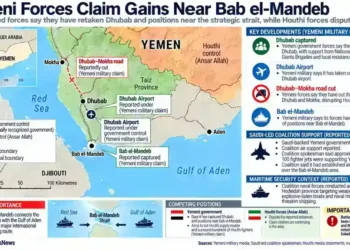
The wider regional risk remains that the war’s consequences spread into secondary theaters before diplomacy solidifies. Houthi missile activity near the Red Sea and the possibility of broader shipping disruption create a second maritime front with direct implications for Europe-bound trade.

That means Europe’s role is no longer confined to alliance management. It now sits at the intersection of Gulf deterrence, Red Sea commerce, refugee risk, and energy stabilization.

The strategic danger is cumulative rather than sudden: every additional week of fractured coordination increases the chance that the diplomatic split becomes harder to reverse than the military confrontation itself.

Conclusion: The War’s Political Damage May Outlast the Fighting

The battlefield phase may be nearing an off-ramp, but the deeper challenge is now political repair.

Trump’s demand that Europe manage the consequences of a war launched without prior allied consensus has transformed the conflict into a referendum on Western strategic trust. Even if military operations wind down within weeks, the diplomatic aftershocks inside NATO, the Gulf, and European energy policy may endure far longer.

For Europe, the immediate objective is clear: convert alliance friction into leverage for de-escalation before maritime insecurity and political distrust harden into the conflict’s most lasting legacy.

Tags: #Diplomacy#Europe#Geopolitics#Hormuz#IranWar#JournosNews#MiddleEast#NATO#OilMarkets#Security#Trump#WorldNews
The Daily Desk

The Daily Desk

The Daily Desk is a contributor at JournosNews.com covering politics, media, governance, and the evolving dynamics of public discourse. Stories published under this byline are produced in accordance with JournosNews' editorial standards, with an emphasis on verified reporting, accuracy, context, and impartiality.

Related Posts

Donald Trump speaks at the Conservative Political Action Conference in Washington, D.C., in 2011 during a political address.

After Six Months of Iran War, U.S. Goals Have Shifted. Strait of Hormuz Is Now a Top Concern

August 27, 2026
USS Abraham Lincoln aircraft carrier underway in the Atlantic Ocean during a U.S. Navy training exercise.

USS Abraham Lincoln to Stop in Thailand After Lengthy Middle East Deployment

August 27, 2026
Iranian fuel tankers arrive in Lebanon as Hezbollah-linked fuel shipments enter the country amid a severe energy crisis.

Iran’s Fuel Lines Grow as U.S. Sanctions Deepen Economic Pressure

August 26, 2026
Solar eclipse graphic showing totality path across Spain and the North Atlantic with partial eclipse visibility across Europe.

Europe Set for Major Solar Eclipse as Totality Crosses Spain and North Atlantic

August 12, 2026
Donald Trump boards Air Force One at Ankara Esenboga International Airport in Turkey on July 8, 2026

Trump Confirms Secret Plane Switch After Possible Threat During NATO Summit

August 12, 2026
Bashar al-Assad meets Vladimir Putin during talks at the Kremlin in Moscow on May 17, 2018.

Syrian Court Sentences Bashar al-Assad to Death Over Crimes Against Humanity

August 11, 2026
Myanmar Prime Minister Min Aung Hlaing meets Russian Federation Council Chairperson Valentina Matviyenko in Moscow on March 4, 2025.

Myanmar Rejects ASEAN Pressure Over Suu Kyi as Peace Effort Falters

August 10, 2026
Houthi supporters protest against Saudi-led coalition airstrikes in Sana’a, Yemen, in September 2015.

Houthi Attacks Raise Risk of Wider Conflict and Red Sea Shipping Disruption

August 9, 2026
Load More
Next Post
Traders monitor Asian stocks after oil falls below $100 - AP Photo/Ahn Young-joon

Asian Markets Rally as Oil Drops Below $100 on Iran De-Escalation Hopes

Artemis II crew aboard Orion during lunar flyby systems test - AP Photo/Chris O’Meara

Artemis II Lunar Flyby Will Test Deep-Space Systems Ahead of Future Moon Landings

JournosNews logo

Journos News delivers globally neutral, fact-based journalism that meets international media standards — clear, credible, and made for a connected world.

  • Categories
  • World News
  • Politics
  • Business & Markets
  • Technology
  • Health
  • Science
  • Sports
  • Arts & Culture
  • Resources
  • Editorial Standards
  • Submit a Story
  • Advertise with Us
  • Syndication & Partnerships
  • Site Map
  • Press & Media Kit
  • Editorial Team
  • Careers

Join thousands of readers receiving the latest updates, tips, and exclusive insights straight to their inbox. Never miss an important story again.

  • About Us
  • Editorial & Trust Center
  • Contact Us
  • Privacy Policy
  • Terms of Use & Copyright Notice

© JournosNews.com All rights reserved.

Welcome Back!

Login to your account below

Forgotten Password?

Retrieve your password

Please enter your username or email address to reset your password.

Log In
JournosNews

Independent Journalism.
Verified Facts.

You're about to read a professionally edited article from JournosNews.com.

Every article is produced in accordance with our editorial standards, emphasizing factual accuracy, transparent attribution, fairness, editorial independence, and meaningful context.

Editorial Standards
No Result
View All Result
  • Home
  • World
    • Africa
    • Americas
    • Asia
    • Europe
    • Middle East
    • Oceania
  • Politics
  • Business
  • Technology
  • Health
  • Science
  • Sports
  • Entertainment
  • Culture

© JournosNews.com All rights reserved.

This website uses cookies. By continuing to use this website you are giving consent to cookies being used. Visit our Privacy and Cookie Policy.