REYKJAVIK, Iceland – Icelanders went to the polls Saturday in a closely watched referendum on whether to restart negotiations for European Union membership, with President Donald Trump’s repeated threats to take control of neighboring Greenland adding a new security dimension to a debate historically dominated by fishing and national sovereignty.
The referendum asks a relatively narrow question: Should Iceland resume negotiations on joining the European Union? It does not itself decide whether Iceland will become an EU member. If voters approve restarting the talks, a separate referendum would be required to approve any eventual membership agreement.
The vote comes as Iceland reassesses its position in a rapidly changing North Atlantic security environment.

Greenland changes the debate
For years, Iceland’s EU debate centered primarily on whether joining the bloc would threaten its control over its lucrative fishing industry.
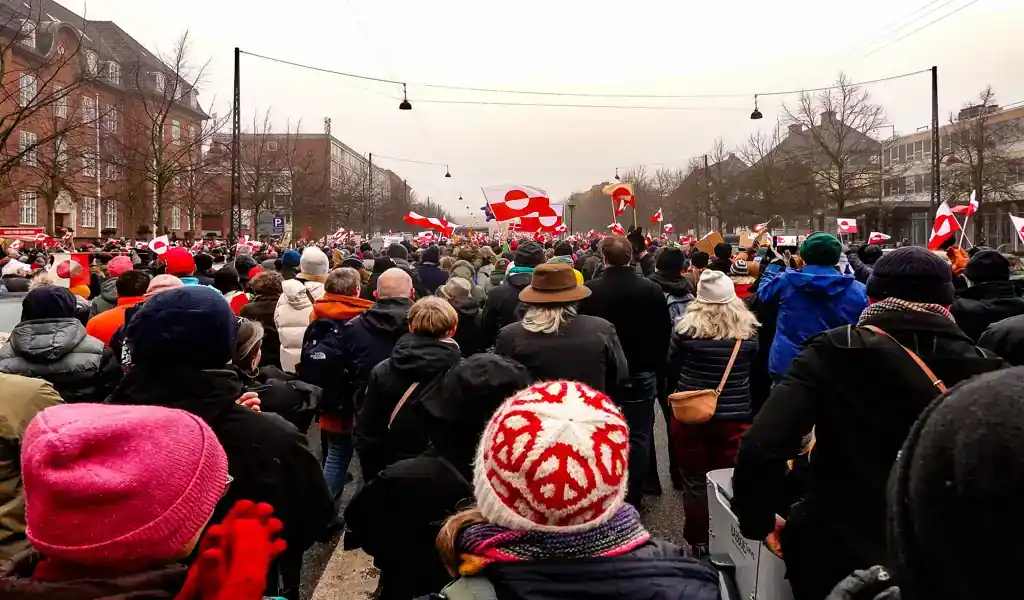
That remains a major concern. But Trump’s campaign to bring Greenland under U.S. control has introduced a much broader geopolitical question: whether Iceland should strengthen its ties with European countries as uncertainty grows around the United States’ future role in the region.
Greenland is an autonomous territory within the Kingdom of Denmark and lies roughly 1,200 kilometers from Iceland. Trump’s statements about acquiring Greenland have caused unease across the Nordic region, particularly because Iceland relies heavily on its alliances for national security.
Iceland is a member of NATO but does not maintain a conventional standing army. Its defense arrangements have historically depended heavily on cooperation with the United States and other NATO members.
Iceland has long kept the EU at arm’s length
Iceland applied for EU membership in 2009 amid the financial crisis and formally began accession negotiations.
■ Related News


The process later stalled, largely because of disagreements over fisheries and concerns about surrendering control over one of the country’s most important natural resources.
Negotiations were suspended, and Iceland ultimately moved away from the membership process.
The issue has returned under Prime Minister Kristrún Frostadóttir’s government, which supports giving voters the opportunity to decide whether negotiations should resume.
The government accelerated the timetable as geopolitical tensions increased.
Fishing remains the biggest obstacle
Iceland’s fishing industry remains at the heart of opposition to EU membership.
Fishing accounts for a substantial share of Iceland’s exports and has long been closely connected to the country’s national identity and economic independence. Opponents fear EU membership could weaken Iceland’s ability to control access to its fishing waters and determine quotas.
Those concerns are rooted in Iceland’s history.
The country fought a series of disputes with Britain over fishing rights, known as the Cod Wars, and control of North Atlantic waters remains politically sensitive.
Opponents therefore argue that EU membership could force Iceland to surrender a degree of control over resources that previous generations fought to protect.
Supporters see Europe as a strategic safeguard
Supporters of restarting negotiations argue that the security environment has changed dramatically since Iceland last seriously considered EU membership.
Russia’s war against Ukraine, uncertainty surrounding trans-Atlantic relations and Trump’s Greenland ambitions have encouraged some Icelanders to reconsider whether closer European integration could provide greater political and economic security.
Prime Minister Frostadóttir has presented the referendum as an opportunity for Iceland to examine its options rather than as an automatic decision to join the EU.
Supporters also argue that Iceland already participates in much of Europe’s economic and travel framework through the European Economic Area and Schengen Area, while remaining outside the EU’s political decision-making structures.
The economic argument
Economic concerns are also influencing the vote.
Supporters say EU membership could provide greater economic stability, potentially lower some costs and give Iceland a formal role in shaping regulations that already affect its economy.
Iceland is currently closely integrated with the EU’s single market through the European Economic Area.
But opponents question whether full membership would deliver enough economic benefits to justify the loss of national flexibility, particularly in fishing and agriculture.
The debate is therefore not simply about Washington or Brussels.
It is also about how much control Iceland is willing to share in exchange for greater integration and influence.
A close and uncertain referendum
Opinion polls ahead of the vote showed Icelanders divided.
A Reuters/Ipsos poll published shortly before voting showed 51.3% supporting the resumption of negotiations and 48.7% opposed, underscoring how close the contest had become.
Other polling showed similarly narrow margins, leaving the outcome uncertain.
The result could therefore depend heavily on turnout and voters who remain undecided.
A “yes” would not mean immediate EU membership
One important distinction is that Saturday’s vote is only about restarting negotiations.
If voters approve the proposal, Iceland would enter a new phase of discussions with the EU.
The country’s government has indicated that negotiations could begin later in 2026 and potentially take around 18 to 24 months. Any final agreement would then have to be presented to Icelandic voters in another referendum.
That means even a “yes” vote would not settle the membership question.
It would instead reopen a process that has been dormant for more than a decade.
Security is changing Iceland’s calculations
The referendum illustrates how questions of national security can alter long-standing political assumptions.
Iceland has traditionally relied on NATO and its defense relationship with Washington while maintaining a close relationship with Europe through economic and diplomatic institutions.
Trump’s Greenland campaign has complicated that balance.
For supporters of EU talks, the issue demonstrates why Iceland should deepen its European relationships.
For opponents, the controversy surrounding Greenland is not sufficient reason to give up greater national control over fishing, agriculture and other areas.
The result could resonate beyond Iceland
The outcome will be closely watched elsewhere in Europe.
A decision to restart EU negotiations would represent a significant shift for a country that previously stepped away from membership talks.
It could also reinforce broader European efforts to strengthen cooperation in the Arctic and North Atlantic at a time of increasing strategic competition.
A rejection, meanwhile, would preserve Iceland’s current relationship with Europe while signaling that concerns over sovereignty and resource control remain stronger than the arguments for deeper political integration.
What Happens Next
If voters approve restarting negotiations, Iceland and the EU could begin formal discussions later this year. Any eventual membership agreement would require another vote by Iceland’s electorate.
If voters reject the proposal, Iceland’s existing relationship with the EU through the European Economic Area and other agreements would remain in place.
The immediate question is therefore not whether Iceland becomes the next EU member.
It is whether Iceland is willing to reopen the door.
Key Facts
- Country: Iceland
- Referendum: Whether to resume EU membership negotiations
- Vote: August 29, 2026
- Prime minister: Kristrún Frostadóttir
- Main domestic issue: Fishing rights and national sovereignty
- Major geopolitical factor: Trump’s threats involving Greenland
- Iceland’s security alliance: NATO
- EU membership: Iceland is not an EU member
- Next step after a “yes”: Membership negotiations
- Final EU membership decision: Would require a separate referendum
- Status: DEVELOPING
Reporting Credit: Reporting and source material from the Government of Iceland, Icelandic electoral authorities and other public institutions.
Government of Iceland — referendum and European affairs; Icelandic Ministry for Foreign Affairs — EU accession process; Icelandic Parliament (Althingi) — referendum and government proceedings; European Union — Iceland accession framework.