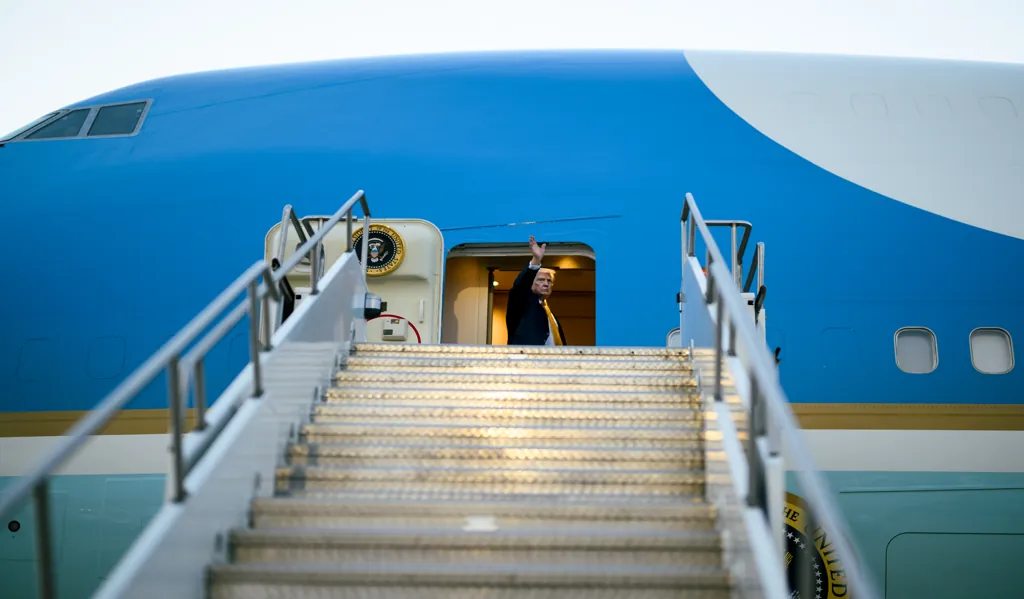
President Donald Trump has confirmed that U.S. security officials secretly moved him to another aircraft after he left a NATO summit in Turkey last month.
Trump said the Secret Service and military made the decision because of a possible security threat.
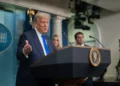
“I go by Secret Service and the military. They wanted me to go in a different flight, different plane,” Trump told reporters.

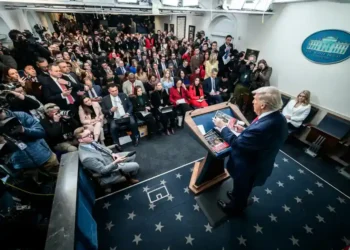
The operation drew attention because journalists and some White House staff stayed on the original aircraft. They reportedly did not know that Trump had left the plane.
The incident also raised questions about security procedures during presidential travel. Those concerns come as tensions between Washington and Tehran remain high.
Security team moved Trump to another aircraft
Trump boarded the presidential aircraft at Ankara airport on July 8 in view of television cameras.
He later left the aircraft away from public view, according to reports. A catering truck reportedly took him to a C-32A military aircraft.
The C-32A is a modified Boeing 757. The U.S. government commonly uses the aircraft to transport the vice president.
■ Related News
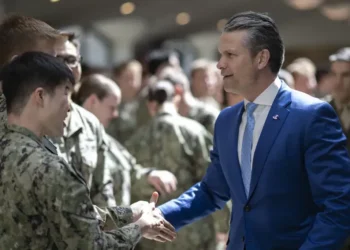
Defense Secretary Pete Hegseth reportedly boarded the C-32A separately. He used external stairs during the operation.
Meanwhile, journalists and some White House staff stayed on the larger aircraft. They reportedly received instructions to keep the window shades closed.
A White House Correspondents’ Association report cited a media pool producer who found the instruction unusual.
The producer also noticed catering trucks near both ends of the aircraft. The media vehicle also sat too far back in the motorcade to photograph Trump boarding.
Reports cite possible Iranian threat
Officials told CBS News, the BBC’s U.S. partner, that the United States had detected what they described as a credible Iranian threat.
The reported threat involved a possible missile attack against the president’s aircraft.
The New York Times separately reported that U.S. intelligence had information about a person near the NATO summit. That person had reportedly been seen with a shoulder-fired missile.
The supplied reports did not independently verify those claims.
Trump said he did not ask for many details about the threat.
“I guess there was a threat out there,” he said while traveling aboard Air Force One. “I didn’t really ask too much about it. I get a lot of threats.”
He also said the second aircraft might have faced greater danger because it could have appeared to be the more likely target.
Trump had earlier described himself as Iran’s “number one target” during the NATO summit in Ankara, according to the supplied BBC report.
The aircraft switch came one day after the United States renewed military strikes on Iran. Washington and Tehran had previously held negotiations aimed at ending the war.
Decoy aircraft kept Air Force One call sign
Trump arrived in Turkey aboard a newer Boeing 747-8 donated by Qatar.
He had said he would leave Turkey aboard the older presidential aircraft.
After the secret transfer, the C-32A reportedly used the call sign “Reach 18.” The larger aircraft carrying journalists continued using the “Air Force One” call sign.
Air Force One is technically the call sign for any U.S. Air Force aircraft carrying the president.
The New York Times, citing two anonymous officials, reported that Secretary of State Marco Rubio and Treasury Secretary Scott Bessent stayed aboard the original aircraft.
The U.S. delegation later stopped at RAF Mildenhall in the United Kingdom.
Trump reportedly transferred back to the older presidential aircraft during that stop. The available reporting did not explain exactly how that transfer occurred.
He later appeared as he left the aircraft before transferring to the Qatar-donated Boeing 747-8 for the final flight to Washington.
Trump spoke with reporters during the flight but did not disclose the aircraft switch at the time.
When reporters asked why they had been told to lower their window shades, Trump pointed to security concerns. He also said he faced threats against his life.
Journalists raise safety concerns
The operation also raised questions about the safety of journalists traveling with the president.
Reporters reportedly remained aboard the original aircraft without knowing that Trump had moved to another plane.
Jose Zamora, regional director for the Americas at the Committee to Protect Journalists, said the administration had a responsibility to avoid placing journalists at unnecessary risk.
“Reporters should be informed of credible security threats so they can make informed decisions about their safety,” Zamora said.
The episode highlights the difficult balance between presidential security and the safety of people traveling with the president.
Officials may need to limit information during sensitive security operations. However, the incident raises questions about what information journalists should receive when authorities identify a credible threat.
The precise nature of the reported threat remains unclear. The available reporting also does not establish how much information officials could have shared without compromising the security operation.
Based on reporting by BBC News, with details attributed in the supplied report to CBS News, The New York Times and the White House Correspondents’ Association.