President Donald Trump initially predicted the war would last only four to five weeks after it began in February. Six months later, there is no clear end to the conflict. A June memorandum of understanding intended to help end the fighting has stalled, while U.S. weapons stocks have come under pressure and Washington has increasingly shifted toward economic pressure and sanctions rather than sustained new strikes.
The Strait of Hormuz has become central
The Strait of Hormuz was not among Trump’s principal objectives when the war began. It has since become one of the most important issues in the conflict.
The narrow waterway between Iran and Oman is a critical route for global energy shipments. About 20% of the world’s oil normally passes through the strait, according to the Associated Press. Disruption has contributed to higher fuel and fertilizer prices and increased pressure on governments and businesses around the world.

The International Maritime Organization has also established a voluntary framework to help merchant ships trapped in the Gulf region evacuate safely, although that operation is currently paused.
Iran has used its position around the waterway as leverage, while Washington has sought to restore maritime traffic. Iran and Oman have recently discussed a temporary arrangement for shipping through the strait, adding another diplomatic dimension to the dispute.
The nuclear question remains unresolved
Preventing Iran from developing a nuclear weapon was one of the central justifications for the U.S. military campaign.
Trump has claimed that American strikes destroyed Iran’s nuclear program. But a major unresolved issue is the fate of an estimated 440 kilograms of enriched uranium believed to remain buried at sites that were attacked.
The June memorandum reportedly called for Iran to dilute its highly enriched uranium stockpile, but negotiations broke down before the broader nuclear issue was resolved.
■ Related News


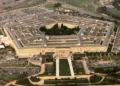

That leaves Washington facing a difficult problem: military strikes may have damaged Iran’s nuclear infrastructure, but they have not produced a comprehensive agreement governing the country’s remaining nuclear material and future nuclear activities.
Iran’s missile capability has been badly damaged
The U.S. has also significantly degraded Iran’s missile forces.
Trump initially claimed that roughly 90% of Iran’s missiles and launchers had been destroyed. Later, his administration used a lower estimate of about 82%.
But Iran has retained the ability to conduct missile and drone attacks, including attacks affecting maritime traffic.
That means Washington has achieved substantial military damage without eliminating Iran’s ability to continue fighting.
Iran’s military has suffered major losses
U.S. officials say Iran’s broader military infrastructure has also been severely damaged.
Secretary of State Marco Rubio told lawmakers in June that Iran’s defense industrial base had suffered roughly 80% to 90% attrition, while Iranian naval capabilities had been severely reduced.
The United States and Israel have also maintained air superiority over much of Iran.
But the continued use of drones, missiles and smaller maritime forces illustrates the difference between destroying conventional military infrastructure and eliminating Iran’s ability to wage an asymmetric war.
Washington has shifted toward economic pressure
The changing military situation has pushed the administration toward sanctions and economic pressure.
Secretary of State Marco Rubio has told U.S. allies that Washington is shifting away from additional major strikes, at least for now, and toward economic measures designed to weaken Iran’s ability to sustain the conflict.
The strategy is intended to pressure Tehran while avoiding another major escalation that could further strain U.S. military resources.
That approach, however, has not yet produced a clear diplomatic breakthrough.
Protecting U.S. allies remains another challenge
Another original U.S. objective was protecting American allies in the Middle East, including Israel and Gulf Arab states.
Iranian attacks and threats have complicated that mission. The United States maintains forces throughout the region, but the conflict has demonstrated the difficulty of protecting allied territory and commercial infrastructure while simultaneously trying to avoid an open-ended regional war.
Oman’s position has become particularly sensitive because of its role in negotiations concerning the Strait of Hormuz.
Iran’s regional networks remain unresolved
The Trump administration also initially emphasized cutting Iran’s support for allied armed groups across the region.
The United States attacked Iran-aligned militia groups early in the war, while Hezbollah in Lebanon remains an important unresolved issue.
Washington has had some diplomatic success in encouraging arrangements concerning southern Lebanon, but Hezbollah has resisted demands for disarmament.
As the war has continued, the administration has provided fewer public updates about this objective.
A war without a clear endpoint
The biggest change after six months may be the gap between the administration’s original expectations and the reality on the ground.
Iran’s military has been heavily damaged, but the country remains capable of asymmetric attacks. Its nuclear program has been disrupted but not fully resolved through a lasting agreement. The Strait of Hormuz remains a major source of economic and security risk, while diplomatic negotiations have stalled.
The conflict has therefore moved from a campaign designed around rapid military objectives toward a broader struggle involving maritime security, sanctions, diplomacy, energy markets and long-term regional security.
For Washington, reopening the Strait of Hormuz has become especially urgent because the consequences extend far beyond Iran.
A prolonged disruption threatens energy supplies, shipping costs and global markets — making the waterway not just a military objective, but an economic one.
What to Watch
- Strait of Hormuz: Whether commercial shipping can return to normal levels.
- U.S.-Iran negotiations: Whether stalled diplomacy can resume.
- Iran’s nuclear material: What happens to the remaining enriched uranium.
- U.S. sanctions: Whether economic pressure changes Tehran’s position.
- Iranian missile and drone attacks: Whether Iran retains the ability to disrupt regional shipping.
- Gulf allies: Whether the conflict expands to additional U.S. partners.
- U.S. military readiness: How long Washington can sustain its current regional deployment.
Key Facts
- War began: February 2026
- Duration: Six months
- Major new U.S. priority: Reopening the Strait of Hormuz
- Oil normally transiting Hormuz: About 20% of global oil
- U.S. strategy: Increasing emphasis on sanctions and economic pressure
- Nuclear issue: Unresolved
- Strait status: Severely disrupted, with diplomatic efforts underway
- Overall status: Ongoing conflict with no clear political settlement
Reporting Credit: American Academy of Pediatrics — Family Media Plan and children’s media guidance; Common Sense Media — Family technology and screen-use guidance; U.S. Department of Education — student technology and digital learning resources.