Journos News - Breaking News, World News, Top Stories, Todays Headlines and Flash Reports
Tuesday, September 1, 2026
  • Login
  • Home
  • World
    • Africa
    • Americas
    • Asia
    • Europe
    • Middle East
    • Oceania
  • Politics
  • Business
  • Technology
  • Health
  • Science
  • Sports
  • Entertainment
  • Culture
No Result
View All Result
  • Home
  • World
    • Africa
    • Americas
    • Asia
    • Europe
    • Middle East
    • Oceania
  • Politics
  • Business
  • Technology
  • Health
  • Science
  • Sports
  • Entertainment
  • Culture
No Result
View All Result
Journos News - Breaking News, World News, Top Stories, Todays Headlines and Flash Reports
No Result
View All Result
Home Environment

The Deadly Algal Bloom Behind Sea Lion Attacks in California

Why Sea Lions Are Attacking Swimmers in California

The Daily Desk by The Daily Desk
June 24, 2026
in Environment, General Environment
0
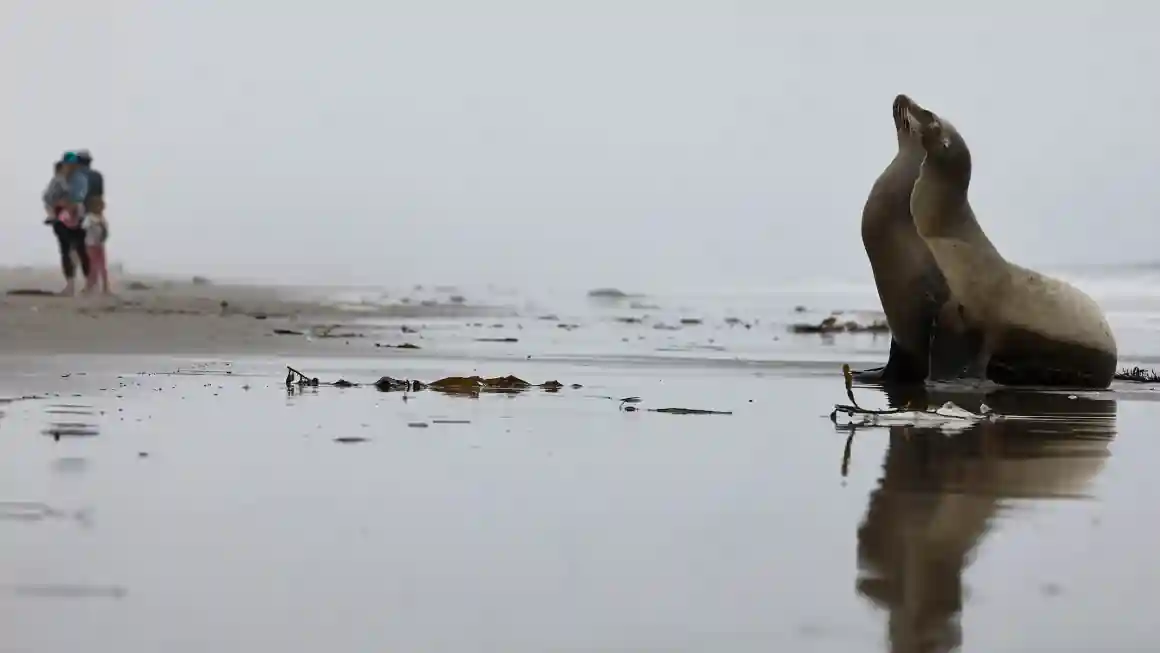
Toxic Blooms Causing Unusual Behavior in Sea Lions Off California - Mario Tama/Getty Images via CNN

The Link Between Sea Lion Attacks and Ocean Toxins in California - Mario Tama/Getty Images via CNN

Sea Lions Attacking Humans Off California Coast: Here’s What’s Behind It

Along 70 miles of Southern California’s coastline, sea lions—typically known for their playful and curious nature—have become increasingly aggressive, attacking swimmers and surfers in the water. Experts believe these unusual incidents are linked to a rise in poisoning caused by toxic algal blooms in the ocean, a problem that’s having a severe impact on marine life, especially sea lions.

On March 30, 15-year-old Phoebe Beltran was swimming near Long Beach when she was attacked by a sea lion. “I was so scared, I couldn’t believe what was happening. The pain in my arm was intense,” Beltran shared. Despite suffering bites, bruises, and scratches, she did not need stitches.

Just a week earlier, a surfer near Oxnard had a terrifying encounter with a sea lion. RJ LaMendola described the attack as “feral” and “demonic,” with the sea lion charging toward him at top speed. It stalked him all the way back to shore, a behavior he had never seen in the normally playful creatures.

But what’s driving these aggressive actions? Experts point to domoic acid toxicosis, a poisoning caused by toxic algal blooms in the ocean, also known as “red tide.”

Domoic acid is a naturally occurring toxin that enters the food chain when it’s produced by toxic algae. It affects marine life, particularly apex predators like sea lions. When consumed, the toxin causes neurological damage, making the sea lions disoriented, fearful, and aggressive. “When they’re affected by the toxin, they become completely disoriented, struggling to breathe or even stay afloat,” explains John Warner, CEO of the Marine Mammal Care Center in Los Angeles.

Sea lions exposed to high levels of the toxin experience seizures, one of which, called “stargazing,” makes them stretch their necks unnaturally. This disorientation leads to heightened aggression, with the animals sometimes attacking people who get too close. The poison is especially deadly because it affects their ability to think clearly, causing them to react with fear and panic.

The toxic algae blooms are not just a random occurrence. They are being worsened by climate change. Rising ocean temperatures and nutrient pollution from agricultural runoff are creating ideal conditions for these blooms to thrive. Once a rare phenomenon, these blooms now happen every year, causing toxic levels of domoic acid to surge in the ocean, which affects marine life on an unprecedented scale.

Warner notes that the warmer ocean surface combined with excess nitrogen in the water from farming is fueling these blooms. While the algae has always existed in the ocean, the blooms have become much more frequent and severe due to human impact on the environment.

■ Related News
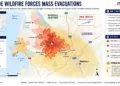
Editorial map showing the Gironde wildfire in southwestern France, including active fire perimeters, evacuation zones, smoke direction, and communities affected near Bordeaux.

France Wildfire Forces Mass Evacuation as Extreme Heat Fuels European Crisis

July 29, 2026
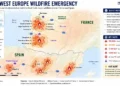
Editorial map showing major wildfire zones across southwestern Europe, including affected areas in France and Spain, evacuation regions, and extreme heat alerts.

France Expands Wildfire Evacuations as More Than 330,000 Displaced Across Southwest Europe

July 29, 2026
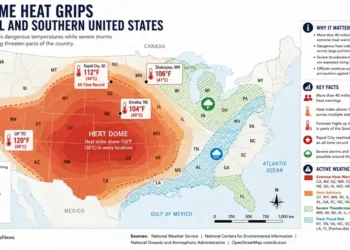
Map showing the extreme heat dome across the central and southern United States, highlighting heat warnings, severe storm risks, flash flood areas, and forecast temperatures.

Extreme Heat Grips Central and Southern U.S. as Millions Remain Under Weather Warnings

July 27, 2026
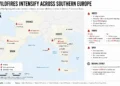
Locator map showing the Guadalajara wildfire in central Spain and extreme heat conditions affecting southern Europe across the Mediterranean region.

Spain Battles One of Its Largest Wildfires as Extreme Heat Grips the Mediterranean

July 23, 2026

This year’s bloom has been particularly severe, with over 2,000 calls to the Marine Mammal Care Center in just five weeks. Last year, the center reported the worst algae event in recorded history in Southern California, and this year’s bloom appears to be even worse.

While sea lions and dolphins are the most affected, other marine animals, including birds and whales, are also impacted. Unfortunately, the recovery rate for sea lions this year is lower than previous years due to the higher toxicity levels in the water. Approximately 50% to 65% of sea lions exposed to the toxin recover, but many are struggling longer than usual, and some may not survive.

Pregnant sea lions are particularly vulnerable. Domoic acid can cause the mothers to expel their fetuses as a survival mechanism. The long-term effects on the sea lion population remain uncertain, but these events could have lasting consequences for the species.

The Marine Mammal Care Center is working tirelessly to treat affected sea lions. To flush the toxin out of their systems, they provide anti-seizure medications, fluids, and nutrition. They’re also caring for more animals than ever before, with a triage site set up in their parking lot to handle an additional 25 animals.

However, the situation is dire for dolphins, who do not recover from domoic acid poisoning. “There’s no rehabilitation for dolphins affected by this toxin. When they strand on the beaches, most are already dead,” Warner explains. This year, the center has had to euthanize more dolphins than ever before, with over 70 strandings in Los Angeles County alone.

The increasing frequency and severity of toxic algal blooms are a direct result of climate change and ecosystem disruption. As the planet warms, the ocean’s chemistry is changing, favoring algae growth and making the problem worse. Human activities, such as agricultural runoff and coastal development, are exacerbating the issue.

The sea lions and dolphins suffering from this toxic poisoning are a reflection of a broader environmental crisis. Climate change is altering the ocean’s ecosystem, putting the health of marine animals at risk and creating dangerous situations for humans who share the waters.

As the situation continues to unfold, experts hope that more research will shed light on how to mitigate the effects of these toxic blooms. For now, both sea lions and humans are facing the consequences of a changing climate, and the aggressive behavior from these normally peaceful animals serves as a stark reminder of the state of the ocean.

“It’s getting to the point where even the pups of elephant seals and sea lions are stranding in higher numbers,” Warner warns. As the Marine Mammal Care Center continues to treat affected animals, the focus remains on getting them back to the ocean safely. But as these blooms worsen each year, it’s clear that both marine life and coastal communities will need to adapt to a changing world.

Source: – Sea lions are attacking people in the waters off California’s coast. Here’s why

Tags: #AlgalBloom#AnimalBehavior#AquaticLife#BeachSafety#CaliforniaCoast#CaliforniaWildlife#ClimateChange#Dolphins#DomoicAcid#EndangeredSpecies#EnvironmentalImpact#MarineCare#MarineConservation#MarineLife#MarineMammals#MarineToxins#OceanConservation#OceanEcosystem#OceanHealth#OceanPollution#OceanToxins#RedTide#SeaLionAttacks#SeaLionBehavior#SeaLions#SevereWeather#SouthernCalifornia#ToxicAlgae#ToxicSeawater#WildlifeEmergency#WildlifeProtection#WildlifeRescue
The Daily Desk

The Daily Desk

The Daily Desk is a contributor at JournosNews.com covering politics, media, governance, and the evolving dynamics of public discourse. Stories published under this byline are produced in accordance with JournosNews' editorial standards, with an emphasis on verified reporting, accuracy, context, and impartiality.

Related Posts

Neil the elephant seal rests on a street in Tasmania. - Sam Volker Photography via AP

Australian Officials Urge Public to Give Viral Elephant Seal Neil More Space

July 3, 2026
Paris skyline during record-breaking heat wave across - AP Photo/Christophe Ena

France Records Hottest Day on Record as Europe Struggles Through Early Heat Wave

June 24, 2026
Police rescue hundreds of cats from illegal cages in Vietnam operation - Vietname Cat Welfare via AP

Vietnam police rescue over 500 cats in major animal theft ring bust

June 17, 2026
Climbers move through the dangerous Khumbu Icefall on Mount Everest - AP PhotoPasang Rinzee Sherpa, File

Everest Climbing Season Begins Under Heightened Risk and Rising Financial Pressure

May 8, 2026
Damaged homes after Oklahoma tornado strikes Enid residential area - KWTV/KOTV via AP

Tornado Impact Tests Local Resilience as Oklahoma Community Confronts Sudden Disaster

May 13, 2026
Snow blankets New York City during major East Coast blizzard - AP Photo/Pamela Hassell

Blizzard Warnings Grip U.S. East Coast as Major Winter Storm Disrupts Travel

June 24, 2026
Refugee firefighters training to combat bushfires near Mbera camp in Mauritania - AP Photo/Caitlin Kelly

Refugee Firefighters in Mauritania Help Protect Desert Communities Amid Rising Climate Pressures

March 13, 2026
Newborn giant panda cub in Indonesian conservation park incubator - Taman Safari Indonesia via AP

Indonesia’s First Panda Cub Signals More Than a Conservation Milestone

June 24, 2026
Load More
Next Post
UConn Dominates South Carolina to End 9-Year Title Drought - Photo by Mike Ehrmann/Getty Images

Huskies Take the Crown: UConn Beats South Carolina for 12th Championship

$9 Billion Talc Settlement Plan From J&J Rejected by Court - AP Photo/Ted Shaffrey, File

Judge Rejects J&J’s $9 Billion Baby Powder Settlement Plan

JournosNews logo

Journos News delivers globally neutral, fact-based journalism that meets international media standards — clear, credible, and made for a connected world.

  • Categories
  • World News
  • Politics
  • Business & Markets
  • Technology
  • Health
  • Science
  • Sports
  • Arts & Culture
  • Resources
  • Editorial Standards
  • Submit a Story
  • Advertise with Us
  • Syndication & Partnerships
  • Site Map
  • Press & Media Kit
  • Editorial Team
  • Careers

Join thousands of readers receiving the latest updates, tips, and exclusive insights straight to their inbox. Never miss an important story again.

  • About Us
  • Editorial & Trust Center
  • Contact Us
  • Privacy Policy
  • Terms of Use & Copyright Notice

© JournosNews.com All rights reserved.

Welcome Back!

Login to your account below

Forgotten Password?

Retrieve your password

Please enter your username or email address to reset your password.

Log In
JournosNews

Independent Journalism.
Verified Facts.

You're about to read a professionally edited article from JournosNews.com.

Every article is produced in accordance with our editorial standards, emphasizing factual accuracy, transparent attribution, fairness, editorial independence, and meaningful context.

Editorial Standards
No Result
View All Result
  • Home
  • World
    • Africa
    • Americas
    • Asia
    • Europe
    • Middle East
    • Oceania
  • Politics
  • Business
  • Technology
  • Health
  • Science
  • Sports
  • Entertainment
  • Culture

© JournosNews.com All rights reserved.

This website uses cookies. By continuing to use this website you are giving consent to cookies being used. Visit our Privacy and Cookie Policy.