MBERA, Mauritania (Journos News) – In southeastern Mauritania, refugee firefighters are playing an increasingly important role in protecting desert communities from destructive bushfires, as climate pressures intensify across the Sahel region. The volunteers, many of them refugees from neighboring Mali, have formed organized teams that work alongside local authorities and international partners to combat fires threatening fragile grazing lands and settlements.
The refugee firefighters in Mauritania are part of a broader humanitarian effort aimed at reducing environmental risks in areas hosting large displaced populations. According to reporting by the Associated Press, the volunteer brigade operates primarily around the Mbera refugee camp, where more than 150,000 Malian refugees live after fleeing violence in northern Mali over the past decade.
Their work reflects how environmental risks, migration pressures, and regional instability increasingly intersect across West Africa’s arid borderlands.

Climate Pressures Intensify in the Sahel
Mauritania, where roughly 90% of the territory lies within the Sahara Desert, faces mounting environmental challenges tied to desertification and climate variability. Experts say rising temperatures and prolonged drought conditions have increased the frequency and intensity of bushfires across grazing areas relied upon by both refugees and local herding communities.
International organizations warn that the destruction of pastureland can quickly escalate into a humanitarian emergency in this region, where livestock often represents the primary source of income and food security.
Officials from the United Nations High Commissioner for Refugees (UNHCR) say even a single uncontrolled fire can wipe out large areas of vegetation critical for cattle and goats, creating tensions between host communities and displaced populations competing for limited resources.
Volunteer Brigade Protects Refugee and Host Communities
The volunteer firefighting initiative emerged within the Mbera refugee community after Malian families arrived in Mauritania beginning in 2012. Many of the refugees are pastoralists who rely on grazing lands, making the prevention of bushfires essential for survival.
Over time, the informal groups evolved into an organized brigade that now includes more than 360 volunteers. Since 2018, the program has received training support and coordination from UNHCR, while the European Union provides funding for equipment, firebreak construction, and operational training.

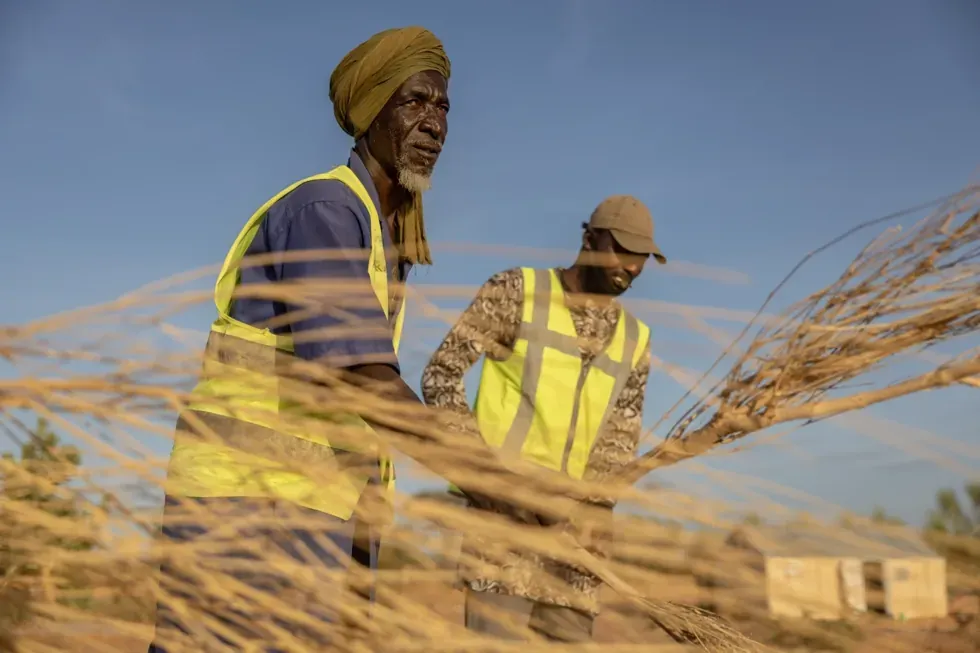
When a fire alert is issued, teams travel by pickup truck to affected areas and form coordinated lines along the fire’s edge. Instead of relying on water — often unavailable in remote desert terrain — firefighters use branches from hardy acacia trees to smother flames and stop them from spreading across dry grassland.
The technique, practiced in the region for decades, allows crews to contain fires even in areas located far from water sources.
Resource Strain Raises Risks of Local Tensions
The southeastern Mauritanian region bordering Mali hosts more than 250,000 refugees, including those in camps and nearby villages. In some rural areas, displaced populations now outnumber local residents, placing additional strain on grazing land and water access.
Local officials say that competition over natural resources can occasionally generate friction between communities. However, joint firefighting efforts and environmental projects have also become an important point of cooperation between refugees and host populations.
UNHCR representatives say the firefighting program has helped strengthen collaboration while protecting resources essential for both groups.
Environmental Restoration Efforts Expand
Beyond firefighting operations, volunteers have begun launching environmental restoration projects across the desert landscape. Members of the brigade are planting tree seedlings — including acacia, lemon, and mango varieties — in small nurseries designed to rebuild vegetation lost to fires and desertification.
The projects aim to restore some grazing capacity while creating shade and stabilizing soils vulnerable to erosion.
Humanitarian organizations say such initiatives illustrate how community-led environmental efforts can reduce risks in fragile border regions already dealing with displacement and climate pressures.
Regional Stability Tied to Environmental Security
The Sahel region, stretching across West and Central Africa, has seen rising instability over the past decade due to armed conflict, climate stress, and mass displacement. Mali’s ongoing security crisis continues to push refugees across the border into Mauritania, where authorities and aid agencies must balance humanitarian needs with environmental sustainability.
Analysts say preventing environmental degradation in refugee-hosting regions has become a strategic priority for international agencies seeking to reduce the risk of local conflict and economic collapse.
For many volunteers in the Mbera brigade, firefighting has become both a practical necessity and a symbol of cooperation between displaced communities and their hosts.
As climate pressures intensify across the Sahel, such grassroots initiatives may increasingly shape how humanitarian responses address the intertwined challenges of migration, environmental change, and regional stability.