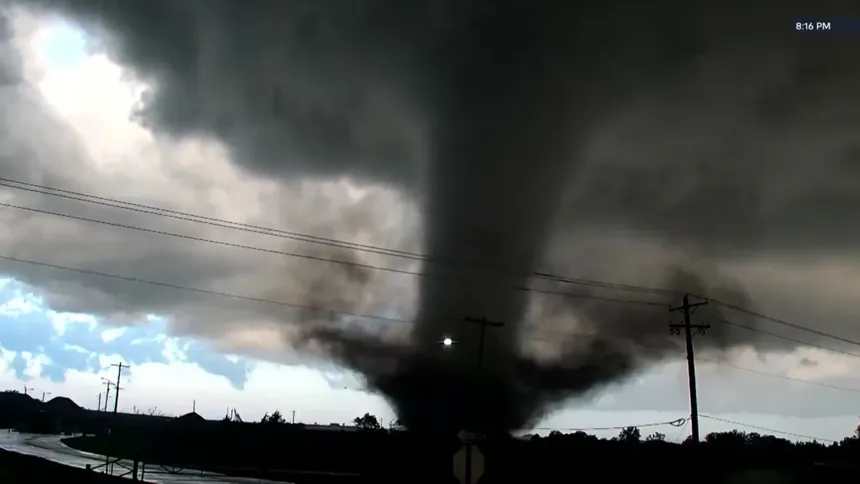
A powerful tornado tore through parts of Oklahoma, leaving a trail of damaged homes and disrupted neighborhoods, but without the loss of life that often accompanies such storms. The outcome has placed local response systems and community preparedness under scrutiny, as officials assess how a potentially catastrophic event resulted in no reported fatalities.
According to reporting by The Associated Press, the tornado struck near the city of Enid, damaging at least 40 homes and displacing residents. Emergency crews moved quickly through affected areas, conducting searches and ensuring no one remained trapped in the debris.
Emergency Systems Hold Under Sudden Pressure
The immediate aftermath highlighted the role of early warnings and coordinated response efforts. Local authorities indicated that storm alerts were issued ahead of impact, allowing residents to seek shelter before the tornado touched down.

Emergency responders described a rapid deployment across impacted zones, with search-and-rescue teams prioritizing heavily damaged structures. The absence of fatalities, while partly attributed to chance, also reflects the operational readiness of local disaster response systems.
Officials noted that while several individuals sustained minor injuries, none were considered life-threatening. Temporary shelters were opened to accommodate displaced families, underscoring the importance of contingency planning in disaster-prone regions.
Structural Damage Exposes Vulnerability Gaps
While lives were spared, the scale of property damage revealed ongoing vulnerabilities in residential infrastructure. Entire sections of roofing were torn away, and some homes were left structurally compromised, raising questions about building resilience in high-risk zones.
Authorities began preliminary damage assessments shortly after the storm passed, focusing on both immediate hazards and longer-term rebuilding needs. Utility crews worked to restore power and clear debris, as residents returned to survey losses.
The destruction also disrupted local routines, with road closures and infrastructure strain affecting mobility and access to essential services.
■ Related News


Recovery Phase Begins Amid Uncertain Weather Patterns
As cleanup operations continue, attention is shifting toward recovery timelines and resource allocation. State and local agencies are coordinating assistance efforts, including potential federal support depending on the final damage assessment.
Meteorologists have cautioned that volatile weather conditions may persist, complicating recovery efforts and raising the possibility of additional severe storms. This uncertainty places added pressure on both emergency management teams and affected communities.
Preparedness Narrative Gains Renewed Focus
The incident is likely to reinforce ongoing discussions around disaster preparedness, particularly in regions frequently exposed to extreme weather. While the absence of fatalities may be seen as a success, officials emphasize that structural damage and displacement still carry significant long-term consequences.
Local leaders are expected to review response protocols and community outreach strategies, aiming to strengthen resilience ahead of future events.
The storm’s aftermath presents a complex picture: a community spared its worst fears, yet still confronting the realities of rebuilding in an increasingly unpredictable climate.