Journos News - Breaking News, World News, Top Stories, Todays Headlines and Flash Reports
Monday, October 12, 2026
  • Login
  • Home
  • World
    • Africa
    • Americas
    • Asia
    • Europe
    • Middle East
    • Oceania
  • Politics
  • Business
  • Technology
  • Health
  • Science
  • Sports
  • Entertainment
  • Culture
No Result
View All Result
  • Home
  • World
    • Africa
    • Americas
    • Asia
    • Europe
    • Middle East
    • Oceania
  • Politics
  • Business
  • Technology
  • Health
  • Science
  • Sports
  • Entertainment
  • Culture
No Result
View All Result
Journos News - Breaking News, World News, Top Stories, Todays Headlines and Flash Reports
No Result
View All Result
Home World News Middle East

Middle East Energy Arteries Under Siege as Iran Conflict Expands

Strikes on oil hubs and shipping lanes signal a widening confrontation with direct implications for global markets and regional stability

The Daily Desk by The Daily Desk
June 20, 2026
in Middle East, World News
0
Smoke rises near Gulf oil facility after missile strike- (AP Photo/Hassan Ammar)

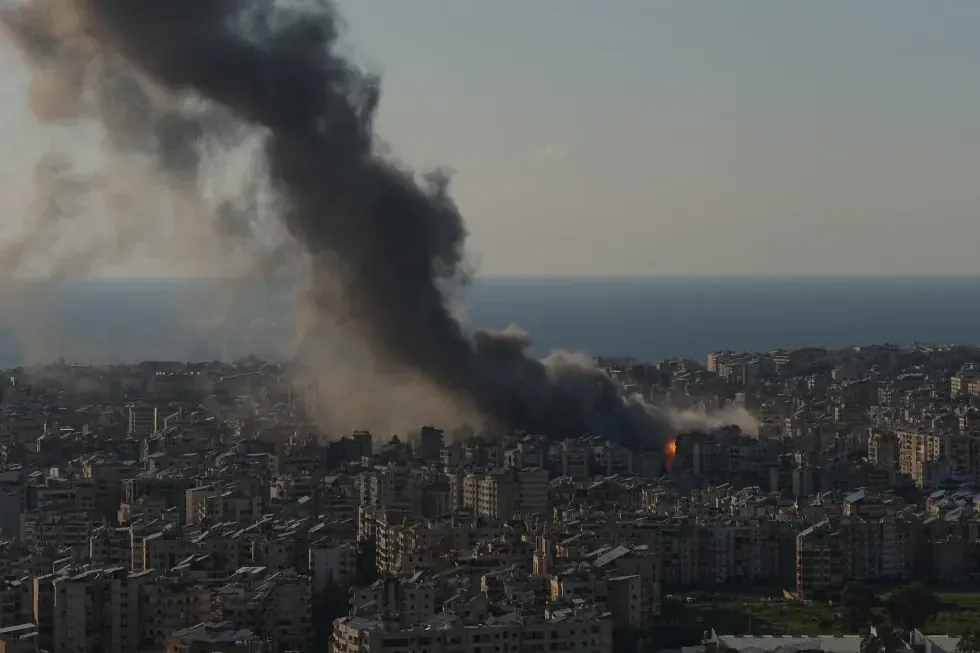
Flames and smoke rise from Israeli airstrikes on Dahiyeh, a southern suburb of Beirut, Lebanon, Monday, March 2, 2026. - (AP Photo/Hassan Ammar)

DUBAI, United Arab Emirates (JN) – The widening Iran conflict has shifted decisively toward energy infrastructure, transforming a military campaign into a strategic contest over the world’s most critical supply corridors. As first reported by The Associated Press, U.S. President Donald Trump signaled that joint U.S.–Israeli operations against Iran could last “four to five weeks,” with the option of extending further.

That timeframe has sharpened market anxiety. Energy facilities, export terminals and maritime chokepoints are now being tested in ways that suggest the conflict’s center of gravity is no longer confined to missile exchanges, but to economic leverage.

With casualties mounting across Iran, Israel and parts of the Gulf, the escalation has begun to strain regional deterrence structures that underpin global energy flows.

Strategic Energy Hubs Draw Direct Fire

Iranian-linked attacks and retaliatory strikes have expanded toward core Gulf infrastructure. Saudi Arabia’s Ras Tanura refinery—one of the kingdom’s primary export facilities—was targeted by drones, according to the state-run Saudi Press Agency. Saudi defenses intercepted the aircraft, but the attempt marked a direct challenge to production capacity exceeding half a million barrels per day.

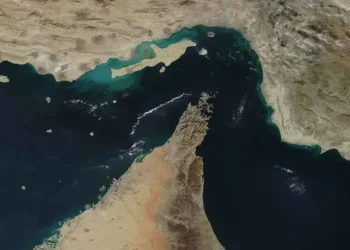
Maritime security has also deteriorated in the Strait of Hormuz, the narrow corridor through which roughly one-fifth of globally traded oil transits. Several vessels reported attacks in recent days, underscoring the vulnerability of shipping lanes long viewed as the backbone of Gulf energy exports.

Qatar announced that its air force had downed two Iranian Sukhoi Su-24 aircraft, an indication that state-to-state engagement is deepening beyond proxy actors.

Each strike broadens the risk perimeter. The conflict is no longer only about degrading missile stockpiles; it is increasingly about testing the resilience of global supply chains.

Gas Markets Absorb Immediate Shock

The commercial fallout was swift. QatarEnergy said it would suspend liquefied natural gas production, removing one of the world’s largest LNG exporters from the market without providing a timeline for resumption. European gas prices surged by roughly 40% in response, reflecting fears of sustained supply disruption.

■ Related News

Volodymyr Zelenskyy delivers a speech to the United States Congress in Washington, D.C., on December 21, 2022.

Zelenskiy Says Ukraine Will Target Russian Refineries After New Airstrike Doctrine

October 4, 2026
Ethiopian Prime Minister Abiy Ahmed attends Somalia’s presidential inauguration ceremony in Mogadishu on June 9, 2022.

Ethiopia Expels 10 Eritrean Diplomats as Tensions Escalate

October 2, 2026
Vladimir Putin attends a meeting of heads of state from Collective Security Treaty Organization member countries on May 15, 2012.

Putin Warns Russia Will Use ‘All Weapons’ if Territory Is Attacked

October 2, 2026
U.S. President Donald Trump delivers his inaugural address at the U.S. Capitol in Washington, D.C., on January 20, 2025.

Third U.S. Carrier, 9,000 Troops Head to Middle East as Trump Weighs Iran Strikes

October 2, 2026

Long-haul carriers based in the Gulf—including Emirates and Etihad Airways—temporarily grounded flights before cautiously restarting limited operations. Aviation disruption added to broader logistical strain, leaving hundreds of thousands of passengers stranded worldwide.

Energy analysts warn that even temporary suspensions can ripple outward. Insurance premiums for shipping are climbing, and traders are reassessing exposure to Gulf-origin cargoes. The cumulative effect suggests that markets are pricing not just immediate damage, but sustained instability.

Nuclear Infrastructure Reenters the Equation

Iran’s ambassador to the International Atomic Energy Agency, Reza Najafi, told reporters that airstrikes targeted the Natanz nuclear enrichment facility. Washington and Jerusalem have not publicly confirmed strikes on that specific site, though Israel has stated it is targeting “leadership and nuclear infrastructure.”

Tehran maintains its nuclear program is peaceful. However, the reintroduction of enrichment sites into active targeting calculus signals that the campaign retains a strategic deterrence dimension beyond energy corridors.

Defense Secretary Pete Hegseth said the United States is not pursuing a nation-building effort and described the mission as limited. Yet the operational scope—B-2 bomber strikes on ballistic missile facilities and reported destruction of Iranian naval assets—suggests a broader objective of degrading Iran’s capacity to project power across the Gulf.

Regional Proxies Test Secondary Fronts

The conflict has also reignited activity by Iran-aligned actors. Hezbollah fired missiles toward Israel, citing the killing of Iranian Supreme Leader Ali Khamenei as justification. Israel responded with strikes in Lebanon, including operations targeting financial branches alleged to support Hezbollah’s military wing.

In Iraq, the militia Saraya Awliya al-Dam claimed drone attacks on U.S. positions near Baghdad’s airport and a northern air base. Though damage assessments remain limited, the actions underscore the layered nature of Iran’s regional network.

Each additional front complicates the security equation for Gulf states and international partners. What began as direct strikes between state actors now risks drawing in secondary arenas tied to energy logistics and maritime security.

Tehran’s Internal Security Tightens

Inside Iran, reports indicate that the paramilitary Basij force has established checkpoints across Tehran as airstrikes continue. Streets in the capital have reportedly emptied during bombardment periods.

The death toll has risen on all sides. Iranian authorities say hundreds have been killed in U.S.-Israeli strikes, while Israeli officials report fatalities from missile attacks. Civilian losses in Lebanon and the Gulf states further illustrate the conflict’s expanding humanitarian footprint.

Despite speculation about internal political shifts, there have been no verified signs of organized uprising within Iran. Tehran’s top security official, Ali Larijani, stated on social media that negotiations with the United States are not under consideration.

Global Powers Edge Toward Coordinated Response

Britain, France and Germany signaled readiness to work with Washington to curb Iranian missile and drone activity. Their involvement reflects concern that sustained attacks on Gulf infrastructure could destabilize not only regional economies but also European energy security.

The strategic question now is durability. If operations extend for weeks—as indicated by President Trump—energy markets may face prolonged volatility. The longer export corridors remain under threat, the greater the risk that insurers, shippers and refiners recalibrate away from Gulf exposure.

The conflict’s trajectory increasingly hinges not solely on battlefield outcomes but on whether energy arteries can remain operational under fire. For global markets, that distinction may prove decisive.

Tags: #EnergyInfrastructure#Geopolitics#GlobalOilMarkets#GulfSecurity#InternationalSecurity#IranIsraelCrisis#LNGExports#MaritimeSecurity#MiddleEastEnergyConflict#OilSupplyRisk#RegionalStability#StraitOfHormuz
The Daily Desk

The Daily Desk

The Daily Desk is the editorial byline of Journos News, representing reporting produced by the newsroom across world news, politics, business, technology, disasters, and other areas of public interest. Stories published under this byline are independently researched, verified, and edited in accordance with Journos News’ editorial standards, with an emphasis on accuracy, transparent sourcing, attribution, context, and editorial independence.

Related Posts

Iraqi fuel trucks convoy out of Camp Taji as Marines prepare vehicles for a mission to the Baiji Oil Refinery in Iraq.

Iraq Imports Gasoline Through Syria as Strait of Hormuz Disruption Persists

by The Daily Desk
September 30, 2026
0

BANIYAS, Syria – Iraq has begun importing gasoline through Syria’s Mediterranean coast, using the Baniyas...

Mojtaba Khamenei in an image published by Tasnim News Agency and dated March 8, 2026.

Iranian Rial Falls to Record Low as War Deepens Economic Pressure

by The Daily Desk
September 29, 2026
0

TEHRAN, Iran — Iran’s rial fell to a new record low on Tuesday, with traders...

Iranian Foreign Minister Abbas Araghchi photographed during an official meeting in Moscow on April 27, 2026.

Trump Rejects Iran’s Seven-Day Plan to Reopen Strait of Hormuz

by The Daily Desk
September 28, 2026
0

WASHINGTON, United States - President Donald Trump has rejected an Iranian proposal that Tehran says...

U.S. President Donald Trump meets with Republican House leadership on March 9, 2026, during a meeting in Washington, D.C.

Trump Rejects Iran Proposal to Reopen Strait of Hormuz

by The Daily Desk
September 27, 2026
0

WASHINGTON, United States - President Donald Trump has rejected an Iranian proposal that would reopen...

Guided missile frigate USS RENTZ escorts transport oiler USS SEALIFT CHINA SEA through the Strait of Hormuz on October 1, 1987.

Iran Offers Seven-Day Plan to Reopen Strait of Hormuz

by The Daily Desk
September 26, 2026
0

UNITED NATIONS, United States - Iran has offered the United States a seven-day plan that...

Masoud Pezeshkian appears in an interview with Khamenei.ir in an image dated December 27, 2025.

Pezeshkian Defies Trump at UN, Says Iran Will Fight Until “Last Breath”

by The Daily Desk
September 24, 2026
0

NEW YORK CITY, United States - Iranian President Masoud Pezeshkian told the United Nations on...

U.S. President Donald J. Trump addresses the United Nations General Assembly in New York on September 25, 2018.

Trump Says U.S. and Iranian Officials Held Talks After UN Threat

by The Daily Desk
September 23, 2026
0

NEW YORK, United States - U.S. and Iranian officials held a three-hour meeting in New...

Empty United Nations General Assembly Hall in New York City, photographed on August 8, 2024, with no session in progress.

Middle East Wars Dominate UN Assembly as Iran Diplomacy Faces New Test

by The Daily Desk
September 23, 2026
0

UNITED NATIONS, United States - The wars and diplomatic crises reshaping the Middle East have...

Iranian and Azerbaijani troops participate in the Aras-2025 joint military exercise in the Karabakh region in May 2025.

Iran Guards Warn of Wider War if U.S. Escalates Conflict

by The Daily Desk
September 21, 2026
0

TEHRAN, Iran - Iran’s Islamic Revolutionary Guard Corps has warned that a new U.S. attack...

U.S. Navy guided-missile destroyer USS Carney engages missiles and unmanned aerial vehicles over the Red Sea on October 19, 2023.

How the Houthis Opened a Volatile New Front in the Iran War

by The Daily Desk
September 19, 2026
0

The Houthis’ advance toward one of the world’s most important maritime chokepoints is changing the...

Load More
Next Post
Missile defense activity over Gulf region during Iran war escalation - American Security Project. Graphic by: Will Jarrett/AP

Trump Signals Weeks-Long Iran Campaign as Regional Deterrence Erodes

President Trump speaking about Iran security policy shift - AP Photo/Alex Brandon

Shifting Iran Rhetoric Raises Military Escalation Risk for Washington

RECOMMENDED

Interior of the domestic departures area at King Khalid International Airport in Riyadh, Saudi Arabia, photographed on August 10, 2019.

Riyadh Airport Terminal Struck Again as Saudi Officials Report Injuries

October 12, 2026
Pope Leo XIV attends an audience with members of the media on May 12, 2025, in a photograph taken by Edgar Beltrán.

Pope Leo XIV to Undergo Surgery to Remove Lung Nodule

October 12, 2026
Doorbell-camera footage shows two people running during the October 9, 2026, shooting in Erie, Pennsylvania, as reported by YourErie.

Father of Toddler Killed in Erie Shooting Remembers Family Patriarch

October 12, 2026
Russian President Vladimir Putin meets U.S. President Donald Trump on the sidelines of the 25th APEC Economic Leaders’ Meeting in Da Nang, Vietnam, on November 11, 2017.

Senators Urge Trump to Reverse Russian Diesel Plan, Citing Laws

October 11, 2026
Fuel dispenser nozzles arranged at a filling station, photographed by Santeri Viinamäki on June 17, 2016.

Trump’s Russian Diesel Deal Unlikely to Cut US Fuel Prices Significantly

October 11, 2026

MOST VIEWED

  • Satellite image of the Strait of Hormuz and Musandam Peninsula, showing rugged coastal mountains between Iran, Oman, and the United Arab Emirates.

    Iran Says US Response to Hormuz Proposal Is Insufficient

    0 shares
    Share 0 Tweet 0
  • Father of Toddler Killed in Erie Shooting Remembers Family Patriarch

    0 shares
    Share 0 Tweet 0
  • Senators Urge Trump to Reverse Russian Diesel Plan, Citing Laws

    0 shares
    Share 0 Tweet 0
  • Erie Shooting Leaves Eight Victims and Suspect Dead, Police Say

    0 shares
    Share 0 Tweet 0
  • Trump’s Russian Diesel Deal Unlikely to Cut US Fuel Prices Significantly

    0 shares
    Share 0 Tweet 0
JournosNews logo

Journos News delivers globally neutral, fact-based journalism that meets international media standards — clear, credible, and made for a connected world.

  • Categories
  • World News
  • Politics
  • Business & Markets
  • Technology
  • Health
  • Science
  • Sports
  • Arts & Culture
  • Resources
  • Editorial Standards
  • Submit a Story
  • Advertise with Us
  • Syndication & Partnerships
  • Site Map
  • Press & Media Kit
  • Editorial Team
  • Careers

Join thousands of readers receiving the latest updates, tips, and exclusive insights straight to their inbox. Never miss an important story again.

  • About Us
  • Editorial & Trust Center
  • Contact Us
  • Privacy Policy
  • Terms of Use & Copyright Notice

© JournosNews.com All rights reserved.

Welcome Back!

Login to your account below

Forgotten Password?

Retrieve your password

Please enter your username or email address to reset your password.

Log In
JournosNews

Independent Journalism.
Verified Facts.

You're about to read a professionally edited article from JournosNews.com.

Every article is produced in accordance with our editorial standards, emphasizing factual accuracy, transparent attribution, fairness, editorial independence, and meaningful context.

Editorial Standards
No Result
View All Result
  • Home
  • World
    • Africa
    • Americas
    • Asia
    • Europe
    • Middle East
    • Oceania
  • Politics
  • Business
  • Technology
  • Health
  • Science
  • Sports
  • Entertainment
  • Culture

© JournosNews.com All rights reserved.

This website uses cookies. By continuing to use this website you are giving consent to cookies being used. Visit our Privacy and Cookie Policy.