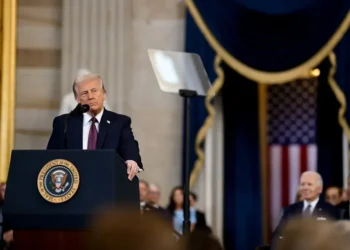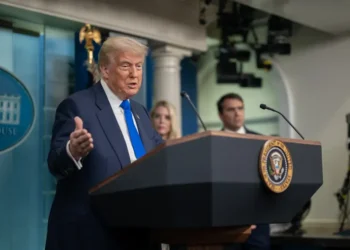
The prospect of a prolonged Iran war escalation moved from contingency to declared policy Monday after Donald Trump said military operations could continue for “four to five weeks” and potentially longer. His remarks followed coordinated U.S. and Israeli strikes across Iranian territory, signaling a campaign with no immediate off-ramp.
As first reported by Reuters, U.S. officials simultaneously urged American citizens in more than a dozen countries to consider departing amid rising security risks. The advisory underscored growing concerns that the conflict could expand beyond Iran and Israel’s direct battlefield.
Command Fractures Deepen as Campaign Timeline Expands
The public projection of a multi-week operation alters the strategic equation. By framing the conflict as potentially extended, Washington has effectively acknowledged that rapid deterrence may not be achievable.

The reported killing of Iran’s Supreme Leader, Ali Khamenei, marks an inflection point. Leadership decapitation strategies historically aim to compress conflict timelines. Instead, the immediate retaliation from Tehran and its allied networks suggests command fragmentation may be producing decentralized escalation rather than paralysis.
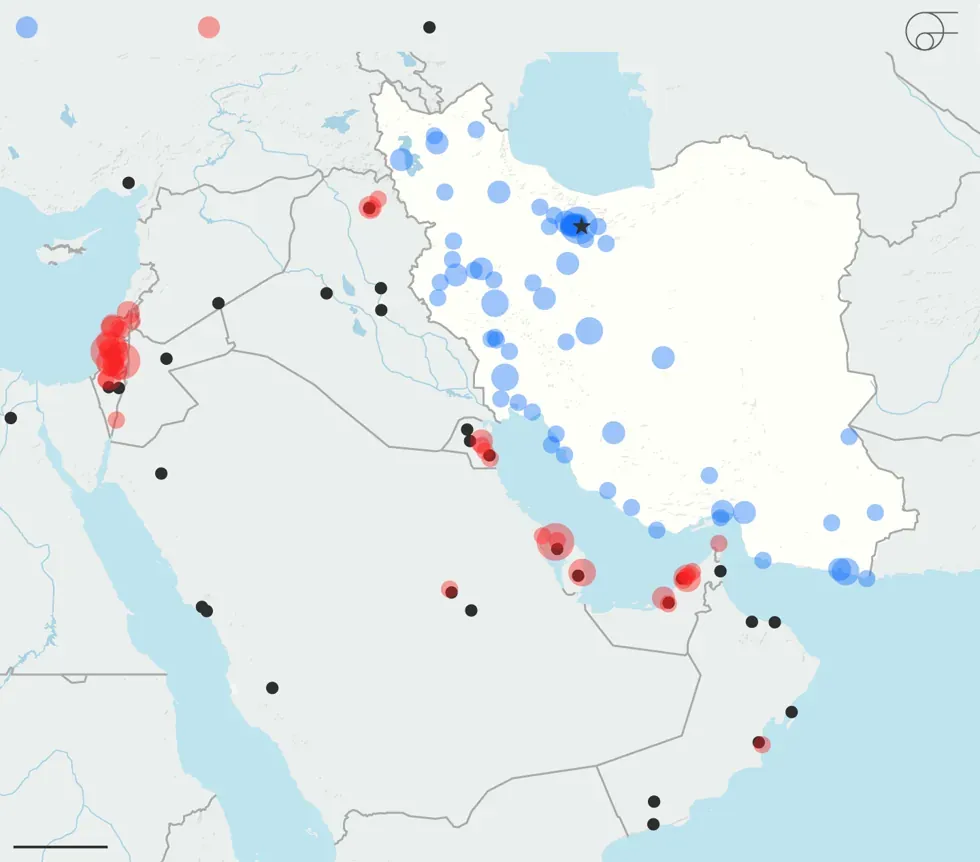
Israeli and American strikes continued into Monday, targeting infrastructure and military facilities. Yet the absence of a defined political end-state leaves regional actors calculating independently, raising the likelihood of asymmetric responses.
Strategic Depth Shrinks Across the Gulf
Iran’s counterstrikes extended beyond Israeli territory, with Gulf states reporting incoming fire. Even areas previously regarded as insulated from direct confrontation have experienced security breaches.
In Dubai, authorities assessed projectile impacts near strategic zones, challenging the long-held perception of the emirate as a secure commercial hub. The ripple effects were immediate: aviation corridors tightened, airspace closures multiplied, and hundreds of thousands of passengers found themselves stranded worldwide.
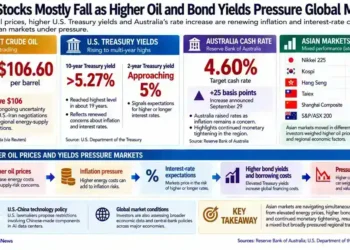
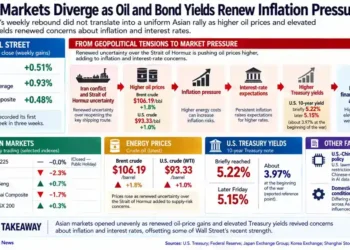
Energy markets reacted sharply. Crude prices surged as traders priced in sustained disruption risks to transport chokepoints and production facilities critical to global supply. While infrastructure damage assessments remain fluid, the strategic signal is clear—energy leverage is once again central to the conflict calculus.



Allied Shielding Tests Collective Resolve
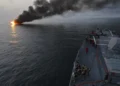
U.S. allies moved swiftly to intercept Iranian missiles and drones, demonstrating a coordinated defensive posture. However, each interception carries political implications. The more partners are drawn into active defense roles, the harder it becomes to contain the theater geographically.
Regional governments now face a dual challenge: balancing domestic stability while aligning with Washington’s operational trajectory. Public messaging across Gulf capitals has remained measured, but security postures have visibly tightened.
The United States’ evacuation advisories amplify the perception that the conflict could spill across borders. Such warnings are typically calibrated carefully; their breadth suggests Washington anticipates sustained volatility rather than episodic flare-ups.
Diplomatic Off-Ramps Narrow
The declaration that operations could extend beyond a month narrows diplomatic maneuvering space. Prolonged campaigns often harden negotiating positions rather than soften them, especially when leadership structures are disrupted.
No formal ceasefire initiative has been publicly advanced. Without a parallel diplomatic track, military timelines risk becoming self-perpetuating. Each retaliatory strike reshapes the political landscape, complicating efforts to de-escalate.
The regional deterrence architecture—long anchored in calculated brinkmanship—now appears under strain. Whether the coming weeks produce strategic recalibration or deeper entrenchment will depend less on battlefield momentum than on the emergence of credible diplomatic intermediaries.
For now, the trajectory points toward endurance rather than resolution. The stated timeline signals preparation for sustained engagement, and the widening geographic footprint suggests the Iran war escalation may test not only military capacity but the resilience of regional order itself.