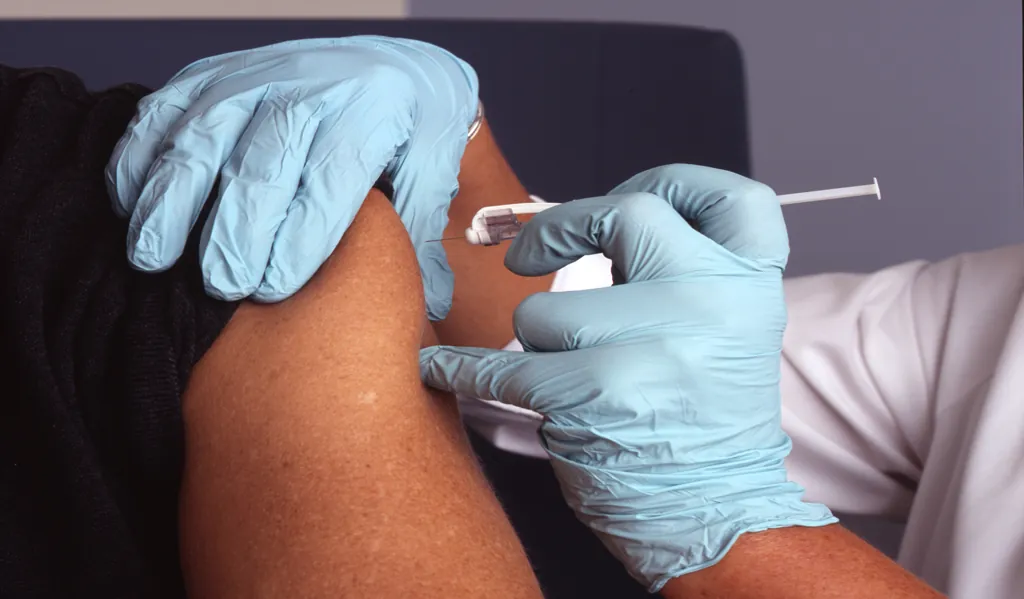
Researchers are testing a new generation of experimental vaccines designed to prevent colorectal cancer in people with Lynch syndrome, an inherited genetic condition that greatly increases the risk of developing colon cancer and several other malignancies.
Unlike vaccines that protect against infectious diseases linked to cancer, these investigational vaccines aim to train the immune system to recognize and destroy abnormal cells before they develop into tumors. Scientists say the approach could eventually reduce cancer risk and lessen the need for intensive lifelong screening among people with the inherited condition.
At least three vaccine candidates targeting Lynch syndrome are currently under development. Two are undergoing early-stage clinical trials in the United States, while another has entered initial human testing in the United Kingdom.

Among those participating in the research is Dr. Stacy Norton, a physician at Houston Methodist Willowbrook Hospital, whose family has been significantly affected by Lynch syndrome-associated cancers. Norton’s mother died from colon cancer when Norton was seven years old, and Norton herself survived an early-stage uterine cancer linked to the inherited mutation. Two of her adult children have also inherited Lynch syndrome.
Dr. Eduardo Vilar-Sanchez, lead investigator of one of the vaccine programs at The University of Texas MD Anderson Cancer Center, said preliminary findings have been sufficiently encouraging that researchers expect to launch a larger clinical trial next year.
For Norton, the research represents hope that future generations of people with Lynch syndrome may one day rely less on frequent cancer surveillance if an effective preventive vaccine becomes available.
Lynch Syndrome Significantly Increases Cancer Risk
Lynch syndrome is caused by inherited mutations affecting DNA mismatch-repair genes, which normally correct errors that occur when cells divide. When those repair mechanisms fail, genetic mutations accumulate more rapidly, substantially increasing the likelihood of developing cancer, often before the age of 50.
Colorectal cancer is the most common cancer associated with the syndrome. According to Vilar-Sanchez, while the average lifetime risk of colorectal cancer is approximately 5% in the general population, the risk may reach as high as 80% in individuals with certain Lynch syndrome mutations.
■ Related News



The condition is also associated with elevated risks of endometrial, ovarian, stomach, pancreatic, certain skin and some brain cancers.
After genetic testing confirmed she had Lynch syndrome in her 40s, Norton began annual colonoscopy screening and later underwent a preventive hysterectomy because of her increased cancer risk. Pathologists subsequently discovered an early-stage uterine cancer in the removed tissue.
Vaccines Target Precancerous Cells
Researchers say the experimental vaccines work differently from vaccines such as those for human papillomavirus (HPV) or hepatitis B, which prevent viral infections that can later lead to cancer.
Instead, the new vaccines are designed to help the immune system recognize abnormal proteins produced by precancerous cells carrying Lynch syndrome-related mutations.
One early clinical study involved Norton and 44 other participants receiving an investigational vaccine developed by Swiss biotechnology company Nouscom. The vaccine targets 209 genetic abnormalities associated with precancerous Lynch syndrome lesions.
Researchers reported in the journal Nature Medicine that the vaccine successfully stimulated tumor-fighting T cells. One year after vaccination, follow-up colonoscopies found fewer precancerous growths and no advanced polyps among participants.
Dr. John Marshall, an oncologist at Georgetown University and adviser to the Colorectal Cancer Alliance who was not involved in the study, said the findings suggest the immune system may become better equipped to suppress the development of Lynch syndrome-related tumors.
For Norton, follow-up colonoscopies performed one and two years after vaccination detected no polyps for the first time since 2014. She has since received a booster dose, with additional study results expected later this year.
Researchers at the University of Oxford have also begun evaluating an experimental mRNA vaccine developed by Moderna using technology similar to that employed in its COVID-19 vaccine.
Separately, California-based ImmunityBio is conducting a larger clinical trial evaluating its Tri-Ad5 vaccine against a placebo.
Genetic Testing May Expand Prevention Efforts
Approximately 158,000 people are diagnosed with colorectal cancer each year in the United States, with most cases occurring after age 50. However, incidence among younger adults has continued to increase, although the reasons remain under investigation.
Researchers estimate Lynch syndrome affects about one in every 279 people.
Vilar-Sanchez said broader use of genetic testing among patients diagnosed with Lynch syndrome-related cancers or those with strong family histories could identify more people carrying the inherited mutations and enable relatives to determine whether they also face elevated cancer risks.
Current U.S. screening guidelines recommend colorectal cancer screening beginning at age 45 for people at average risk using colonoscopy or other approved methods. Medical experts also advise prompt evaluation for symptoms including blood in the stool, rectal bleeding, persistent changes in bowel habits, unexplained weight loss, abdominal pain or prolonged cramping, regardless of age.
Researchers emphasized that the vaccines remain experimental and that continued screening remains the standard of care for people with Lynch syndrome while larger clinical trials evaluate the vaccines’ long-term safety and effectiveness.
This report is based on reporting by The Associated Press.