WASHINGTON, United States — U.S. health authorities have declared the country’s record Cyclospora outbreak over, ending the active outbreak investigation while investigators continue to search for the source of the contamination.
The outbreak sickened thousands of people across multiple states and territories, making it the largest recorded U.S. outbreak of cyclosporiasis. Despite extensive epidemiological and traceback investigations, officials have not identified a single food, producer or other source responsible for the infections.
Cyclospora is a parasite that causes intestinal illness when people consume food or water contaminated with the organism. Symptoms commonly include prolonged diarrhea, abdominal cramps, nausea, fatigue and loss of appetite.

Outbreak investigation ends without a confirmed source
The Centers for Disease Control and Prevention and the U.S. Food and Drug Administration coordinated the investigation with state and local health authorities.
Investigators interviewed patients, examined exposure histories and conducted traceback work involving foods consumed by people who became sick.
The investigation did not produce enough evidence to establish a common contaminated food or supplier.
That leaves the central question of the outbreak unresolved: how the parasite entered the food supply and where the contamination occurred.
The end of the outbreak designation does not mean officials have determined what caused the infections. Rather, it reflects the absence of continuing evidence indicating that the outbreak remains active.




Cyclospora can cause prolonged illness
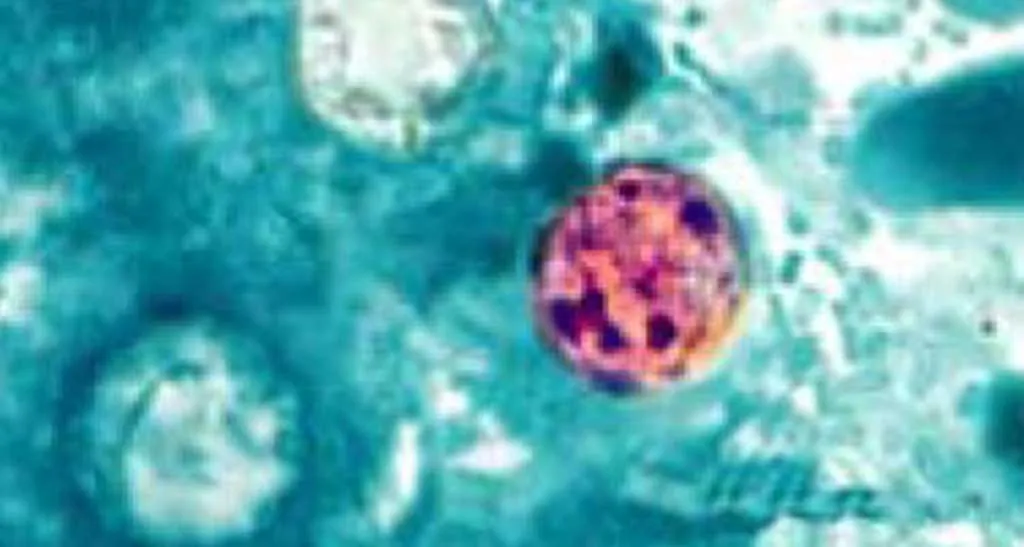
Cyclospora infection, known as cyclosporiasis, is caused by the microscopic parasite Cyclospora cayetanensis.
People generally become infected by consuming food or water contaminated with the parasite. Unlike some foodborne pathogens, Cyclospora requires time outside the human body before it becomes infectious, which can complicate efforts to identify how contamination occurred.
Illness can last for weeks if untreated and may recur in some patients.
Common symptoms include watery diarrhea, frequent bowel movements, stomach cramps, nausea, vomiting, loss of appetite, weight loss and fatigue.
The infection is generally treatable with prescription medication, although diagnosis can be difficult because routine stool testing does not always detect the parasite.
Food-safety investigations can be difficult to trace
Identifying the source of a Cyclospora outbreak can be particularly challenging because people may become sick days or weeks after consuming contaminated food.
Patients may also have eaten many different foods during the exposure period, making it difficult for investigators to establish a statistically meaningful common exposure.
Fresh produce has been associated with previous Cyclospora outbreaks in the United States. Investigators have previously identified contaminated cilantro, basil, fresh vegetables and other produce as outbreak vehicles.
But those previous findings do not establish the source of the latest outbreak.
Officials therefore continue to distinguish between known risk factors for Cyclospora infection and evidence directly linking a particular product to the current outbreak.
Record outbreak raises continuing questions
The scale of the outbreak has increased pressure to determine how contamination occurred.
A confirmed source could help public-health agencies identify weaknesses in the food-supply chain and determine whether additional interventions are needed to prevent similar outbreaks.
Without a source, investigators cannot conclusively identify the point at which contamination entered the supply chain.
That does not mean the outbreak is expected to continue. Health authorities’ decision to close the active investigation indicates that available evidence no longer supports treating the event as an ongoing outbreak.
Investigation may continue after outbreak declaration
The conclusion of the outbreak does not necessarily end all public-health work related to Cyclospora.
Health authorities continue to monitor reported infections and may investigate new clusters if cases begin to show a common geographic, food or exposure pattern.
The FDA and other agencies can also pursue food-safety investigations when new evidence emerges.
For consumers, the outbreak highlights the continuing difficulty of preventing and tracing parasitic contamination in fresh foods.
For investigators, however, the most important unanswered question remains the same: where the contamination originated and how it reached the people who became infected.
Reporting Credit: U.S. Centers for Disease Control and Prevention — outbreak and cyclosporiasis surveillance information; U.S. Food and Drug Administration — food-safety investigation and traceback information; state and local public-health authorities — case and epidemiological information.