TEHRAN, Iran – Hundreds of thousands of people gathered in central Tehran on Sept. 18 for a government-organized military-style rally as Iran showcased a newly formed volunteer force intended to provide additional defense and emergency-response capacity during the continuing war.
The event, known as Janfada-ye Iran, or roughly “those who sacrifice their lives for Iran,” featured volunteers in combat clothing, military hardware, drones and anti-aircraft equipment. President Masoud Pezeshkian and senior military officials attended.
Iranian authorities said about 313,000 people took part in the Tehran mobilization. That figure could not be independently verified. Iran’s state broadcaster had earlier estimated that more than 300,000 people were in the streets.

Iran expands civilian mobilization
The new force is being presented as an additional layer of defense alongside Iran’s Islamic Revolutionary Guard Corps and its Basij organization.
Gen. Hassan Hassanzadeh, the IRGC commander in Tehran, told Iranian state media that more than 600,000 people had registered for the volunteer campaign and that more than 1 million could eventually participate in training. Those figures are Iranian government claims and have not been independently verified.
The volunteers are expected to receive limited military and emergency-response training. State media had encouraged participation for several days before the rally and said training with assault rifles would begin shortly.
Basij commander Hossein Taeb told participants that the volunteers would be prepared for what he described as full-scale defense and said similar mobilizations would be held in other Iranian cities.
The initiative therefore goes beyond a single public demonstration. It is also intended to create an organized pool of civilians who can be incorporated into Iran’s broader domestic security and defense structure.
Rally projects strength amid war
The Tehran gathering came after months of war involving Iran, the United States and Israel.
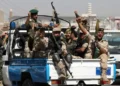
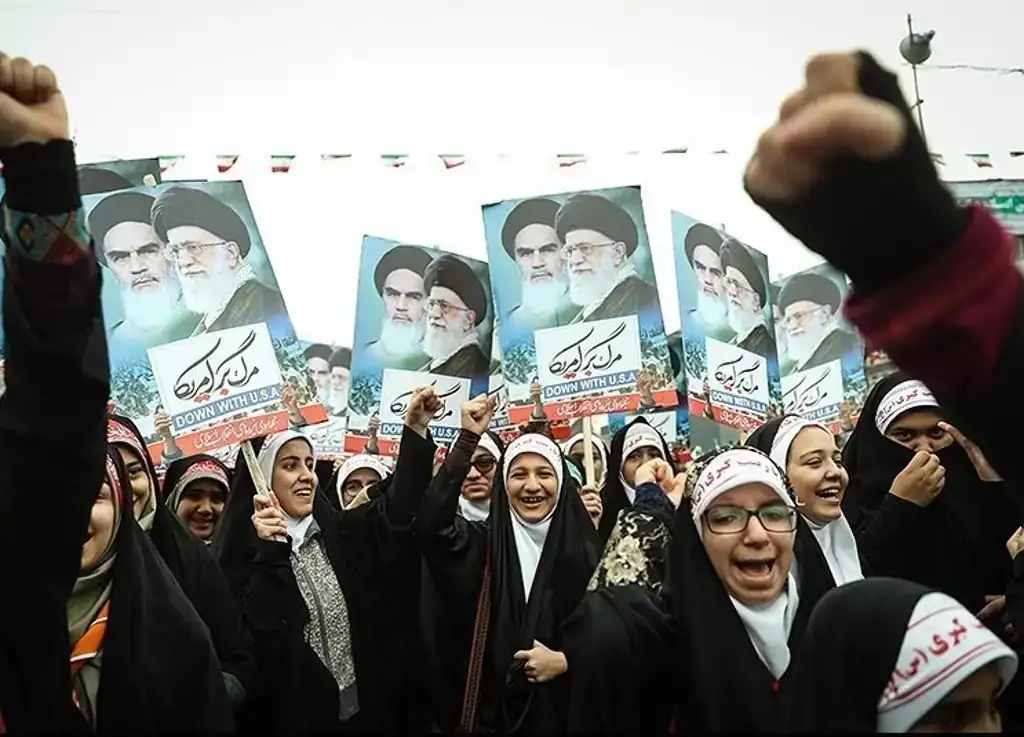
The government used the event to emphasize national unity and resistance. Participants carried Iranian flags, while some waved weapons and others chanted slogans directed against the United States and Israel. Military vehicles and weapons systems were displayed along the parade route.
Iranian officials have portrayed the mobilization as a demonstration that the country can continue defending itself despite military pressure.
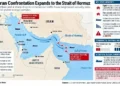
The rally also provided the government with an opportunity to display military equipment, including drones that Iranian forces have used in the conflict and in operations affecting shipping around the Strait of Hormuz.
The size of the gathering is significant, but attendance at a government-organized event cannot by itself establish the level of support for Iran’s leadership across the wider population.
Economic pressure adds to the government’s challenge
The mobilization comes as Iran faces severe economic pressure.
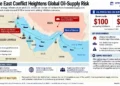
The country has been subjected to U.S. sanctions and a U.S. naval blockade of Iranian ports during the conflict, according to current reporting. Reduced shipping through the Strait of Hormuz has also affected regional energy flows and Iran’s ability to conduct normal trade.
The government has sought to frame the war as a national defense effort while urging citizens to remain united.
The economic situation complicates that message. Earlier in 2026, Iran experienced major protests linked initially to economic grievances that later expanded into broader opposition to the government. The authorities subsequently launched a major crackdown, according to human-rights organizations and international reporting.
The new volunteer structure could therefore serve both external defense and internal security functions.
The Basij remains central to the system
The volunteers are being organized alongside the Basij, a large volunteer paramilitary organization affiliated with the IRGC.
The Basij has played an important role in Iran’s security system for decades and has also been used to suppress anti-government demonstrations.
The new force is not being presented as a replacement for the IRGC or Basij. Instead, Iranian officials describe it as an additional mobilization structure that can provide manpower and support during wartime.
That distinction matters because the government’s stated purpose extends beyond conventional military operations.
The training program includes emergency-response elements, while the public rallies are designed to demonstrate readiness and participation.
Tehran says more mobilizations are coming
Taeb said similar events would take place in other Iranian cities, suggesting the Tehran rally is the beginning of a broader mobilization campaign rather than a one-day event.
Iranian state media had already promoted the Sept. 18 event as a major national exercise. Basij officials described the planned Tehran participation as 313,000 people and linked it to a broader million-person mobilization effort.
The government’s ability to translate those registrations into trained and operational personnel remains unclear.
Registration figures are not equivalent to completed military training, and neither the number of volunteers nor their future assignments has been independently verified.
A message aimed at Iran’s enemies and its own population
The mobilization serves two audiences.
Externally, the display is intended to signal that Iran retains the ability to mobilize additional manpower despite sustained military pressure.
Domestically, it projects an image of national cohesion at a time when the country is dealing with war, sanctions, economic disruption and political tensions.
The rally cannot by itself establish how broadly that message is accepted. But the scale claimed by Iranian authorities, the participation of senior political and military officials and the creation of a formal volunteer-training program show that Tehran is making public mobilization part of its wartime strategy.
For now, the next test will be whether the campaign produces the large trained force Iranian officials have projected and how that force is ultimately used.
Reporting Credit: Islamic Revolutionary Guard Corps / Iranian state media — volunteer registration figures and mobilization plans; Basij Force — organization of the Janfada-ye Iran exercise and volunteer-defense campaign; Government of Iran — participation of President Masoud Pezeshkian and official presentation of the mobilization.