The world’s leading climate science assessment body faces a difficult choice over when to publish its next major reports: complete the work in time to inform international climate negotiations in 2028, or allow more time for scientific review and broader participation by researchers from developing countries.
The disagreement within the Intergovernmental Panel on Climate Change (IPCC) has persisted for nearly three years, according to Reuters, exposing competing views about how an international scientific institution should balance rigorous assessment, equitable participation and the practical needs of governments making climate-policy decisions.
The dispute concerns the publication timetable for the three Working Group contributions to the IPCC’s Seventh Assessment Report, known as AR7. These assessments examine the physical science of climate change, its impacts and adaptation, and options for mitigating further warming.

The immediate question is whether all three reports can be approved by September 2028, as proposed by the Working Group co-chairs, or whether the second and third reports should move into 2029. These are reported competing positions, not an adopted schedule.
The stakes extend beyond a publication date. The reports are intended to provide governments with a comprehensive assessment of climate science. Their timing could influence the evidence available during the second Global Stocktake under the Paris Agreement, a process scheduled to conclude in November 2028.
But the scheduling dispute also raises a question about scientific independence: how can the IPCC deliver policy-relevant evidence when governments disagree over the time needed to produce it?
What the IPCC’s Seventh Assessment Will Cover
The IPCC does not conduct original climate research. Instead, it assesses existing scientific, technical and socioeconomic literature to establish the state of knowledge about climate change, its consequences and possible responses.
Its assessments are produced by international teams of experts and undergo extensive review. Governments participate in the institution’s procedures, including the development of report outlines and the formal consideration of reports. The IPCC describes its work as policy-relevant but policy-neutral: it supplies evidence for decision-makers rather than prescribing particular government policies.



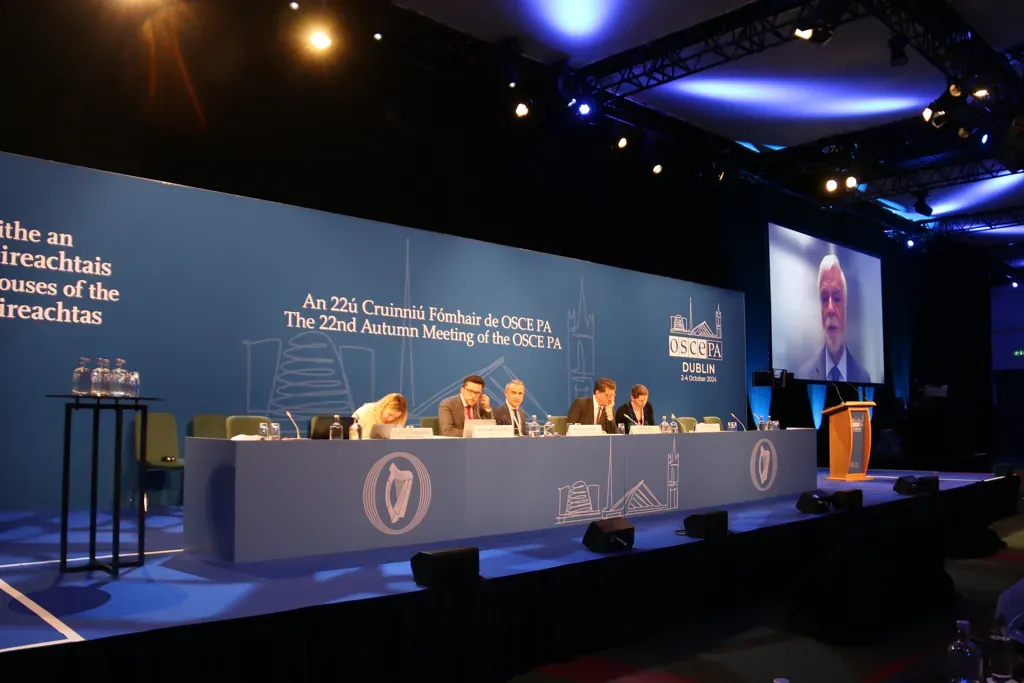
The seventh assessment cycle formally began in July 2023. At its 60th plenary session in Istanbul in January 2024, the Panel agreed on the programme of scientific work for the cycle. Governments subsequently agreed on the outlines of the three Working Group contributions at the 62nd plenary session in Hangzhou in February 2025.
The three reports address distinct but connected questions.
Working Group I examines the physical science basis of climate change, including changes in the climate system and the evidence underlying projections of future warming.
Working Group II assesses climate-change impacts, vulnerability and adaptation. Its work examines how climate risks affect people and natural systems and how societies can respond.
Working Group III assesses options for mitigating climate change, including approaches to reducing greenhouse gas emissions.
The assessment cycle will also produce a Synthesis Report that integrates the Working Group findings with the cycle’s Special Report on Climate Change and Cities. The IPCC’s published schedule identifies late 2029 as the target for the Synthesis Report.
That distinction matters when discussing the deadline dispute. The proposed September 2028 date concerns the approval of the three Working Group reports, not the completion of the entire assessment cycle or the publication of its Synthesis Report.
Why Scientific Review Takes Time
An IPCC assessment is not simply a collection of published studies or a summary written by a small editorial team.
The process begins with scoping and the preparation of a report outline. Author teams then assess the relevant scientific literature, develop draft chapters and submit their work to successive review stages.
The first draft is reviewed by experts. Authors then prepare a second draft that takes review comments into account, alongside an initial draft of the Summary for Policymakers. Both are subjected to further expert and government review.
After that stage, author teams prepare final drafts and governments provide another round of written comments on the Summary for Policymakers. The relevant Working Group or Panel then formally considers the report under the IPCC’s approval, acceptance or adoption procedures.
These stages are central to the institution’s credibility. They allow experts to challenge incomplete assessments, identify relevant research and scrutinize the balance of the evidence.
Review Editors have a specific role in ensuring that substantive comments receive appropriate consideration and that genuine differences in scientific perspectives are reflected in the final work. The IPCC also publishes review comments and author responses after the process is completed.
A compressed timetable could place pressure on author teams, reviewers and government representatives who must examine complex material across three major assessments.
However, the available evidence does not establish that the proposed 2028 schedule would necessarily compromise scientific quality. That question requires examination of the actual work plans, remaining milestones, review windows and the assessments’ workload.
Likewise, allowing more time would not automatically guarantee better science. The editorial question is whether the competing schedules provide a workable balance between completeness, review and timely publication.
Why Developing-Country Participation Is Central to the Dispute
The disagreement is also about who can participate meaningfully in the production of global climate assessments.
Reuters reported that countries including India, Kenya, Saudi Arabia, Russia and China were pressing for more time. Their stated concerns include whether scientists in less-resourced countries have sufficient time and capacity to contribute to the process.
The problem described is practical as well as institutional. Researchers may have limited opportunities to publish new findings in time for assessment, or to take time away from their regular employment for IPCC work that is not paid by the organization.
A timetable that assumes all researchers have comparable resources and flexibility could make participation more difficult for scientists working in institutions with fewer resources.
The IPCC says its author-selection process considers scientific expertise, geographical representation, gender balance and representation from developing countries and economies in transition. It also relies on volunteer contributions from scientists and experts.
Those commitments, however, do not by themselves establish whether the current timetable provides sufficient opportunities for participation. That requires evidence about the workload, review periods, author representation and practical constraints affecting the teams preparing the reports.
Reuters reported that slightly more than half of the lead authors and editors selected for the next assessment were from developing economies or economies in transition. That figure is relevant to representation, but representation among selected experts is not the same as demonstrating that all participants have sufficient resources to complete the work.
The distinction should remain central to the debate. A scientifically credible assessment needs rigorous review, but its legitimacy also depends on whether the process can draw on expertise from across the world.
The Case for Completing the Reports Before the 2028 Climate Talks
Governments that support an earlier timetable argue that updated assessments should be available when countries make consequential climate-policy decisions.
The second Global Stocktake under the Paris Agreement is scheduled to conclude at the UN climate negotiations in November 2028. The UNFCCC says the process will examine collective progress toward the Paris Agreement’s goals and inform countries as they strengthen climate action and international cooperation.
That makes the timing of the IPCC reports relevant, even though the two processes have different mandates.
The IPCC assesses the scientific evidence. The Global Stocktake is an intergovernmental process that evaluates collective progress under the Paris Agreement and considers the implications for climate action.
If the Working Group reports are completed before the stocktake concludes, their findings could inform the discussions. If publication moves into 2029, the reports would not be available in their completed form for the conclusion of that process.
The consequences should not be overstated. The absence of a new IPCC assessment would not mean that governments had no climate evidence available. They would still have existing assessments, scientific publications and other sources of information.
The narrower concern is that policymakers could have to conduct the stocktake without the completed findings of the next comprehensive IPCC assessment cycle.
Reuters reported that supporters of the earlier timetable fear negotiators would otherwise have to rely on assessments published in 2021 and 2022. Researchers interviewed by the news agency argued that a new assessment would be valuable because scientific understanding and the policy context continue to develop.
The original documentary basis for the competing schedules, including the proposed work plans, still needs to be examined to determine precisely what could be delivered by the respective deadlines.
The Case for More Time
Those seeking a longer timetable argue that the value of an assessment depends on the integrity of the process, not solely on whether it meets an international negotiating deadline.
The reports must assess large bodies of scientific literature, consider review comments, reconcile the presentation of evidence and complete the relevant approval procedures. These are substantial tasks involving authors, reviewers, technical support teams and government representatives.
A schedule that leaves insufficient time for these stages could make it harder to deliver a comprehensive assessment or provide meaningful opportunities for participation.
There is also a broader institutional concern. The IPCC’s role is to provide governments with a rigorous assessment of scientific knowledge, not to produce findings according to a political calendar at the expense of its established procedures.
Reuters reported that Russia’s economy ministry objected to framing the dispute as a confrontation with oil-producing countries. The ministry argued that synchronizing the assessment cycle with UN negotiations could raise questions about the IPCC’s independence and risk advancing a predetermined climate-policy agenda.
That argument is distinct from the question of whether the proposed schedule is technically achievable. It concerns the principles that should govern the institution’s work.
An assessment’s policy relevance is not the same as political direction of its conclusions. Governments can reasonably want scientific evidence to arrive in time for negotiations while also insisting that the timetable must not determine the findings.
The evidence reviewed so far does not establish that either an earlier or later schedule would necessarily produce a more politically independent assessment. Resolving that question requires the actual proposals, the reasoning behind them and the procedural options available to the Panel.
Political Accusations Require Evidence
The scheduling dispute has generated accusations that some governments are using procedural arguments to delay climate action.
Reuters reported that some supporters of the 2028 timetable accused major oil-producing countries of seeking to avoid additional pressure to reduce emissions. It also reported that Russian officials rejected the characterization and that representatives from India and China questioned the idea that the value of the IPCC’s work should be measured primarily by its contribution to the 2028 negotiations.
These competing positions should not be collapsed into a single explanation for the deadlock.
A government’s position on a deadline can be documented through official statements, meeting records and proposed schedules. Its underlying political motive is a separate matter that requires additional evidence.
The fact that a country produces fossil fuels does not establish that its position on an assessment timetable is intended to obstruct climate action. Conversely, a stated concern about inclusivity does not by itself demonstrate that a proposed delay is necessary.
A sound assessment of the dispute would examine whether the positions are supported by concrete procedural concerns: the time required for review, the readiness of author teams, the volume of material to be assessed and the availability of researchers from less-resourced countries.
It would also examine whether governments have proposed practical alternatives, such as adjustments to individual report schedules or measures to support broader participation.
Without that evidence, claims about deliberate obstruction should remain attributed allegations rather than established findings.
What the Dispute Means for the IPCC
The scheduling disagreement exposes a structural tension in international scientific assessment.
The IPCC is both a scientific assessment institution and an intergovernmental body. Scientists assess the available evidence, while member governments participate in the institution’s procedures and formally consider its reports.
That arrangement gives the assessments their distinctive international standing, but it also means that agreement over the work programme must be reached among governments with different priorities and capacities.
The institution must preserve scientific independence while remaining useful to decision-makers. It must also provide a credible process for researchers working under very different institutional conditions.
Those objectives are not inherently incompatible. The challenge is to establish a schedule that allows the scientific work to be completed properly without unnecessarily separating its findings from the decisions they are intended to inform.
The IPCC’s published procedures provide a framework for review and approval. What remains to be established is how the competing timetables measure up against the workload and participation requirements of the current assessment cycle.
The Decision That Remains to Be Verified
The next decisive development is the outcome of the IPCC plenary scheduled to begin in Addis Ababa, Ethiopia, on October 12, according to Reuters. The meeting is expected to address the disputed publication timetable.
As of October 11, 2026, the outcome remains unverified. The final article must therefore not describe either schedule as adopted or claim that the dispute has been resolved.
The official meeting record should establish whether governments agreed on a timetable, modified the Working Group co-chairs’ proposal, deferred the decision or left some deadlines unresolved.
Any decision should also be assessed against the distinction between the three Working Group reports and the later Synthesis Report. The IPCC’s current published documentation identifies late 2029 as the target for the latter.
The wider significance will depend on the substance of the agreement, if one is reached: whether it protects the necessary review stages, addresses participation concerns and gives policymakers a clear understanding of when the completed assessments will be available.
For the IPCC, the goal is not simply to publish before a particular summit. It is to produce an authoritative assessment that governments can use with confidence.
The central test is whether governments can agree on a timetable that protects scientific rigor and inclusive participation while delivering the evidence when it can still inform international climate decisions.
Reporting Credit: Intergovernmental Panel on Climate Change; United Nations Framework Convention on Climate Change; Reuters, reporting by Kate Abnett and Sudarshan Varadhan.