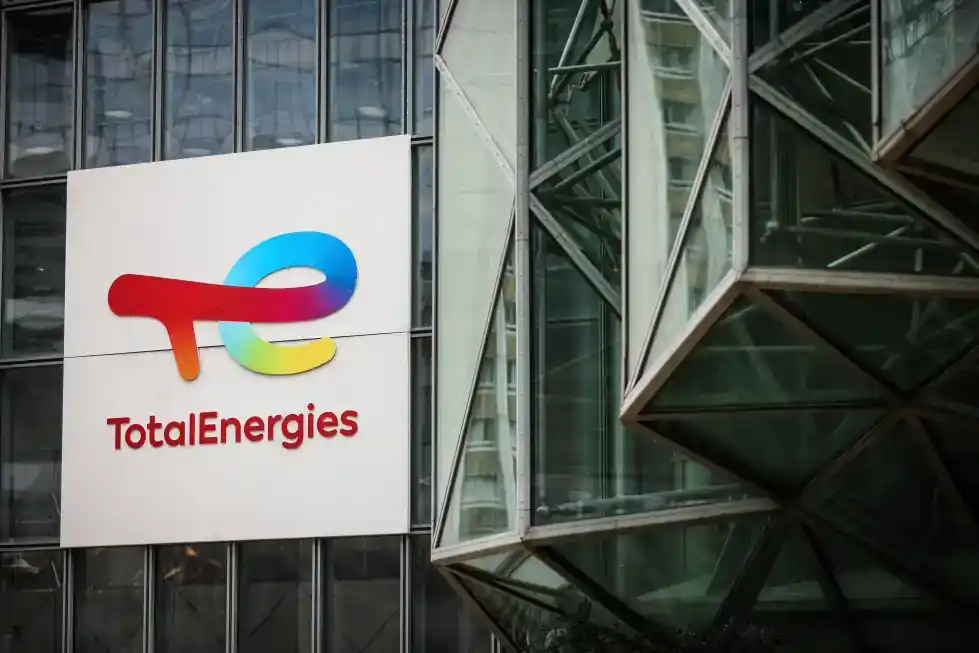
The U.S. government will pay approximately $1 billion to TotalEnergies to terminate offshore wind lease agreements, marking a significant policy shift under the administration of Donald Trump. The agreement, confirmed by the Department of the Interior, allows the company to exit planned wind projects off the coasts of North Carolina and New York, with funds effectively reimbursing prior lease payments.
The move underscores a broader strategic reorientation in U.S. energy policy toward fossil fuel development, with implications for capital allocation, regulatory stability, and the future of renewable energy investment.
Strategic Reallocation of Capital
Under the terms outlined by the Interior Department, TotalEnergies will redirect capital toward liquefied natural gas and oil development projects in the United States. Company executives stated that the reimbursement of lease costs would support construction of a liquefied natural gas facility in Texas and expansion of hydrocarbon operations, describing the shift as a more efficient deployment of capital.

According to corporate disclosures, TotalEnergies initially acquired offshore wind leases in 2022 for approximately $928 million combined. The Carolina Long Bay project alone was expected to generate over 1 gigawatt of capacity, while a separate lease off the New York–New Jersey coast had the potential to produce up to 3 gigawatts, based on company estimates.
Policy and Regulatory Context
The agreement follows a series of legal setbacks for the administration’s efforts to halt offshore wind development. Federal courts previously allowed multiple East Coast wind projects to proceed after determining that the government had not demonstrated sufficient grounds for emergency suspension.
Officials at the Interior Department framed the settlement as a cost-saving measure that eliminates what they described as subsidies for offshore wind projects. However, state officials and environmental groups have challenged that characterization, arguing that the payment represents a significant fiscal outlay without corresponding infrastructure development.
Market and Industry Implications
The decision introduces additional uncertainty into the U.S. renewable energy sector, particularly for offshore wind developers reliant on long-term regulatory clarity. Analysts cited by the Financial Times note that abrupt policy reversals can affect investment timelines and increase perceived risk premiums for large-scale energy infrastructure projects.
At the same time, the reallocation of capital toward liquefied natural gas may reinforce the United States’ position in global energy exports. Data from the International Energy Agency indicates that LNG demand has grown steadily, particularly in Europe and Asia, as countries diversify supply sources.
■ Related News



State-Level Response and Energy Mix Debate
Officials in affected states, including New York and North Carolina, criticized the agreement, citing lost opportunities for renewable capacity expansion and local economic development. State energy strategies in these regions have emphasized a diversified approach, combining renewables, nuclear power, and conventional energy sources to meet demand and emissions targets.
Despite the federal policy shift, offshore wind development continues in other jurisdictions. Industry data shows that global offshore wind capacity is expanding, led by significant installations in China and Europe.
Outlook for US Energy Investment
The agreement with TotalEnergies highlights a divergence between federal policy direction and broader global energy transition trends. While fossil fuel investment may increase in the near term, the long-term trajectory of U.S. energy markets will likely depend on regulatory consistency, technological costs, and international climate commitments.