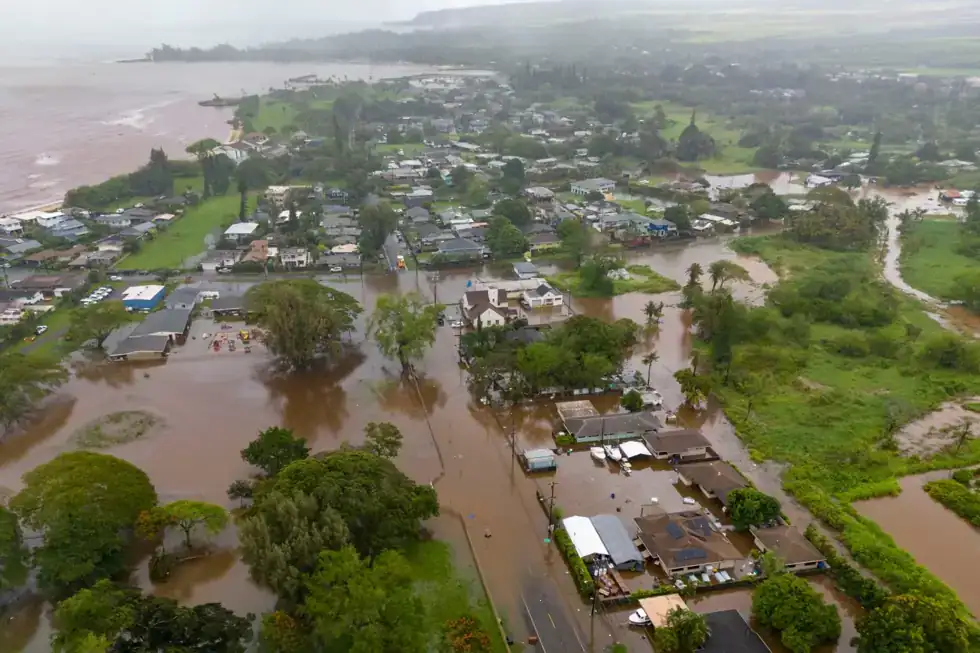
Authorities in Hawaii ordered the evacuation of over 5,500 people on Oahu’s North Shore after severe rainfall caused flooding and raised concerns about the potential failure of a century-old dam. Officials said some homes were damaged or displaced as floodwaters intensified, while emergency services warned of life-threatening conditions. The event highlights growing exposure to extreme rainfall events, which scientists link to a warming climate.
The Data Behind the Flood Event
According to the U.S. National Weather Service, parts of Oahu received between 8 and 12 inches (20–30 cm) of rain in a single night, with the island’s highest peak recording nearly 16 inches (40 cm) over 24 hours. These totals followed earlier rainfall earlier in the month, further saturating the ground and increasing runoff risk.
Meteorological authorities attributed the rainfall to “Kona low” storm systems, which bring moisture from the south and southwest. Scientists say such systems can produce intense rainfall events, particularly when atmospheric conditions favor prolonged moisture accumulation.

Evacuations and Emergency Response
Local officials ordered evacuations downstream of the Wahiawa dam, which authorities described as “at risk of imminent failure.” Honolulu officials said emergency sirens were activated and rescue operations were launched, including air and water searches for stranded residents.
Honolulu Mayor Rick Blangiardi said there were reports of extensive property damage, though a full assessment remained difficult due to ongoing flooding. The Hawaii National Guard was deployed to assist with evacuations, including airlifting people from a youth camp isolated by floodwaters.
Emergency shelters were also impacted, with at least one facility evacuated due to rising water levels. Officials said approximately 5,500 residents were under evacuation orders during the peak of the event.
Regional Impact Across Hawaii
On Maui, authorities issued evacuation advisories for neighborhoods near Lahaina after retention basins approached capacity. Crews were reportedly redirecting and pumping water to manage levels.
The Lahaina area remains highly sensitive to flooding risks following the 2023 wildfires, which altered land stability and drainage patterns. Officials said the latest flooding added pressure to already stressed infrastructure systems.
■ Related News



Dam Safety and Infrastructure Concerns
The Wahiawa dam, built in 1906, is classified by state officials as having “high hazard potential,” meaning a failure could result in significant loss of life. The dam has a documented history, including a collapse in 1921, and has been under scrutiny for modernization needs.
The state has identified the dam as requiring upgrades, with cost estimates exceeding $20 million. Ownership transfer from Dole Food Company to the state is ongoing, and authorities have issued warnings about necessary improvements since at least 2009.
Dole has said the dam is operating as designed and shows no current signs of damage. However, officials maintain that extreme rainfall increases risk levels, particularly for aging infrastructure.
Scientific Context and Climate Signals
Scientists and meteorological agencies have observed that heavy rainfall events in Hawaii have become more intense in recent years. According to climate research referenced by experts, warmer air can hold more moisture, which may contribute to heavier precipitation during storm systems.
The Intergovernmental Panel on Climate Change (IPCC) has reported with high confidence that extreme precipitation events are increasing in many regions as global temperatures rise. However, attribution of any single event to climate change remains probabilistic rather than deterministic.
In this case, experts note that while the storm system itself is a natural meteorological event, its intensity may align with broader trends identified in climate models.
What Remains Uncertain
Officials have not yet confirmed the final extent of property damage, and no fatalities have been reported as of the latest updates. The stability of the Wahiawa dam remains under monitoring, with authorities emphasizing that risk assessments can change rapidly with ongoing rainfall.
Meteorologists also note uncertainty in forecasting localized rainfall totals, especially in complex island terrain. Further precipitation could exacerbate flooding conditions and strain already saturated ground systems.
Policy and Infrastructure Implications
The flooding raises broader questions about infrastructure resilience in regions exposed to extreme weather. Hawaii regulates more than 130 dams, many of which were built for historical agricultural use and may require modernization.
Infrastructure experts have long warned that aging dams, combined with increased rainfall variability, present elevated risk profiles. The situation underscores ongoing challenges in balancing legacy infrastructure with evolving environmental conditions.