Six people were killed after Houthi forces attacked a commercial vessel in the Bab el-Mandeb strait, while U.S. forces fired on a Panamanian-flagged ship near Iran that American officials said was attempting to evade a blockade of Iranian ports.
The developments marked a further expansion of maritime risks linked to the wider conflict involving Iran, Israel and the United States. They also raised concerns about renewed fighting in Yemen, where a truce has largely held since 2022.
Yemeni authorities said the Houthi attack involved three ballistic missiles fired at a Yemeni commercial vessel. Four crew members and two fighters from the government-allied National Resistance Forces were killed, according to the Yemeni coast guard.

The incident was the first reported fatal Houthi attack on shipping off Yemen during the latest escalation described in the supplied report.
Houthi attack adds pressure on Red Sea shipping
The attack occurred in the Bab el-Mandeb, a strategic waterway connecting the Red Sea with the Gulf of Aden and an important route for international shipping.
The effective closure of the Strait of Hormuz by Iran has increased attention on alternative maritime routes, including the Bab el-Mandeb. The waterway is particularly important for shipments moving between the Middle East, the Red Sea and global markets.
The Houthis have also intensified attacks around the government-held port city of Mokha and other parts of Yemen. The Yemeni military said dozens of government troops and civilians have been killed since last week.
The escalation has raised fears that Yemen’s civil war could resume on a broader scale and create another front in the wider Middle East conflict.
■ Related News




Houthis demand an end to blockade
Mohammed Abdul-Salam, the Houthis’ chief negotiator and spokesperson, accused Saudi Arabia of using the ceasefire to strengthen an air and sea blockade imposed in 2015.
Abdul-Salam said the Houthis remained open to negotiations but insisted that any settlement must include an end to the blockade.
The comments came as fighting and maritime tensions increased across the region, making the future of Yemen’s ceasefire increasingly uncertain.
U.S. forces strike ship near Iran
Separately, U.S. Central Command said American forces fired on the Panamanian-flagged M/V Vela Nova in the Gulf of Oman after the vessel ignored warnings to stop.
Central Command said a U.S. helicopter fired missiles into the ship’s engine room, disabling the vessel. The command did not report whether any crew members were injured.
The United States said the ship was attempting to evade its blockade of Iranian ports.
Central Command also said U.S. forces had redirected 55 commercial vessels attempting to bypass the blockade, disabled three vessels that did not comply and boarded two others.
The U.S. Navy has more than 15 warships in the Arabian Sea, including two aircraft carriers and an amphibious assault ship, according to the command.
Strait of Hormuz remains central to energy risks
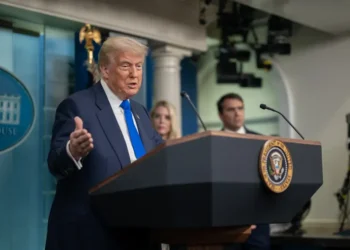
President Donald Trump said Tuesday that the United States had “total control” of the Strait of Hormuz. However, Iranian attacks on ships have continued to disrupt maritime traffic through the strategic waterway.
Iran has demanded that the United States end its blockade of Iranian ports and lift sanctions, along with meeting other conditions.
Iran effectively closed the Strait of Hormuz after Israel and the United States attacked the country on Feb. 28. Before the conflict, about one-fifth of globally traded oil passed through the waterway.
The continued uncertainty surrounding the strait has therefore kept energy markets focused on the conflict and the potential consequences for global oil supplies.
Pakistan seeks to revive U.S.-Iran negotiations
Diplomatic efforts also continued as Pakistani Interior Minister Mohsin Naqvi traveled to Tehran to meet Iranian Foreign Minister Abbas Araghchi and other officials.
Two officials said Naqvi was seeking to encourage Iran to resume negotiations with the United States under an interim peace agreement brokered by Pakistan in June. The officials spoke anonymously because they were not authorized to discuss the diplomatic effort publicly.
Naqvi’s visit was his sixth trip to Iran as part of Pakistan’s efforts to reduce tensions between Tehran and Washington.
West Bank violence adds to regional tensions
Meanwhile, five European members of the U.N. Security Council called a meeting on escalating violence in the occupied West Bank.
Britain’s U.N. ambassador, Sarah MacIntosh, condemned attacks by Israeli settlers on Palestinian villages. She said some of the attacks occurred alongside Israeli soldiers.
Palestinian U.N. Ambassador Riyad Mansour accused Israel of moving toward annexation of Palestinian territory and called for international action supporting Palestinian self-determination.
Israeli U.N. Ambassador Danny Danon said Israel condemned violence against Israelis and Palestinians and did not tolerate extremism. He said attacks by Israeli extremists were declining and accused Security Council members of overlooking what he described as increasing Palestinian attacks.
The developments underscore the widening security risks across the Middle East as maritime disruptions, renewed fighting involving Iranian-backed groups and diplomatic efforts continue simultaneously.
Reporting credit: Based on reporting by The Associated Press.