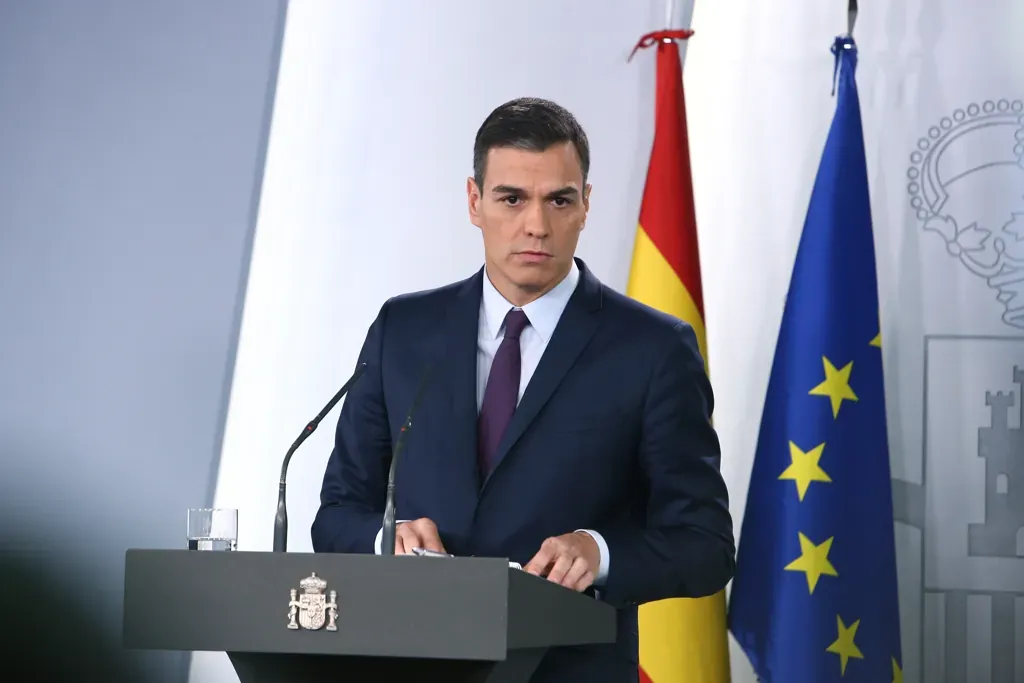
MADRID, Spain – Spanish Prime Minister Pedro Sánchez has called an early general election for Nov. 29, cutting short the current parliamentary term after his minority government suffered a defeat over two housing measures.
Sánchez announced the election on Oct. 5, turning what had been speculation over the weekend into a formal electoral process.
The decision follows the rejection in Parliament on Oct. 2 of two government housing decrees aimed at addressing rental stability, protections for vulnerable tenants and other housing pressures.

Parliament rejects government housing measures
The two measures were part of a package introduced by Sánchez’s government as Spain faces growing pressure over housing affordability and access.
One decree included measures intended to strengthen protections against evictions and extend safeguards for vulnerable households. Another addressed rental arrangements, including temporary and room rentals, while seeking greater stability for habitual housing.
The government had approved the measures shortly before the parliamentary vote. Official government records show that the housing package included expanded protection against evictions, regulation of temporary and room rentals, restrictions on speculative purchases and extensions for some existing rental contracts.
Parliament rejected the measures on Oct. 2 after opposition from the conservative People’s Party, Vox and Junts, according to the reported voting results.
The defeat left Sánchez facing renewed pressure over his ability to maintain parliamentary support for his government’s legislative agenda.
■ Related News



Election date set for November 29
Sánchez has now chosen to end the legislature early and call voters to the polls.
The election is scheduled for Nov. 29, 2026.
The decision does not mean the housing crisis itself legally triggered the election. Rather, the sequence was political: the government lost key housing votes, Sánchez assessed the parliamentary situation and then announced an early election.
That distinction is important because the government could have continued seeking parliamentary support on other legislation. The election instead reflects Sánchez’s decision to dissolve the current political arrangement and seek a new mandate.
Housing becomes a major election issue
Housing has become one of Spain’s most visible domestic political pressures.
The country has experienced protests over rising housing costs, limited availability and the difficulty faced by tenants and younger people trying to secure long-term accommodation.
Recent demonstrations have also focused attention on individual eviction cases, including that of 87-year-old Maricarmen Abascal in Madrid.
Her eviction became a prominent symbol in the housing debate, although the case itself should not be treated as evidence that Spain’s broader housing laws are unlawful or that every eviction is politically comparable.
The protests and the parliamentary defeat now provide important background to the election announcement.
A minority government under pressure
Sánchez’s Socialist-led government has governed without a parliamentary majority, making support from other parties important for passing legislation.
The defeat of the housing measures demonstrated the difficulty of maintaining that support on a major domestic policy issue.
The election therefore moves the dispute from Parliament to the electorate.
The campaign will allow Sánchez’s Socialist Party and its political opponents to present competing approaches to housing, public policy and the direction of the country.
Those positions will ultimately be tested at the ballot box rather than through the parliamentary vote that brought down the housing measures.
No prediction on the election outcome
The election announcement does not establish which party will win or what coalition could emerge afterward.
The People’s Party, Vox, Junts and other parties will enter the campaign with their own positions on housing and other national issues, while Sánchez’s government will defend its record and legislative program.
Any assessment of likely electoral results would depend on polling, campaign developments and voter decisions that remain unresolved.
For JournosNews, the immediate verified development is the election itself.
Spain moves into a new political phase
The Nov. 29 vote will bring Spain into an accelerated national campaign after months of political pressure over housing.
The immediate sequence is clear: the government introduced housing measures, Parliament rejected them, and Sánchez subsequently chose to call an early election.
The housing crisis provides important political context, but the election should not be presented as a predetermined referendum on housing policy.
What voters decide in November will depend on the campaign that now begins and on the broader issues presented by Spain’s political parties.
For now, Sánchez’s announcement marks the end of the current parliamentary phase and the beginning of a national election campaign.
Reporting Credit: Spanish Government / La Moncloa; Spanish Congress; Boletín Oficial del Estado; Spanish electoral authorities; official parliamentary records.