A new survey of audiophiles has identified a group of amplifiers widely regarded as outperforming higher-priced competitors, reinforcing a long-standing industry discussion around value versus cost in hi-fi systems. The ranking, reported by Headphonesty, compiles community votes on amplifiers perceived to deliver performance comparable to—or exceeding—gear priced at significantly higher levels.
The list reflects a mix of vintage designs, mid-range integrated amplifiers, and newer compact models, suggesting that price alone is not a consistent indicator of performance in amplification.
Community Rankings and Notable Models
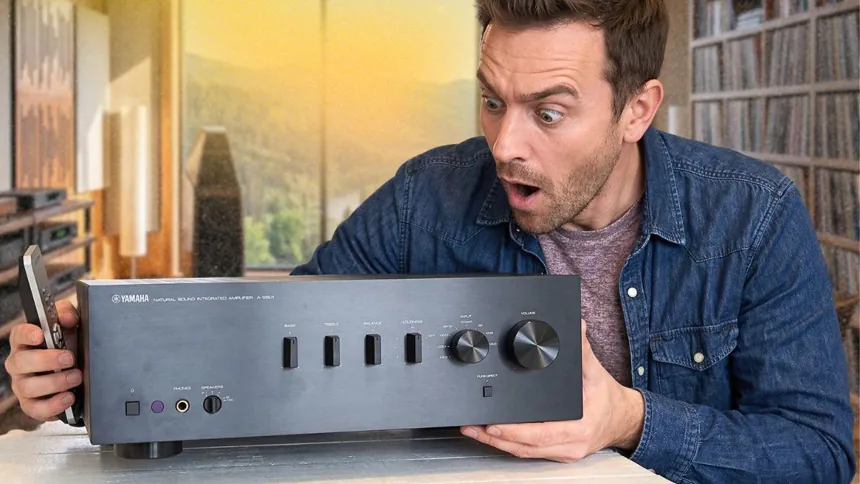
According to Headphonesty’s survey, classic and affordable models dominate the upper ranks. The NAD 3020 led the voting with over 13% of responses, followed by the Yamaha A-S501 and the compact Fosi Audio V3.

Other frequently cited amplifiers include the Denon POA-1500, Rotel RB-1090, and Adcom GFA-555 II, alongside vintage units such as the Sansui AU-717.
The distribution shows no single price bracket dominating the results, with some models historically positioned as entry-level products now viewed as long-term reference points by listeners.
Technical Factors Behind Perceived Value
From a technical standpoint, the amplifiers cited tend to prioritize stable power delivery, low distortion, and effective current handling—key factors in driving speakers accurately. While specifications such as total harmonic distortion (THD) and damping factor are often emphasized in marketing, engineers note that implementation quality and circuit design remain more critical to audible performance.
The enduring reputation of models like the NAD 3020 reflects this principle. Originally designed as a budget amplifier, it became known for delivering performance beyond its price category, helping redefine expectations for entry-level hi-fi.
Modern compact amplifiers included in the list, such as those from newer manufacturers, often benefit from advancements in Class D amplification and efficient power supply design, allowing smaller units to achieve high output with reduced heat and distortion.
■ Related News




Vintage Equipment and Longevity
A notable portion of the ranked amplifiers originates from the 1970s through the 1990s. These designs are often associated with robust build quality, discrete component layouts, and conservative power ratings.
Audiophile communities frequently cite these characteristics as contributing to long-term reliability and consistent sonic performance. The continued demand for such models in secondary markets suggests sustained confidence in their engineering.
However, compatibility considerations remain. Older amplifiers may require servicing, and their connectivity standards may not align with modern digital sources without additional components such as external DACs.
Market Context and Industry Implications
The survey results align with a broader trend in the audio industry: increasing scrutiny of price-to-performance ratios. As more affordable manufacturers enter the market—particularly in Asia—competition has intensified around measurable performance metrics and cost efficiency.
This dynamic has contributed to a shift in consumer behavior, with buyers placing greater emphasis on real-world performance and system synergy rather than brand positioning or price tier.
Industry observers note that such community-driven rankings, while subjective, continue to influence purchasing decisions and shape perceptions of value in the hi-fi sector.
Evaluation Beyond Price
While the amplifiers highlighted in the survey are widely regarded as strong performers, engineers caution that system matching remains essential. Factors such as speaker impedance, sensitivity, and listening environment can significantly affect perceived performance.
As a result, the idea of an amplifier “outperforming” more expensive gear is often context-dependent—reflecting how well a component integrates within a specific system rather than an absolute hierarchy of quality.