A blind listening test conducted within the DIY audio community has placed the legacy MC1458 operational amplifier at the top of a comparative evaluation, outperforming significantly more expensive modern chips. The result has prompted renewed discussion about the relationship between technical measurements and perceived audio quality in analog playback systems.
The test, first documented in March 2024 on the DIYAudio forum, evaluated nine dual op-amps through a Pearl 3 phono stage design. According to participants, the MC1458—originally introduced in the early 1970s—achieved the highest average listener score, despite specifications that are modest by current engineering standards.
Test Methodology
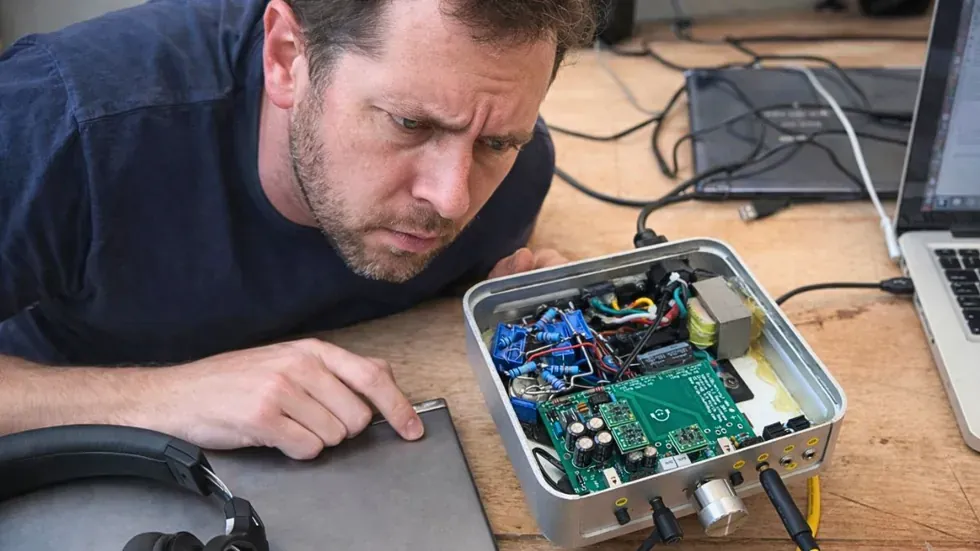
The evaluation was structured to minimize bias. Seven op-amps were anonymized by sanding off identifying marks and assigning color-coded labels, while two additional units were included as known references. The identity of each component was withheld until after scoring was completed.

The listening panel consisted of four individuals with varying levels of audio experience, including an enthusiast listener and a semi-professional musician. Playback was conducted using a vinyl-based system incorporating a Lenco L75 turntable, an Ortofon MC30 cartridge, and horn-loaded loudspeakers.
Participants assessed each op-amp across multiple criteria, including bass clarity, midrange presentation, treble response, transient speed, and overall musical engagement. Scores were recorded on a 10-point scale.
Results and Ranking
The final scores fell within a narrow range, from 7.0 to 8.2, indicating broadly similar performance across all tested components. The MC1458 achieved the highest average rating at 8.2.
Following the release of the anonymization key, the top-performing unit—previously labeled “A539”—was confirmed to be the MC1458, a dual operational amplifier derived from the earlier 741 architecture. Originally introduced with a unity-gain bandwidth of approximately 1 MHz, the device is often categorized as a general-purpose or “jelly bean” component in modern electronics.
Higher-cost alternatives included in the test, such as premium audio-grade op-amps, did not achieve top rankings.
■ Related News



Technical Observations
Subsequent discussion focused on possible explanations for the outcome. Measurement observations from the Pearl 3 design indicated that while most op-amps performed similarly on standard parameters—such as noise floor, bandwidth, and slew rate—differences emerged in harmonic distortion profiles.
The MC1458 was noted to exhibit relatively higher levels of second-order harmonic distortion compared to other tested units. Second-order harmonics occur at one octave above the fundamental frequency and are generally considered musically consonant.
In contrast, higher-order odd harmonics are more likely to be perceived as harsh or dissonant. The presence of stronger even-order harmonic content has historically been associated with tube amplifier designs, which are often described as producing a “warmer” sound despite higher total harmonic distortion (THD) measurements.
Interpretation and Limitations
The findings have not been presented as definitive. Participants acknowledged several constraints, including the small sample size, limited listening duration, and the use of a single playback system.
Short-term A/B listening tests may emphasize perceptible differences rather than long-term listening preference. Additionally, the Pearl 3 phono stage—like all analog circuits—is designed around specific component characteristics. Substituting different op-amps may alter circuit behavior in ways that extend beyond the component itself.
These factors complicate attempts to generalize the results across other systems or use cases.
Broader Industry Context
The outcome reflects a broader and ongoing discussion within the audio engineering and enthusiast communities: the extent to which objective measurements align with subjective listening experiences.
While modern op-amps typically deliver improved specifications—including lower noise, higher bandwidth, and reduced distortion—these metrics do not always predict listener preference in real-world playback conditions.
In particular, phono stages introduce additional complexity due to RIAA equalization, which shapes frequency response and may interact with component-level distortion characteristics in audible ways.
Follow-Up Community Response
In the months following the initial test, additional forum participants reported their own experiments. Some indicated a preference for lower-cost op-amps over premium alternatives, citing differences in tonal balance and perceived musicality.
However, these follow-up observations were similarly anecdotal and lacked standardized testing conditions.
Conclusion
The MC1458’s performance in this blind test does not overturn established engineering principles, but it highlights the limitations of relying solely on conventional specifications to predict listening outcomes.
The results suggest that, in certain circuit contexts, harmonic behavior and system interaction may play a more significant role in perceived sound quality than headline performance metrics.