A new Headphonesty survey-based report has crystallized a growing shift inside hi-fi culture: many of the hobby’s most repeated “rules” are now being openly challenged by experienced listeners who say they often worsen performance in real rooms. The article’s significance lies less in contrarianism than in what it reveals about how audio communities are moving away from absolutist advice toward system-specific, evidence-based setup thinking.
The 10 most frequently criticized recommendations range from “never use EQ” to “vinyl always sounds better,” exposing a widening gap between internet folklore and technically grounded playback practice.
Room Acoustics Matter More Than Purist Dogma
One of the clearest technical takeaways is the rejection of blanket anti-EQ advice. The report notes that every listening room imposes its own frequency response problems through boundary reinforcement, standing waves, flutter echo, and seat-dependent bass nulls. In that context, refusing equalization on principle often means preserving room coloration rather than preserving the source.

This reflects a broader trend in both hi-fi and studio monitoring, where DSP correction, room calibration, and careful low-frequency management have become normalized rather than controversial.
The more analytically sound position is that EQ should be treated as a precision correction tool, not a philosophical compromise.
Format Myths: Vinyl vs Digital Still Depends on the Master
Another widely challenged belief is the assumption that vinyl is inherently sonically superior to digital playback. The reporting correctly points out that much modern vinyl is sourced from digital masters before lacquer cutting, undermining claims of format-based superiority.
From a technical audio standpoint, this is crucial. Audible differences are more often explained by mastering choices, playback chain quality, cartridge alignment, and phono stage behavior than by analog-versus-digital ideology.
In practice, a well-mastered lossless stream or CD can outperform a poorly cut LP, while a thoughtfully mastered vinyl pressing may still deliver a preferred tonal presentation.
■ Related News



The key variable is production lineage, not mythology.
The Industry’s Most Persistent Cost Illusion
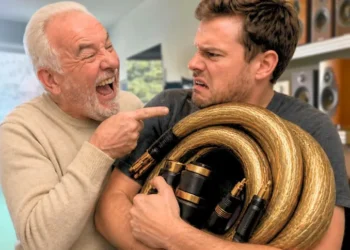
The report also takes aim at the idea that expensive accessories are a prerequisite for “real” sound quality, especially for newcomers entering the hobby. Community respondents argue that this mindset redirects budgets away from the variables that matter most: loudspeaker quality, room interaction, and placement.
That criticism mirrors wider frustration across enthusiast communities over premium cable narratives and accessory inflation, where price signaling can overshadow measurable or audible gains. Reddit discussions over the past month show similar fatigue with pricing excess and prestige-driven recommendations.
The larger industry implication is cultural: luxury positioning remains important for high-end brands, but more listeners now prioritize rational allocation of budget toward transducers and acoustic treatment.
Why Reviewer-Led Buying Advice Often Fails
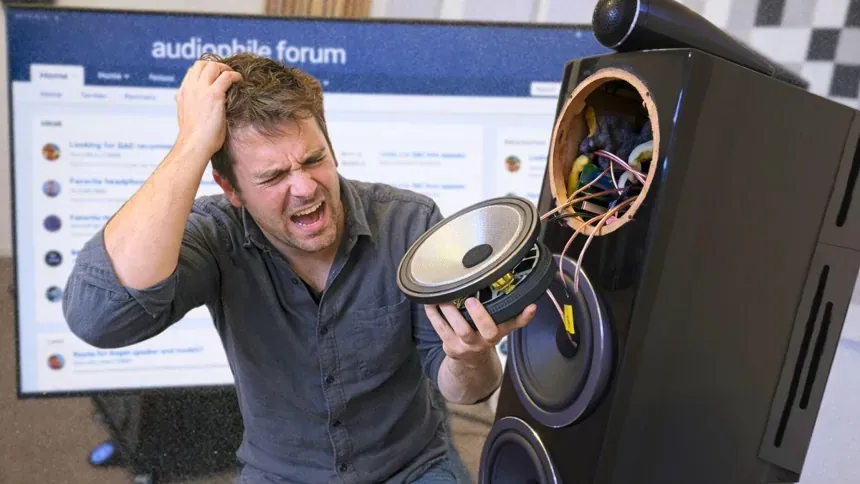
The article’s skepticism toward reviewer and forum consensus is especially relevant in 2026’s content-heavy audio ecosystem. System matching remains deeply context-sensitive; amplifier damping factor, speaker impedance curves, room size, listening distance, and SPL preferences all influence outcomes in ways generic reviews cannot fully capture.
A speaker praised for treble detail in a damped room may become fatiguing in a reflective apartment space. Likewise, “best DAC” or “best amp” discussions often collapse under differences in gain structure, source quality, and speaker efficiency.
The reporting’s broader point is editorially strong: reviews are best used to identify patterns and feature sets, not as universal prescriptions.
A More Mature Audiophile Culture
Perhaps the most important insight is cultural rather than technical. Advice such as “listen the way the artist intended” or “aesthetics don’t matter” is increasingly being reframed as unhelpful absolutism. Real-world listening is shaped by furniture, living spaces, neighbors, décor, and long-term usability as much as by frequency response.
That evolution aligns with broader market realities, especially as younger listeners operate in smaller apartments and multipurpose spaces where system integration matters as much as ultimate output.
The modern audiophile conversation is therefore becoming less about ideology and more about sustainable listening habits, room-aware tuning, and practical enjoyment.
For the hi-fi industry, that may be the healthiest development in years.